Former CJI D.Y. Chandrachud seeks special number plate for new Mercedes, sparks controversy
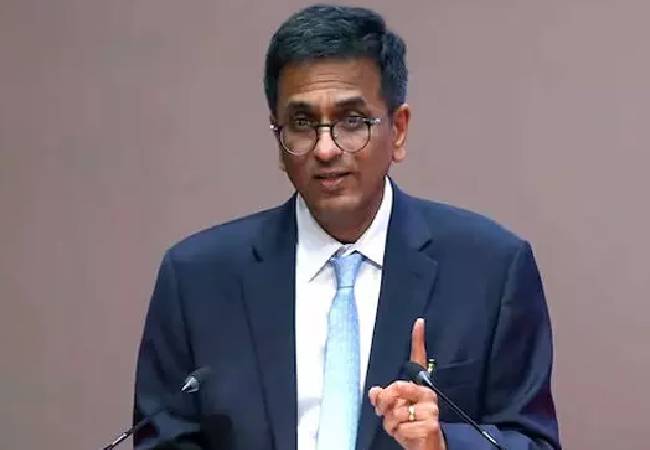
New Delhi: Former Chief Justice of India (CJI) D.Y. Chandrachud is once again at the centre of public attention, this time over a request for a special registration number for his newly purchased luxury car.
A letter dated July 28 from the Deputy Registrar of the Supreme Court to the Delhi Transport Commissioner has surfaced, urging the department to allot a specific registration number for a new Mercedes Benz E220 owned by the retired CJI. The request for priority allocation of a VIP number has raised eyebrows, particularly because it came officially from the Supreme Court registry rather than from the individual concerned.
This is not the first instance where Justice Chandrachud has faced scrutiny over vehicle number plates. In 2024, a photograph of one of his cars bearing the registration DL1 CJI 0001 went viral on social media. The image was posted by businessman Lloyd Mathias, who wrote: “Saw then Chief Justice of India D.Y. Chandrachud at a private event in Delhi. Couldn’t help noticing the number plate: DL1 CJI 0001. Imagine if the Chief Election Commissioner’s car bore DL1 CEC 0001!”
Following the latest development, Mathias again took to social media, claiming that Chandrachud has a “long-standing fetish for VVIP number plates.” He also reshared the old photograph, remarking: “This was from 2024, when he was still CJI. He had assigned himself the ‘CJI’ plate.”
Adding to the controversy, this request for a preferential number plate comes at a time when questions are still being raised about Justice Chandrachud’s delay in vacating the official Chief Justice bungalow post-retirement. The Supreme Court had to write to the central government requesting immediate steps for the vacation of the residence.
Now, the fresh request made through the Supreme Court Registry has sparked a new wave of criticism, with many questioning whether this is a case of procedural normalcy or a reflection of lingering influence from his time in office.
Legal observers and social media users alike are divided: while some see the request as an administrative formality, others believe it reflects a misuse of institutional channels for personal preferences. Critics argue that former high-ranking officials should refrain from leveraging their previous positions for privileges not meant to extend beyond retirement.
The Transport Department is yet to officially respond to the letter or confirm whether the requested number will be allotted.
Let the Truth be known. If you read VB and like VB, please be a VB Supporter and Help us deliver the Truth to one and all.
Vijayanagara: One dead, 12 injured as trucks hits their vehicle from behind on NH 50
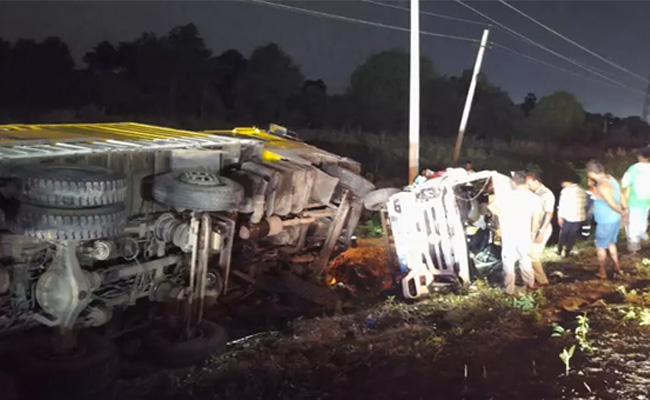
Vijayanagara: One man was killed and 12 others were injured after a truck hit vehicle they were traveling in on the National Highway 50 stretch on the outskirts of Koodligi in the district.
The accident victim, Madhu (27), is learned to have been an employee of Reliance Digital from Andhra Pradesh.
The vehicle was reportedly traveling from Bengaluru to Koodligi and the passengers are learned to have been seriously injured following the collision with the truck, which was found to have a Maharashtra registration.
Koodligi Deputy Superintendent of Police (DySP) Mallesh Dodmani and Circle Inspector Prahlad Channagiri arrived at the accident spot on being informed of the accident.
The police officers and locals rescued the injured passengers and got them shifted to the Koodligi Government Hospital. Some of the passengers were reportedly taken to the Ballari Trauma Care Centre for further treatment.
A case has been registered at the Koodligi Police Station and the officers are investigating the incident.