Former President Pratibha Patil conferred Mexico's highest civilian honour
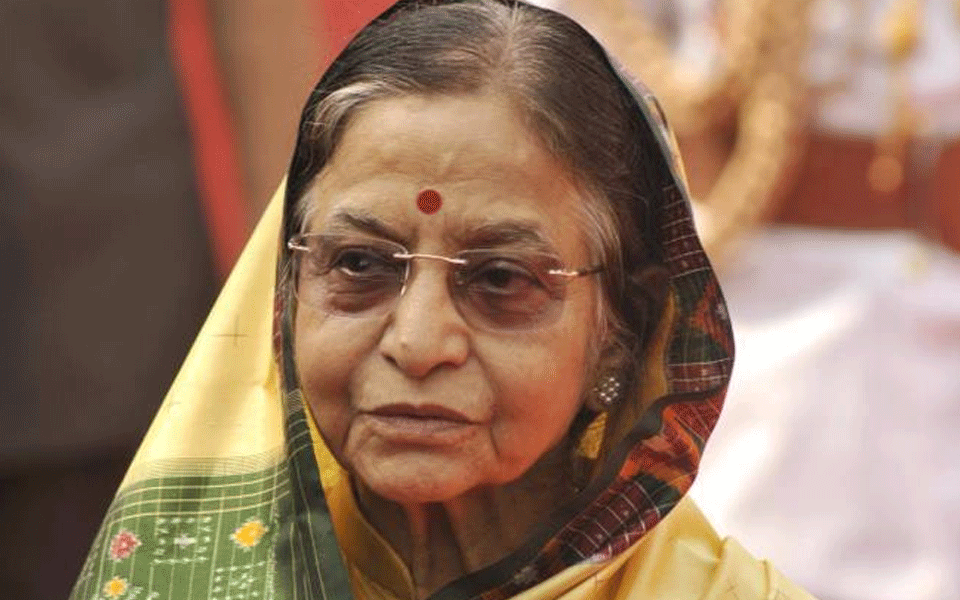
New Delhi: Former Indian President Pratibha Patil has been conferred the "Orden Mexicana del Águila Azteca" (Order of the Aztec Eagle) - the highest civilian award of Mexico given to foreigners on Saturday.
The Ambassador of Mexico to India, Melba Pria, conferred the award on Patil - who created history as this country's first woman President (2007-2012), at a special ceremony held in the MCCIA Bhavan, Pune.
Patil, 85, becomes only the second Indian head of state to get the award. Earlier, the late President S. Radhakrishnan had been conferred this honour.
Mexico's highest distinction for foreigners is in recognition of their outstanding services to the Mexican nation or humanity, significant contributions to strengthening the bilateral relations between Mexico and other countries, said an official spokesperson.
The royal eagle is Mexico's national animal, sacred to the ancient Aztecs and it is present on the National Emblem of the Mexican flag.
"It is an essential symbol that links their Aztec past with the modern nation. It is of gold and turquoise and is given to express the respect and admiration of the Mexican people," the spokesperson added.
Created by a decree in 1993 by the then President of Mexico, Abelardo L. Rodriguez, it is awarded to prominent heads of state or government, ambassadors after they have served in Mexico, important personalities who have made major contribution in various fields, service to the country or its people.
The award comes in five degrees - Collar, Sash of Special Category, Sash, Plaque, Venera and Insignia.
Previous Indian recipients in various categories include Nobel laureate Amartya Sen, renowned artist Satish Gujral, industrialist Raghupati Singhania, Consul-General of Mexico in Mumbai Rajju Shroff and others.
Let the Truth be known. If you read VB and like VB, please be a VB Supporter and Help us deliver the Truth to one and all.
Trump says EU has until July 4 to approve last year's trade deal or it will face higher tariffs
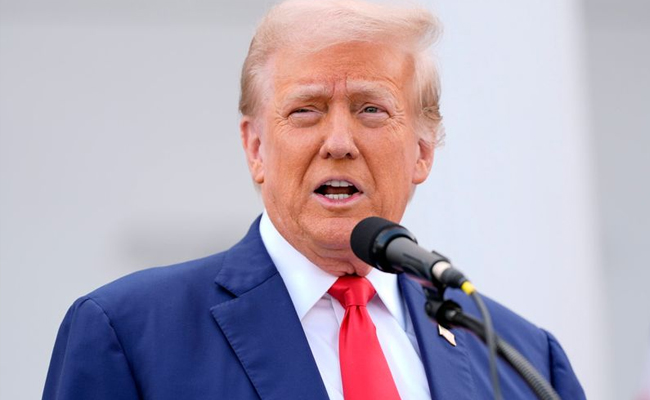
Washington (AP): President Donald Trump has said in a social media post that goods from the European Union would face higher tariff rates if the 27-member bloc fails to approve last year's trade framework by July 4.
The announcement on Thursday appeared to be a deadline extension after the president said last Friday that EU autos would face a higher 25 per cent tariff starting this week. Trump made the updated announcement after what he described as a "great call" with European Commission President Ursula von der Leyen.
Still, the US president was displeased that the European Parliament had yet to finalize the trade arrangement reached last year, which was further complicated in February by the US Supreme Court ruling that Trump lacked the legal authority to declare an economic emergency to impose the initial tariffs used to pressure the EU into talks.
"A promise was made that the EU would deliver their side of the Deal and, as per Agreement, cut their Tariffs to ZERO!" Trump posted. "I agreed to give her until our Country's 250th Birthday or, unfortunately, their Tariffs would immediately jump to much higher levels."
It was unclear from the post whether Trump was implying that the tariff rates would jump on all EU goods or the increase would only apply to autos.
His latest statement indicates he might be backing away from his earlier threat on EU autos by giving the European Parliament several more weeks to approve the agreement.
Under the original terms of the framework, the US would charge a 15 per cent tax on most goods imported from the EU.
But since the Supreme Court ruling, the administration has levied a 10 per cent tariff while investigating trade imbalances and national security issues, aiming to put in new tariffs to make up for lost revenues.