Former student sparks panic at school in Kerala brandshing air pistol; arrested
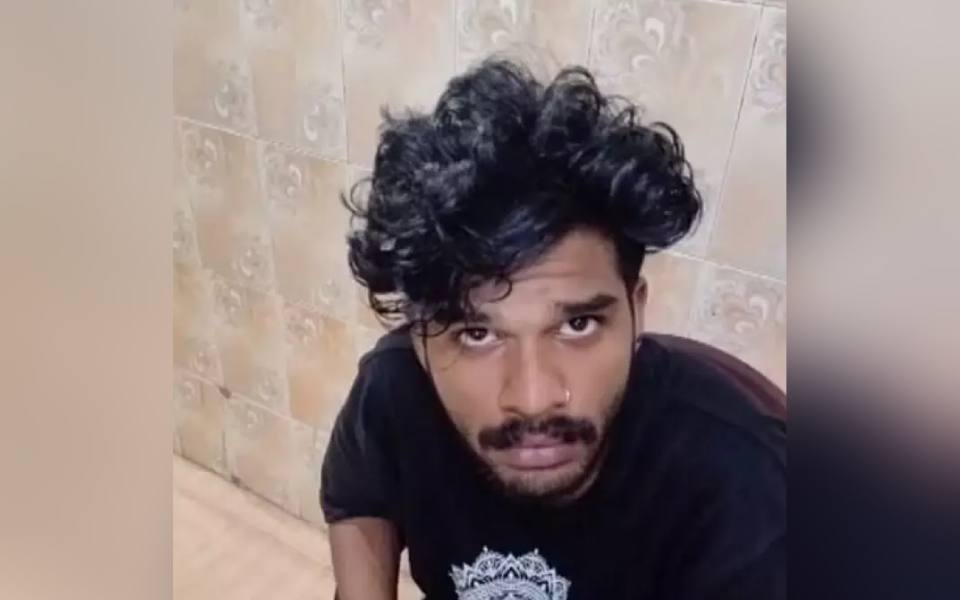
Thrissur (Ker), Nov 21: A former student of a private school in Thrissur sent students and staff into a panic on Tuesday, when he arrived there brandishing a "gun" -- but with the police responding to emergency calls promptly, he was apprehended before he could injure anyone with the air pistol.
The student, identified as Jagan, entered the Vivekodayam school in Thrissur in the morning and proceeded to the staff room, where he took out the weapon from his bag.
The tresspasser then moved through various classrooms, terrorising both students and staff members -- in an episode that brings to mind the hundreds of horrific school shootings in the United States of America in which many children have died.
Jagan fired a few rounds inside the school, according to the school staff, but the police -- who rushed there after receiving calls for help and subdued the 'shooter' -- said nobody was injured.
Acting swiftly, police caught hold of the gun-wielding man when he tried to escape, and arrested him on the school premises.
The charges filed against him include sections 448 (trespass) and 506 (criminal intimidation) of the IPC.
Police said Jagan, who is from Thrissur himself, has some mental issues, and the magistrate has issued relevant orders for his medical examination, based on his parents' request.
A police officer told PTI that Jagan had recently purchased the "baby toy air pistol" from a local shop, which he used to terrorise the students and teachers at his alma mater.
District Collector V R Krishna Teja, upon being informed, immediately arrived at the school to assess the situation, and assured parents that it was an isolated incident.
"A young person has come to the school. He was a bit unsteady and used his pistol and fired two or three rounds. That's what the school authorities have told us. He was taken into custody.
"It's an isolated incident, and an investigation is on. There is no need to worry. We are all here. He will be produced before a doctor," Teja told the media.
Television channels telecast visuals of the accused sitting inside the staff room waving about the air pistol he had taken out of his bag.
A teacher said that Jagan was a former student who had previously caused disturbances and had left the school.
"Earlier, he had used abusive language towards his teachers. Today, he came and asked for a hat that was confiscated when he was a student here," a teacher told the media.
Jagan's confrontational behaviour extended to the police station as well, where he was seen shouting at officials.
Police said that he has a track record of being kept under preventive detention by the Mannuthy police for creating public nuisances in the past.
Let the Truth be known. If you read VB and like VB, please be a VB Supporter and Help us deliver the Truth to one and all.
Bengaluru: KAS officer, driver caught in Rs 30 lakh bribe case
Bengaluru: Lokayukta police have arrested a KAS officer and his driver for allegedly demanding and accepting a Rs 30 lakh bribe to pass a favourable order in a pending RRT case.
The accused have been identified as Nagaprashanth (KAS), serving as Special Assistant Commissioner (North) and Special Land Acquisition Officer-1, KIADB, and Kumar, a driver associated with his office, Deccan Herald reported.
Based on a complaint by Ravi Kumar, a resident of Attur in Yelahanka, Lokayukta team laid a trap.
According to investigators, the accused had demanded Rs 30 lakh, of which Rs 15 lakh was allegedly collected earlier by the driver on the officer’s instructions.
On Wednesday, the driver was caught red-handed while accepting the remaining Rs 15 lakh, leading to the arrest of both him and the officer.
Both accused have been taken into custody, and further investigation is underway.