Foundation stone for Ayodhya mosque to be laid on Republic Day; blueprint this week
Ayodhya (UP), Dec 17: The blueprint of the mosque to replace the Babri Masjid will be unveiled this Saturday and its foundation laid on Republic Day on the five-acre land allotted for it here, members of the Trust formed for its construction said.
"The Trust chose January 26, 2021 for laying the foundation stone of the Ayodhya mosque as on this day our Constitution came into effect over seven decades ago. Our Constitution is based on pluralism, which is the leitmotif of our mosque project," said Athar Hussain, secretary of the Indo-Islamic Cultural Foundation (IICF).
The IICF was set up by the Sunni Waqf Board six months ago to build the mosque.
The blueprint of the mosque complex, which will include a multi-speciality hospital, a community kitchen and a library, will be unveiled by the IICF on December 19 as the plan for the project has been finalised by its chief architect, Professor S M Akhtar.
"The mosque will have a capacity to hold 2,000 namazis at a time, and the structure will be round-shaped," Akhtar told PTI.
The Supreme Court on November 9 last year had paved the way for the construction of a Ram Temple at the disputed Ram Janambhoomi-Babri Masjid site at Ayodhya, and directed the Centre to allot an alternative five-acre plot to the Sunni Waqf Board for building a new mosque at a "prominent" place in the town in Uttar Pradesh.
The state government allotted a five-acre land in Dhannipur village in Sohaval Tehsil of Ayodhya.
"The new mosque will be bigger than Babri Masjid, but won't be a lookalike of the structure. The hospital will take centre stage in the complex. It will serve humanity in the true spirit of Islam as taught by the Prophet in his last sermon 1,400 years ago," Akhtar said.
"The hospital won't be a usual concrete structure but will be in sync with the architecture of the mosque, replete with calligraphy and Islamic symbols. It will house a 300-bed speciality unit, where doctors will work with missionary zeal to provide free treatment to the ailing," he said, adding that "the mosque will be self efficient for power as it is designed based on solar energy and a natural temperature maintenance system."
"When we talk about the hospital project at Dhannipur, one thing is sure that it will be a multi speciality hospital," Hussain said. The community kitchen will serve good quality meals twice a day to cater to the needs of nourishment of the poor people living nearby, he added.
"We can establish a nursing and paramedic college to provide human resources to the hospital. We can manage doctors from local resources from Faizabad, and for specialised needs in terms of critical surgeries, we have a group of doctor friends in prominent government and private institutions who want to offer their services," he said.
"We are looking forward to corporate funding for the hospital. There are many donors who are willing to contribute when we have 80 G approval. After that, we will go for FCRA and seek foreign funds from Muslims of Indian origin," the IICF secretary added.
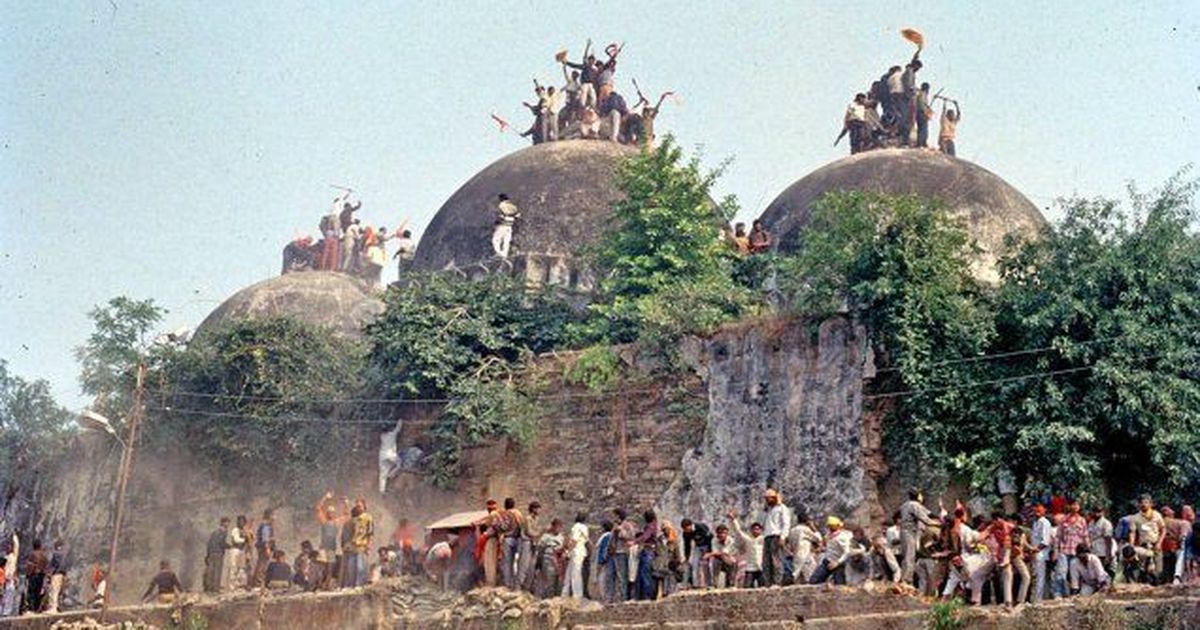
The Babri Masjid was demolished in December 1992 by "kar sevaks" who claimed that the mosque in Ayodhya was built on the site of an ancient Ram temple.
Let the Truth be known. If you read VB and like VB, please be a VB Supporter and Help us deliver the Truth to one and all.
Indian startup's 'Drishti' satellite launched aboard SpaceX rocket
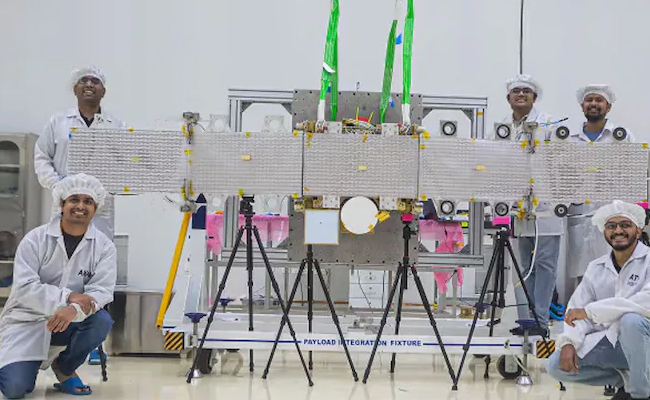
New Delhi (PTI): Bengaluru-based space start-up GalaxEye's Mission Drishti satellite was launched on Sunday aboard SpaceX's Falcon 9 rocket from California.
Mission Drishti is the world's first OptoSAR satellite, integrating electro-optical (EO) and synthetic aperture radar (SAR) sensors into a single operational platform, according to the company.
While EO sensors capture high-resolution images during sunlight and clear skies, SAR sensors provide all-weather and all-time images, using radar pulses.
In a statement, Suyash Singh, founder and CEO of GalaxEye, said, "With the satellite (Mission Drishti) now successfully in orbit, our immediate focus is on completing its commissioning. As we move through this phase, we are already witnessing strong global interest in the differentiated datasets enabled by our OptoSAR payload."
The satellite will help address long-standing limitations of conventional systems and enable more reliable and consistent data acquisition across diverse environmental conditions, the company said.
As a dual-use Earth observation satellite, the mission will support use cases across defence, agriculture, disaster management, maritime monitoring, and infrastructure planning.
The satellite is also expected to complement India's broader initiatives, including the 29 active Earth Observation satellites outlined in ISRO's recent annual report.
The launch came after five years of indigenous research and development, and extensive environmental testing and performance validation of the Mission Drishti.
In a statement, Lt Gen AK Bhatt (Retd), director general of Indian Space Association (ISpA), said, "GalaxEye has achieved what only a few global players have, which is seamlessly combining optical and SAR capabilities on a single platform to enable persistent, all-weather intelligence."
What stands out is not just the technology, but its broader impact on how downstream applications will increasingly define value in the space economy, particularly in Earth observation, where timely, decision-grade insights are critical," he added.
ISpA is the premier industry association of space and satellite companies in the country.
Union Minister Jitendra Singh also took note of the Mission Drishti launch, saying the development marked a significant milestone in India's space journey.
In a post on X, the minister said, "The successful launch of the world's first OptoSAR satellite, and the largest privately-built satellite in the country, reflects the immense potential of our young innovators driving nation-building."
GalaxEye aims to scale up Mission Drishti to a constellation of 10 satellites by 2030, developing a robust and sovereign Earth observation infrastructure for India.