Four nuns, survivor seek Kerala CM's intervention on transfer issue
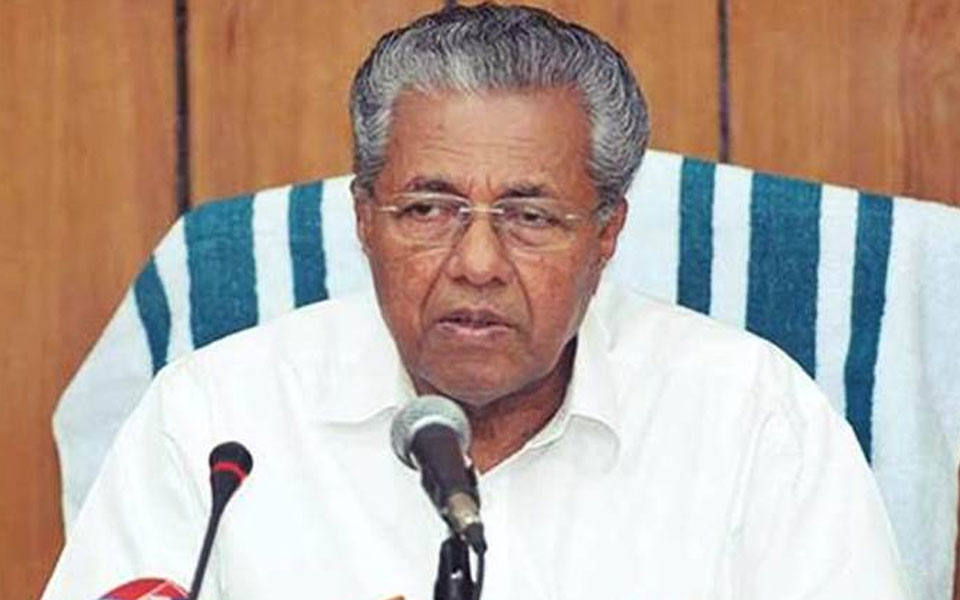
Kochi, Jan 19 : Four nuns, who took part in a protest demanding the arrest of rape-accused Bishop Franco Mulakkal, have written to the Kerala chief minister, seeking his intervention to ensure that their transfer orders were not effected till the trial of the case was over.
The letter to Chief Minister Pinarayi Vijayan was written after four of the five nuns, who led the agitation against the bishop last year, were directed to leave their convent in Kottayam district, in compliance with a transfer order issued by their congregation last year.
The survivor nun has also written a separate letter to the chief minister, seeking his help in the matter.
"Their aim is to single me out and to harass and torture me. My life will be in danger if such a situation arises," she has alleged in her letter.
Their congregation -- Missionaries of Jesus under the Jalandhar diocese of the Roman Catholic Church -- has directed the nuns to join their previously-assigned convents, according to the transfer orders issued between March and May, 2018.
The nuns -- Alphy, Anupama, Josephine and Ancitta -- were served notice by the superior general of the congregation, Regina Kadamthottu, urging them to take up their assigned responsibilities as befitting members of the Missionaries of Jesus congregation.
Sister Nina Rose, who also fought for justice for the survivor nun, has not been asked to leave the convent.
While Sister Alphy has been transferred to a convent at Pakartala in Bihar, sister Ancitta and sister Josephine have been directed to join their convent in Lalmatia, Jharkhand.
Sister Anupama has been asked to report at a convent in Punjab.
In their letter to the chief minister, the nuns alleged that the transfer orders were aimed at splitting them and "to sabotage the case" against Bishop Franco Mulakkal.
"Bishop Franco is supported by some of the church authorities and his henchmen. They are making false propagation and character assassination against us.
"The aim of the present transfer orders is to pressure and threaten us as all of us are prominent witnesses in the case," the four nuns alleged in the letter.
They claimed that their "fate of life" itself would be unpredictable if they were transferred to distant regions.
"They want to split us and put us into different locations in India. We will not be able to appear and give evidence before the court at the trial stage in such a situation," they said in the letter.
The nuns sought Vijayan's intervention to ensure that all of them could live at the St Francis Mission Home in Kuravilangad itself, with the survivor, till the trial of the rape case was over, especially considering their safety.
"The victim is actually living on the strength and support extended from our side. Our presence itself is a great solace for her, who is totally in a broken situation," they said.
Alleging that the transfer orders were a "strategy" to put all of them under pressure, the nuns said, "If the transfer is effected, we will not be in a position to give evidence in the case daringly."
"We will not be allowed to live peacefully and will collapse emotionally and mentally. Our lives will be in danger," they said.
The protest led by the nuns and the Catholic reformist forums here in September last year had led to a public outrage and demands for action against the bishop.
Bishop Mulakkal, a senior member of the Roman Catholic clergy in India, was arrested last year following allegations by the nun that he repeatedly raped and sexually assaulted her at the Kuravilangad convent between 2014 and 2016, a charge denied by him.
The 54-year-old clergyman was "temporarily" relieved of all pastoral responsibilities as the bishop of the Jalandhar diocese by the Vatican.
The congregation had issued the transfer orders of the nuns last year, much before the outbreak of protests, but they had then refused to accept those.
In a recent communique, Superior General Regina said it was a "matter of serious concern" for her to note that they were yet to join their convents assigned previously.
Let the Truth be known. If you read VB and like VB, please be a VB Supporter and Help us deliver the Truth to one and all.
Rickelton's ton in vain as SRH beat MI by 6 wickets

Mumbai (PTI): Ryan Rickelton's whirlwind unbeaten ton was overshadowed by Heinrich Klaasen's unbeaten 65 as Sunrisers Hyderabad defeated Mumbai Indians by six wickets in an IPL match here on Wednesday.
Chasing an imposing 244-run target, Travis Head (76 off 30) and Abhishek Sharma (45 off 24) shared 129 runs for the opening wicket to set the platform for SRH.
Klaasen (65 not out off 30 balls) then displayed his all-round hitting abilities to guide SRH home with the help of Nitish Kumar Reddy (21) and Salil Arora (30 not out off 10) in 18.4 overs.
Earlier, Rickelton's knock powered MI to 243 for five.
MI rode on a 93-run stand between Rickelton (123 not out off 55 balls) and Will Jacks (46 off 22) in 7.1 overs for the opening stand to power the side.
MI skipper Hardik Pandya scored a valuable 31 off 15 balls before being dismissed.
Praful Hinge (2/54), Eshan Malinga (1/29), Sakib Hasan (1/39) and Nitish Kumar Reddy (1/31) were the wicket-takers for SRH.
Brief Scores:
Mumbai Indian: 243 for 5 in 20 overs (Ryan Rickelton 123 not out; Praful Hinge 2/54).
Sunrisers Hyderabad: 249 for 4 in 18.4 overs (Travis Head 76, Heinrich Klaasen 65 not out; AM Ghazanfar 2/51).