Gadkari flags energy security concerns, says India eyes 100% ethanol blending
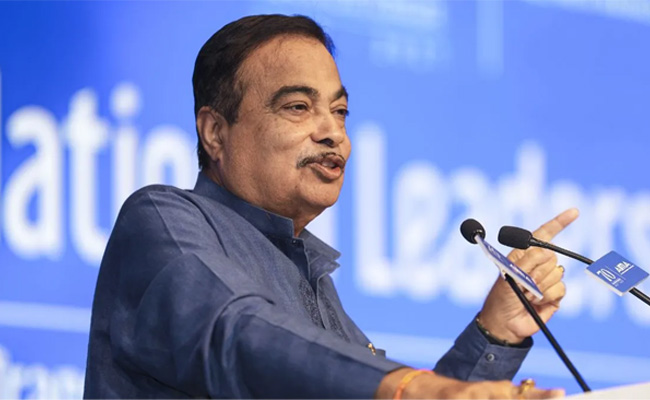
New Delhi: Union Road Transport and Highways Minister Nitin Gadkari said that India should aim to achieve 100 per cent ethanol blending in fuel in the near future, , citing the need for energy self-reliance amid global uncertainties.
Speaking at a green transport conclave, Gadkari was quoted by NDTV Profit as saying that rising tensions in West Asia have underscored the risks associated with dependence on imported fossil fuels. He noted that India currently meets about 87 per cent of its oil requirement through imports, with an annual outlay of nearly ₹22 lakh crore.
“Given the ongoing global situation, it is necessary for us to become self-reliant in the energy sector,” he said, emphasising the need to scale up alternative fuels and biofuel production.
India has already introduced petrol blended with 20 per cent ethanol, launched in 2023 by Prime Minister Narendra Modi, with vehicles now being adapted to run on E20 fuel with minor modifications.
Countries such as Brazil have adopted higher ethanol blending, offering a possible model as India expands its biofuel programme.
Gadkari was quoted by NDTV Profit as saying that reducing production costs to around one dollar per kilogram would be key to making India a global exporter of energy.
Let the Truth be known. If you read VB and like VB, please be a VB Supporter and Help us deliver the Truth to one and all.
India’s generosity should not be mistaken for weakness: V-P Radhakrishnan
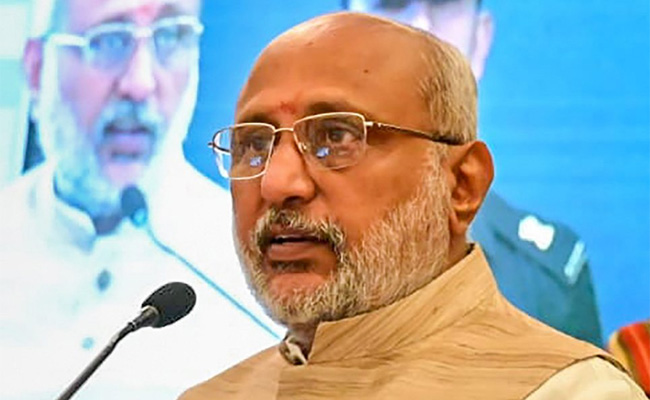
Kalaburagi (Karnataka) (PTI): Vice President C P Radhakrishnan on Wednesday asserted that India will continue to fight terrorism unitedly, but said the country’s “generosity” should not be mistaken for “weakness.”
He made the remarks while addressing the 10th convocation of the Central University of Karnataka.
The vice president said the rise of “nari shakti” (women's power) reflects a transformative journey towards equality, empowerment, and leadership across multiple fields such as academia, research, governance, entrepreneurship, innovation, space research, and the armed forces.
Referring to a press briefing by three women officers of the armed forces on Operation Sindoor, he recalled the 2025 terror attack in Pahalgam that claimed the lives of 26 tourists on April 22.
“How cruel are they (terrorists)? In front of the wife, they are killing the husband. But we have to fight terrorism. We have to fight our enemies. We want to live together at all times and take everyone along. But that should not be mistaken for weakness; it is our generosity,” he said.
The vice president highlighted the growing role of women in academic excellence.
He observed that women consistently form a majority among medal winners at convocations across the country and expressed satisfaction that more than 80 per cent of the gold medalists at the university this year are women.
He urged graduating students to contribute meaningfully to society and nation-building, emphasising that the vision of a Viksit Bharat (Developed India) can be achieved only through the collective efforts of all citizens.
“You (graduating students) carry the responsibility to contribute meaningfully to society and to the nation as a whole. India today stands at a defining moment,” he said, adding that the vision of Prime Minister Narendra Modi of a Viksit Bharat is a shared national mission.
“Viksit Bharat cannot be achieved unless each one of us contributes to the best of our abilities. When all efforts come together, they will create the best in the world,” Radhakrishnan said.
Calling upon the youth to innovate, lead, and act with integrity, he said every graduate is a stakeholder in India’s development journey and must recognise their role in nation-building.
“The classrooms that students leave behind today have prepared them for nation-building. Equally significant is the spirit of a self-reliant India,” he added.
Referring to India’s progress across sectors, the vice president said the country is making new achievements in every field, driven by the enthusiasm of young people to adapt to changing requirements and contribute solutions.
“It is about using your own capabilities, fostering innovation, supporting local enterprises, and creating solutions rooted in our realities, yet competitive on the global stage. That is what is important—we must be globally competitive,” he said.
He insisted that graduates equip themselves to adapt to rapid changes in a fast-evolving world, stressing that whether they become entrepreneurs, researchers, administrators, or professionals, their role in strengthening a self-reliant ecosystem will be crucial.
The vice president said graduates are entering a world full of opportunities as well as challenges, including climate change, technological disruption, and social inequalities, and encouraged them to face these with courage and creativity.
“Let your education guide you, and let your values define you,” he said, stressing that learning should be reflected in action and in life.
He told students not to measure success solely by personal gain or compare themselves negatively with others, saying the achievements of peers should serve as motivation rather than jealousy.
The vice president told students not to become dejected or frustrated by failure. “Success may not teach as many lessons, but failure teaches many,” he said.
Drawing from his own political journey, Radhakrishnan said he had contested five elections and won two, describing failure as a natural part of life.
“We should never become stagnant. We should always move forward with renewed enthusiasm,” he said, advising students to recover from setbacks and continue moving forward.