'Getting aggressive calls from powerful people': Serum CEO Adar Poonawalla on vaccine pressure
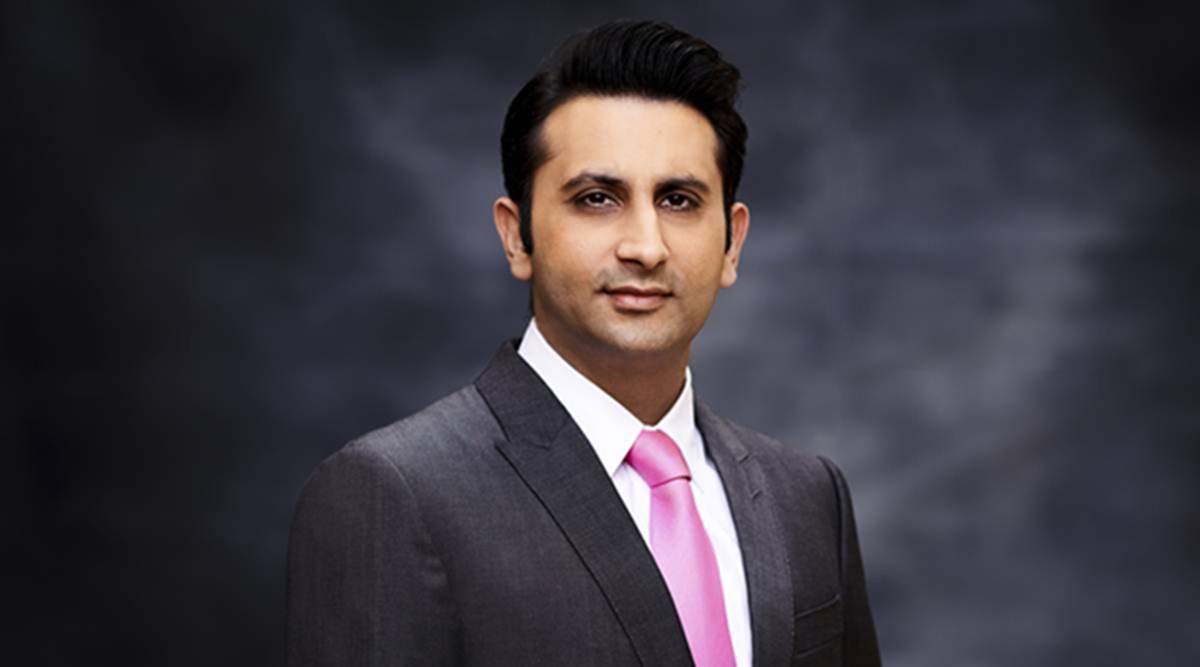
London, May 1: Serum Institute of India CEO Adar Poonawalla on Saturday spoke out about the pressures he was under over the production of COVID-19 vaccines to meet the ever-increasing demand in India as the country battles through a devastating second wave of the coronavirus pandemic.
In his first comments since he was provided with Y' category security by the Indian government earlier this week, Poonawalla told The Times' in an interview about receiving aggressive calls from some of the most powerful people in India, demanding supplies of Covishield -- the Oxford/AstraZeneca COVID-19 vaccine that the Serum Institute is producing in India.
That pressure is largely behind his decision to fly into London to be with his wife and children, the 40-year-old entrepreneur said.
I'm staying here (London) for an extended time because I don't want to go back to that situation. Everything falls on my shoulders but I can't do it alone...I don't want to be in a situation where you are just trying to do your job, and just because you can't supply the needs of X, Y or Z you really don't want to guess what they are going to do, Poonawalla told the newspaper.
According to Indian government officials, the protection to Poonawalla has been given in view of "potential threats" to him. Armed commandos of the Central Reserve Police Force (CRPF) will be with him every time he travels to any part of the country, they said and added that the 'Y' security cover will entail a posse of about 4-5 armed commandos.
The level of expectation and aggression is really unprecedented. It's overwhelming. Everyone feels they should get the vaccine. They can't understand why anyone else should get it before them, Poonawalla said.
The businessman indicated in the interview that his move to London is also linked to business plans to expand vaccine manufacturing to countries outside India, which may include the likes of the UK.
There's going to be an announcement in the next few days, he said, when asked about Britain as one of the production bases outside India.
According to the newspaper, by the time the Oxford/AstraZeneca vaccine was approved in January this year, the Serum Institute of India (SII) had increased its annual production capacity from 1.5 to 2.5 billion doses at a cost of USD 800 million, and stockpiled 50 million doses of Covishield.
The company began exporting to 68 countries, including Britain, as India seemed to have been over the worse, until the situation worsened in recent weeks.
We're really gasping for all the help we can get, Poonawalla said in the Times' interview.
I don't think even God could have forecast it was going to get this bad, he said.
India is struggling with a second wave of the pandemic with more than 3,00,000 daily new coronavirus cases being reported in the past few days, and hospitals are reeling under a shortage of medical oxygen and beds.
India's daily coronavirus tally crossed the grim milestone of four lakh on Saturday, while the death toll rose to 2,11,853 with 3,523 fresh fatalities.
On the charge of profiteering as the cost of Covishield was recently hiked, he termed it as totally incorrect and added that Covishield will still be the most affordable vaccine on the planet even at a higher price.
We have done the best we can without cutting corners or doing anything wrong or profiteering. I'll wait for history to judge, he said.
I've always had this sense of responsibility to India and the world because of the vaccines we were making, but never have we made a vaccine so needed in terms of saving lives, he added.
The Serum Institute on April 21 had announced a price of Rs 600 per dose for private hospitals and at Rs 400 for state governments and for any new contract by the central government.
The announcement followed widespread criticism of the company's pricing policy as it has sold the initial doses of Covishield to the central government at Rs 150 per dose. Many states objected to the different prices for the vaccines.
Subsequently, SII on Wednesday announced a cut in price of the jab it plans to sell to states to Rs 300 per dose.
Let the Truth be known. If you read VB and like VB, please be a VB Supporter and Help us deliver the Truth to one and all.
TN Assembly elections: Eight-month pregnant homemaker wins Thiru Vi Ka Nagar seat for TVK

Chennai (PTI): Before giving birth, she had already delivered a mandate—a symbol of hope for Thiru Vi Ka Nagar.
Echoing Delhi’s 2013 “common citizen” political churn associated with the rise of the Aam Aadmi Party (AAP), an eight-month-pregnant homemaker, M R Pallavi, has been elected as an MLA from Chennai’s Thiru Vi Ka Nagar constituency, emerging as one of the notable first-time faces of the Vijay-led TVK in the recently held Tamil Nadu Assembly elections.
In the narrow lanes of Thiru Vi Ka Nagar, a steady stream of media personnel has been making their way to Pallavi’s residence—a scene reminiscent of the result day in Delhi when journalists thronged the modest home of Rakhi Birla, who had won from Mangolpuri on an AAP ticket.
Pallavi, 36, a homemaker educated up to class XII, defeated the DMK candidate K S Ravichandran by a margin of 22,333 votes in the reserved Thiru Vi Ka Nagar Assembly constituency.
Tamilaga Vettri Kazhagam emerged as the single largest party by winning 108 seats, while DMK and AIADMK got 59 and 47, respectively.
Pallavi’s victory has drawn attention due to her personal circumstances. She campaigned extensively while eight months pregnant, going door-to-door to reach voters.
According to local accounts, she even fainted once during the campaign but continued her outreach.
She has not spoken to the media following her victory, as doctors have advised her to rest. Her husband, Rajesh, briefly recounted her campaign efforts.
A self-professed admirer of actor-turned-politician Vijay, Pallavi joined TVK soon after its formation and is now among its first-time legislators.
Doctors have advised her to be hospitalised around May 20, as she is expecting her second child. Ahead of that, voters in Thiru Vi Ka Nagar have entrusted her with representing them in the state Assembly.
Political observers say the rise of candidates like Pallavi signals a possible shift in Tamil Nadu’s political landscape, with voters backing a new party and candidates from non-traditional backgrounds.