Ghost of demonetization haunts Government, RBI: Chidambaram

New Delhi, April 18: Former Finance Minister P. Chidambaram on Wednesday attacked the government and the RBI over the acute cash crunch in the country and said the ghost of demonetization has come back to haunt them.
He also needled the government on the recent bank scams, saying people appeared to have lost confidence in banks.
"I suspect ordinary people are withdrawing cash but not putting back into the banks their surplus cash. It is possible that there is some loss of confidence in the banking system, thanks to the bank scams.
"After demonetizing 500 and 1,000 rupee notes, government printed Rs 2,000 notes! Now, government is complaining that Rs 2,000 notes are being hoarded!! We always knew that Rs 2,000 notes were printed only to help hoarders.
"The ghost of demonetization has come back to haunt the government/RBI. Why are ATMs still bring re-calibrated even 17 months after demonetization?" Chidambaram said in a series of tweets on the reported shortage of money in banks in some states.
"Cash is back with a vengeance," says Navrose Dastur, MD, NCR Corp, India. "I support digitization, but government cannot force the pace of digitization or arbitrarily reduce the supply of cash.
"Is it correct that currency in circulation has increased by only 2.75 per cent since demonetization? If so, I maintain that government/RBI are not allowing money supply to grow at the same rate as the nominal GDP.
"I also suspect that RBI seriously miscalculated demand for cash in the post-harvest season," he said.
"RBI's statement is unsatisfactory. If RBI has printed and supplied sufficient cash, it must explain why there is a cash shortage."
The RBI on Tuesday said that there is "sufficient cash" in its vaults and currency chests and it is "taking steps to move currency to areas" which have witnessed unusually large cash withdrawals.
Let the Truth be known. If you read VB and like VB, please be a VB Supporter and Help us deliver the Truth to one and all.
Telugu actress death: SC upholds jail for paramour, directs him to surrender
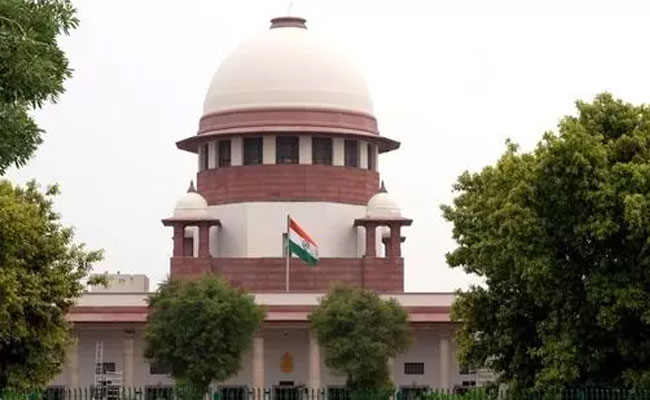
New Delhi (PTI): Ruling out strangulation and rape, the Supreme Court on Tuesday upheld the two-year jail term of a man challenging his conviction for abetting the suicide of Telugu actress Pratyusha in 2002, and directed him to surrender within four weeks.
Pratyusha died in Hyderabad on February 24, 2002.
The gist of the case against Gudipalli Siddhartha Reddy, according to the remand report, is that he and Pratyusha were in love for six years.
While the relation was acceptable to Pratyusha's mother, Reddy's mother did not agree to the alliance on account of which both of them decided to commit suicide.
On February 23, 2002, both of them went in a car, purchased a pesticide bottle, mixed it in coke and consumed it. However, wisdom prevailed over them and they decided that they should not die.
They drove to Care Hospital in Hyderabad. In spite of the medical care, Pratyusha died while Reddy survived.
A bench comprising justices Rajesh Bindal and Manmohan also dismissed the plea filed by P Sarojini Devi, Pratyusha's mother, who alleged foul play in the death.
"This court holds that the accused's conduct in entering into and acting upon the suicide pact falls squarely within all the three situations envisaged in Section 107 (Abetment) of the IPC. His participation directly facilitated the deceased's suicide. "Notably, it is not his defence that the deceased was the dominant personality who pressured him into the pact. His culpability therefore stands established," the bench said.
The top court said the allegation of homicidal death by manual strangulation is wholly unsustainable.
"A wealth of ocular and medical evidence points to poisoning. The materials on record, when examined holistically, leave no room for doubt that the deceased died due to consumption of organophosphate poison, specifically Nuvacron...
"Consequently, the convergence of multiple independent expert opinions lends overwhelming credibility to the conclusion that the deceased died of poisoning," the bench said.
The top court also slammed Dr Muni Swamy, who conducted post-mortem of the actress, and said even though there was a doctor on duty on February 25, 2002, he came to the mortuary on his own and did the autopsy.
The bench said it was surprising as Dr Swamy was neither on duty at the mortuary nor on call duty as professor.
"The premature and erroneous opinion of Dr. Muni Swamy unleashed a wave of public controversy. Media reports amplified his conclusions, leading to widespread suspicion of investigators and calls for immediate action against alleged perpetrators.
"This demonstrates how a single erroneous report, when publicised prematurely, can distort public perception and derail the course of justice," the bench said.
In 2011, the Andhra Pradesh High Court reduced the jail sentence of Reddy, who was convicted for her death, to two years from the five years earlier awarded.
The trial court had on February 23, 2004, sentenced Reddy to five years' imprisonment and slapped a fine of Rs 5,000 on charges of abetment of suicide. It had also awarded him one more year of imprisonment and a fine of Rs 1,000 for attempting suicide.