Girls outshine boys yet again in class 12 CBSE results; Hansika Shukla, Karishma Arora bag top rank
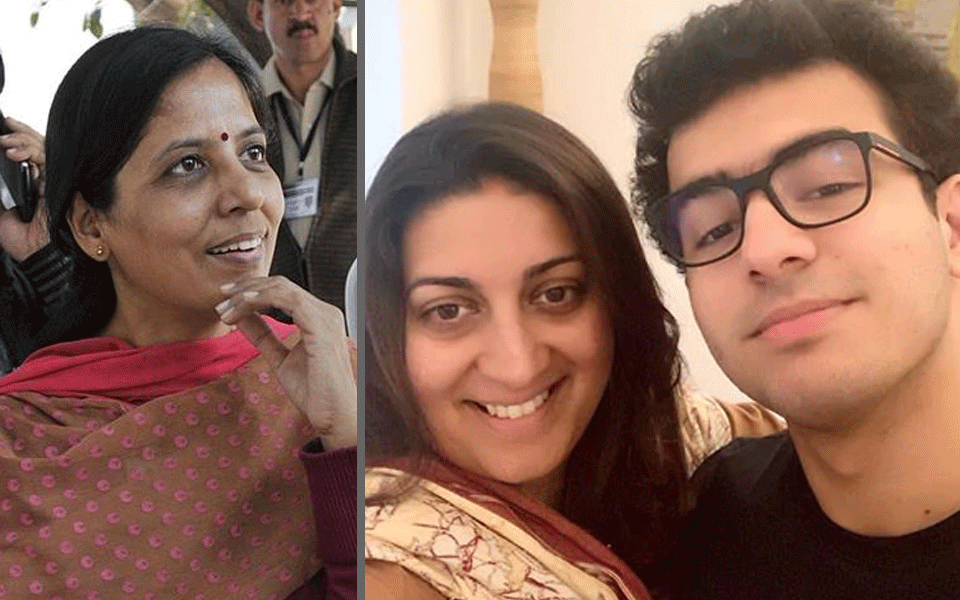
Smriti Irani Is A "Gloating Mom", Kejriwal's Wife Tweets "Gratitude" On Son's CBSE Class 12 Result
New Delhi, May 2: Girls outshone boys in the class 12 CBSE examination, the results of which where declared Thursday way ahead of schedule, with Ghaziabad's Hansika Shukla and Muzaffarnagar's Karishma Arora sharing the top rank with 499 out of 500 marks.
Girls have a pass percentage of 88.70, which is 9 percentage points more than that of boys' 79.40 per cent. Transgenders have a pass percentage of 83.3 per cent, according to officials of the Central Board of Secondary Education (CBSE).
In a first, the board announced the class 12 results for all the 10 regions within 28 days of the last date of the examination. Usually, the results are announced by third week of May.
According to the board officials, the results were announced earlier to ensure that they are available before undergraduate admission process begins in universities to avoid any hassle to students.
As the results were announced, the board's server crashed for a while, leaving parents and students restless.
Prime Minister Narendra Modi congratulated the students on clearing the exams.
"Congratulations to all my young friends who have successfully passed the CBSE Class XII examinations. My best wishes to them for their endeavours. Kudos also to their parents and teachers for the valuable support," he tweeted.
Union HRD Minister spoke to the toppers and congratulated them on their success.
"I have spoken to the toppers and congratulated them on their success. I congratulate all students who have cleared the exam and those who could not make it, they should not get demotivated and work harder for next attempts," he said.
The board's Thiruvananthapuram region has the highest pass percentage at 98.20 followed by Chennai at 92.93 per cent and Delhi at 91.87 per cent.
The pass percentage in Delhi has improved from last year's 89 per cent.
Foreign schools affiliated to the CBSE have also improved their pass percentage from 94.94 to 95.43 per cent.
A total 12.05 lakh candidates had appeared for the examination and an increase of 0.39 per cent in the pass percentage has been registered. Students from 12,441 schools had appeared for the exam at 4627 centres.
Kendriya Vidyalayas have achieved the best pass percentage at 98.54 per cent followed by Navodaya Vidyalyas at 96.62 per cent.
While 17,693 students scored above 95 per cent, 94,299 students scored between 90-95 per cent marks. A total of 99,207 students have been placed in compartment.
Rishikesh's Gaurangi Chawala, Raebareli's Aishwarya and Bhavya from Jind have bagged the second rank, scoring 498 out of 500 marks.
Neeraj Jindal and Mehak Talwar from Delhi are among 18 students to rank third in the exams.
Among others bagging the third rank are Ayushi Upadhyay (Lucknow), Rubani Cheema (Haryana), Vanshika Bhagat (Meerut), Parth Saini (Solan), Ananya Goel (Meerut), Dishank Jindal (Chandigarh), Divya Agarwal (Meerut), Shreya Pandey (Haldwani), Garima Sharma (Noida), Piyush Kumar Jha (Dehradun), Ibadat Singh Bakshi (Noida), Tisha Gupta (Rajasthan) and G Khartik Balaji from Chennai.
Ghaziabad's Aishna Jain, Arpit Maheshwari and Pragya Kharkwal, have also bagged the third rank with 497 out of 500 marks.
Delhi Chief Minister Arvind Kejriwal's son Pulkit Kejriwal scored 96.4 per cent and Union Minister Smriti Irani's son Zohr Irani secured 91 per cent marks.
Ok saying it out loud— proud of my son Zohr..not only did he come back with a bronze medal from the World Kempo Championship also scored well in 12 th boards. Best of 4– 91% .. special yahoo for 94% in economics.. Maaf karna ,today I’m just a gloating Mom?
— Chowkidar Smriti Z Irani (@smritiirani) May 2, 2019
With God’s grace and well-wishers’ blessings son has secured 96.4 percentile in CBSE Class XII. In high gratitude ??
— Sunita Kejriwal (@KejriwalSunita) May 2, 2019
Let the Truth be known. If you read VB and like VB, please be a VB Supporter and Help us deliver the Truth to one and all.
Sujit Nair raises concerns over speculation of DMK-AIADMK understanding to block TVK
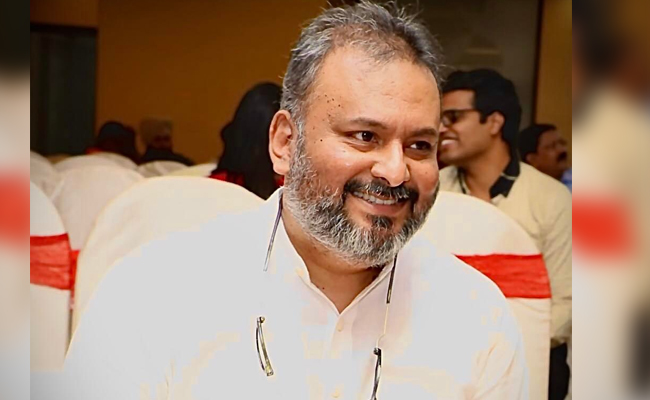
Chennai: Journalist and political commentator Sujit Nair has expressed concern over speculation that the Dravida Munnetra Kazhagam and the All India Anna Dravida Munnetra Kazhagam could explore a post-poll understanding to prevent Vijay-led Tamilaga Vettri Kazhagam from forming the government in Tamil Nadu.
In a social media post, Sujit Nair said the election verdict in Tamil Nadu reflected a clear public demand for political change and argued that the mandate should be respected irrespective of political preferences.
Referring to reports and political discussions surrounding a possible understanding between the DMK and AIADMK, he said he hoped such developments remained only speculative conversations and did not turn into reality.
Nair stated that if such an alliance were to take shape, it would raise serious questions about ideological politics in the country. He said TVK had emerged through a democratic electoral process and that the legitimacy to govern in a parliamentary democracy comes from the people’s verdict.
According to him, attempts to prevent an electoral winner from forming the government through unexpected political arrangements may be constitutionally valid, but many people could view them as politically opportunistic.
He further said that such a move could particularly affect the political image of the DMK, which has historically projected itself around ideology, social justice and opposition politics. Nair said that in ideological terms, the DMK appeared closer to TVK than to the AIADMK, and joining hands with its long-time political rival only to remain in power could weaken its broader political narrative.
He added that the same questions would apply to the AIADMK as well, as the party had spent decades positioning itself against the DMK and such an arrangement could create discomfort among its cadre and supporters.
Drawing a comparison with Maharashtra politics in 2019, Nair said he had expressed similar views when the Shiv Sena formed an alliance with the Indian National Congress and the Nationalist Congress Party after the Assembly elections.
He said post-poll alliances between long-standing political rivals often create a public perception that ideology and electoral mandates become secondary when political power equations come into play.
Nair also said such developments increase public cynicism towards politics and reinforce the belief among voters that ideology is often sidelined after elections.
He maintained that the Tamil Nadu verdict was emphatic and said respecting both the spirit and substance of the mandate was important for the credibility of democratic politics.