Gogoi slams Modi for silence over rape case against Minister
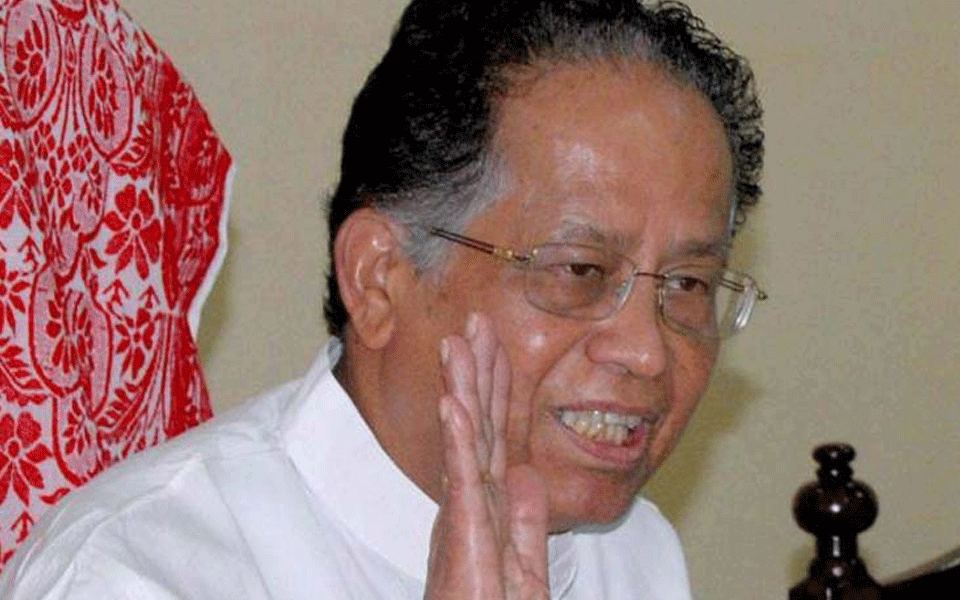
Guwahati, Aug 14 : Former Assam Chief Minister and Congress leader Tarun Gogoi on Tuesday questioned Prime Minister Narendra Modi on his silence over the rape case against Union Minister Rajen Gohain.
"The Prime Minister talks about 'Beti bachao'. However, we need to save our daughters from BJP leaders. How can the railway passengers feel safe when the Minister of State for Railways (Gohain) is involved in rape," Gogoi told the media.
"A case stands registered against the Minister but Modi and the Bharatiya Janata Party are silent over the issue," Gogoi said, adding that crime against women had increased across the state during the two-year BJP rule in Assam.
"There should be a thorough inquiry into the rape charge but unfortunately the Assam Police is also silent. Why does the Minister not deny that the voice on an audio clipping of a phone call is not his," Gogoi tweeted on Tuesday.
A woman from Nagaon district had on August 2 lodged an FIR against Gohain for allegedly raping her and her sister on the pretext of providing them jobs.
The woman had later submitted a letter to police that she wanted to withdraw her complaint. The case against Gohain was however registered.
An audio recording had later gone viral on Whatsapp, wherein the Minister reportedly threatened her husband with dire consequences.
Lok Sabha MP from Silchar and All India Mahila Congress chief Sushmita Deb also slammed the Minister.
"How can he continue as the Union Minister? He (Gohain) must resign till the inquiry is over. The audio clipping also makes it clear that he has misused his powers to silence the complainant and her family," Deb said while appealing to Chief Minister Sarbananda Sonowal to take action as the state Home Minister in the matter.
Deb also warned of a statewide agitation against Gohain if the victims were not given justice.
"For now, we are not undertaking any major protest since work related to the National Register of Citizens is on and Section 144 of the CrPC has been imposed. However, if no action is taken against Gohain, we will launch a mass agitation," the Congress leader added.
Let the Truth be known. If you read VB and like VB, please be a VB Supporter and Help us deliver the Truth to one and all.
TN polls: TVK pushes DMK behind with leads in 83 seats, AIADMK ahead in 54
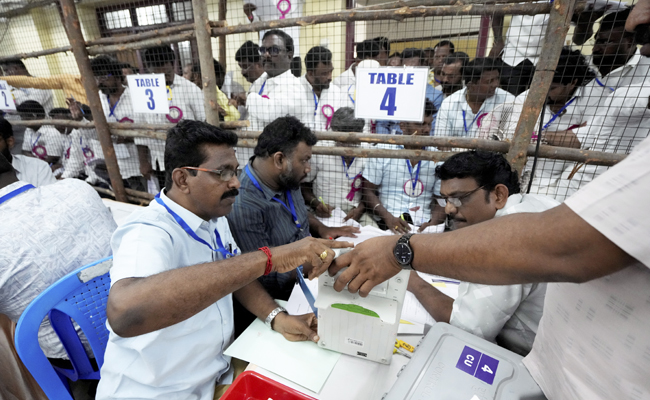
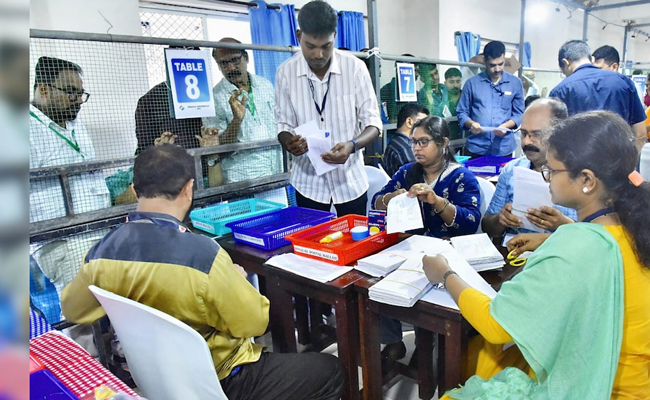
Chennai (PTI): New entrant TVK, led by actor-politician Vijay, was leading in as many as 83 constituencies on Monday when counting of votes polled in the April 23 Assembly polls was on across Tamil Nadu. The AIADMK was leading in 58 seats while the ruling DMK was ahead in 34, EC data showed.
About two hours after the postal ballots were counted and EVMs opened for multi-round counting, Vijay's Tamilaga Vettri Kazhagam surged ahead of its Dravidian rivals-- the DMK and the AIADMK, with the ruling party struggling to catch up.
If the trends maintain, Vijay could as well ensure the biggest electoral upset, something in lines with the "1967,1977" wins he had referred to in his campaign speeches.
While the Dravidian stalwart CN Annadurai brought the first non-Congress government in Tamil Nadu post-independence in 1967, the charismatic MG Ramachandran (MGR) installed the maiden AIADMK government 10 years later, unseating then DMK government under M Karunanidhi. TVK was leading in most Chennai segments, all considered DMK strongholds and currently represented by the party in the 234-member House.
A poor show by DMK could belie most exit polls giving an edge to it, riding on the number of populist measures Chief Minister M K Stalin had implemented in his five year "Dravidian model," inclusive governance.
According to EC and TV reports, 15 cabinet ministers, including Stalin were trailing. His son and deputy CM Udhayanidhi was also behind in his incumbent Chepauk-Tirvuvallikeni seat, according to a number of reports.
Stalin was trailing behind TVK's VS Babu by 1234 votes in Kolathur segment. Vijay was ahead in Tiruchirappalli East by over 3,000 votes at the end of two rounds of counting, according to EC data.
BJP is trailing in 26 constituencies and it is ahead in Thali segment alone. TVK is ahead in constituencies including Ponneri, Tiruvallur, Poonamalle, and Avadi.
AIADMK is leading in segments including Katpadi, and Guidyattam and party chief Edappadi K Palaniswami is ahead in Edappadi segment by 7003 votes.
DMK was leading in segments including Vellore, Anaikattu and Rishivandiyam.