Gold falls to Rs 1,25,900/10 g in Delhi as trade optimism dulls safe haven demand

New Delhi (PTI): Gold prices declined by Rs 700 to Rs 1,25,900 per 10 grams in the national capital on Monday, tracking weak global trends as easing US-China trade tensions dented safe-haven demand.
According to the All India Sarafa Association, the yellow metal had climbed Rs 1,000 to Rs 1,26,600 per 10 grams on Saturday.
Gold of 99.5 per cent purity also fell by Rs 700 to Rs 1,25,300 per 10 grams (inclusive of all taxes). It had settled at Rs 1,26,000 per 10 grams in the previous session.
"Gold resumed trading on a weaker note on Monday as signs of easing US-China trade tensions have increased investors' interest in riskier assets, creating a negative impact on precious metals," Saumil Gandhi, Senior Analyst - Commodities at HDFC Securities, said.
In the local bullion market, silver prices slumped sharply by Rs 4,250 to Rs 1,51,250 per kg (inclusive of all taxes) on Monday. The white metal had ended at Rs 1,55,500 per kg, up by Rs 2,900 on Saturday.
On Sunday, top economic officials from Washington and Beijing agreed on the framework of a potential trade deal, which is expected to be discussed when US President Donald Trump meets his Chinese counterpart, Xi Jinping, in South Korea later this week.
In the overseas markets, spot gold extended the losses for the second straight day, by dropping USD 97.86, or 2.38 per cent to USD 4,015.55 per ounce.
Gandhi said investors continued to take profits and withdraw from gold-backed exchange-traded funds, adding further pressure on the bullion prices.
"We believe bullion will remain under selling pressure in the short term, and the downside will intensify once spot gold slips below the USD 4,000 per ounce level," he noted.
Spot silver was quoted 2.03 per cent lower at USD 47.60 an ounce in overseas markets.
Investors are shifting their focus to central bank meetings later this week.
"The US Federal Reserve is largely anticipated to cut interest rates by 25 basis points after weaker than expected inflation data while the European Central Bank and Bank of Japan are expected to maintain current policy rates," Renisha Chainani, Head - Research at Augmont, said.
Let the Truth be known. If you read VB and like VB, please be a VB Supporter and Help us deliver the Truth to one and all.
No unannounced load shedding in Kerala, outages due to overload, says Minister
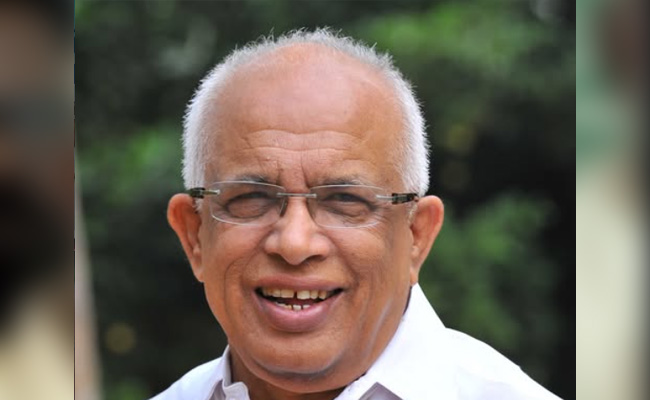
Palakkad (PTI): Kerala Electricity Minister K Krishnankutty on Saturday said there was no unannounced load shedding in the state, attributing recent power interruptions to temporary overload caused by high consumption.
Clarifying concerns raised from various parts of the state, the minister said the disruptions are not deliberate but occur when demand peaks, particularly between 10 pm and 11 pm.
"It is not being done intentionally. Power consumption has risen sharply, and when there is excessive and indiscriminate usage, the system experiences overload, leading to natural supply interruptions," he told reporters here.
His remarks come amid complaints that several areas have been witnessing frequent power cuts, often lasting around 15 minutes and occurring multiple times during the night.
Krishnankutty said the state's power demand has crossed 6,195 MW, putting pressure on the supply system. He added that around 70 per cent of Kerala's electricity is procured from outside, and existing power banking arrangements have been exhausted.
"We have approached the Regulatory Commission seeking permission to purchase more power. However, this will come at a higher cost," he said.
The minister said the government is trying to avoid increasing electricity tariffs and urged consumers to exercise restraint in usage to help manage the situation.
Responding to opposition criticism over the ruling LDF's earlier claims of a decade without power cuts, he said the current situation is not unique to Kerala.
A power crisis is emerging across the country, he said, and sarcastically asked the Opposition to take note of the role of natural factors in this.
Krishnankutty expressed confidence that the situation would improve within two days, while cautioning that long-term energy security would depend on enhancing in-state power generation.
He also warned that future generations could face serious challenges if adequate electricity production capacity is not developed within Kerala.