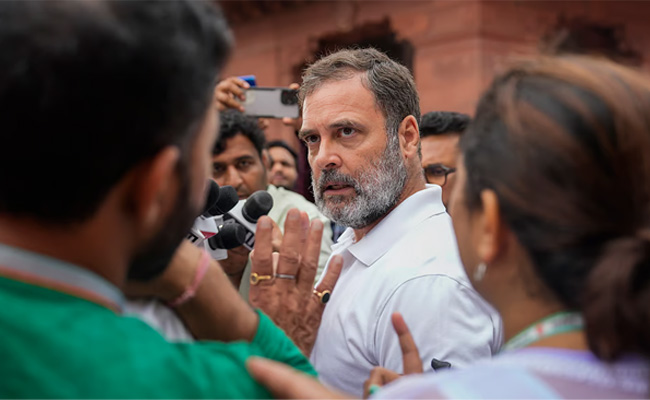
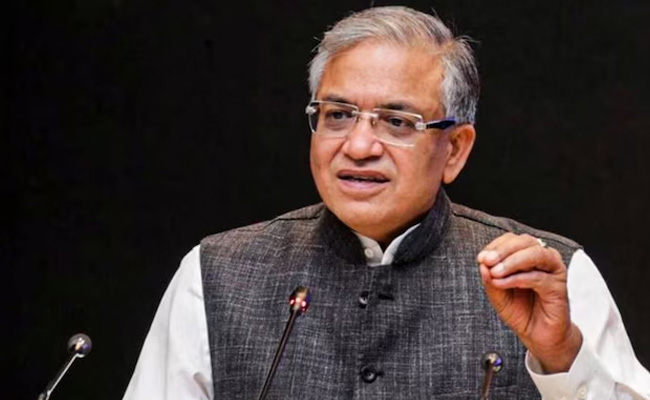
Good beginning, talks to proceed: Manipur CM on meeting with Kuki Zo Council delegation

Imphal (PTI): Manipur Chief Minister Y Khemchand Singh on Sunday said his meeting with a Kuki Zo Council delegation was a "good beginning" at restoring peace in the state and rebuilding trust between Meiteis and Kukis.
A day after holding the closed-door meeting with the delegation in Guwahati, he told reporters here that "the talk between the Kuki Zo Council (KZC) and the state government for the first time in nearly three years is a really good thing".
"The talks will proceed," the chief minister said.
More than 260 people have been killed and thousands rendered homeless in ethnic violence between Meiteis and Kuki-Zo groups since May 2023.
The KZC, in a statement on Sunday, said the meeting commenced at 7 pm on Saturday and lasted around 1 hour and 45 minutes. The interaction was largely an ice-breaking session, it said.
Addressing the media on Sunday, the chief minister said, "In Manipur's situation, the most saddening part is that internally displaced persons (IDPs) are unable to return to their native homes..
"What is of utmost importance for their return is to rebuild the trust between the two communities. How long can central forces keep on guarding the population in some places? What is required is for the communities to forget the conflict and rebuild trust," Singh said.
Informing the reporters that the issue of IDPs of both sides returning to their places featured in the talks, the chief minister added that "at least we need to have a good beginning".
"I would like to thank the Kuki Zo Council for accepting the invitation for talks. We held the talks with the objective of bringing peace..
"My appeal to all is to restore peace and proceed with the concept of forgive and forget. My approach is bringing peace and building trust. There is no demand or commitment," Singh said.
Responding to media queries on the demand for a separate administration, he said, "Prime Minister Narendra Modi has already announced that the territorial integrity of Manipur would remain intact.
As to the buffer zones terminology, Singh said, "There is no buffer zone for the government. During talks, I refer to it as a sensitive zone. Since there is no trust, security forces engage in checking at such sensitive zones..
He, however, asserted that "now is not the time for any kind of confrontation. If we want to bring peace, we must work honestly and more importantly, we must not focus on someone said this or someone said that".
The Kuki Zo Council, on the other hand, said that its delegation raised several key issues during the meeting in Guwahati on Saturday, all of which were attentively heard by the chief minister.
"Prominent among these (issues raised) were the urgent need to de-escalate the ongoing tensions between the Kuki and Tangkhul communities, and the imperative of ensuring justice for the victims of the conflict as a fundamental prerequisite for any meaningful peace and reconciliation process," it said.
The delegation also emphasised the importance of maintaining the sanctity of the buffer zone until a political settlement is reached and stressed the need to expedite a resolution to the ongoing Suspension of Operations talks to ensure durable and lasting peace in the region, the KZC statement said.
"The chief minister, in turn, shared his concerns, commitments, and the steps undertaken by his government in restoring peace and normalcy in Manipur. He expressed high appreciation for the KZC's initiative and its bold step in engaging with him during this challenging period," it said.
Let the Truth be known. If you read VB and like VB, please be a VB Supporter and Help us deliver the Truth to one and all.
Lebanon appoints new representative for talks with Israel, rejects linkage to Iran
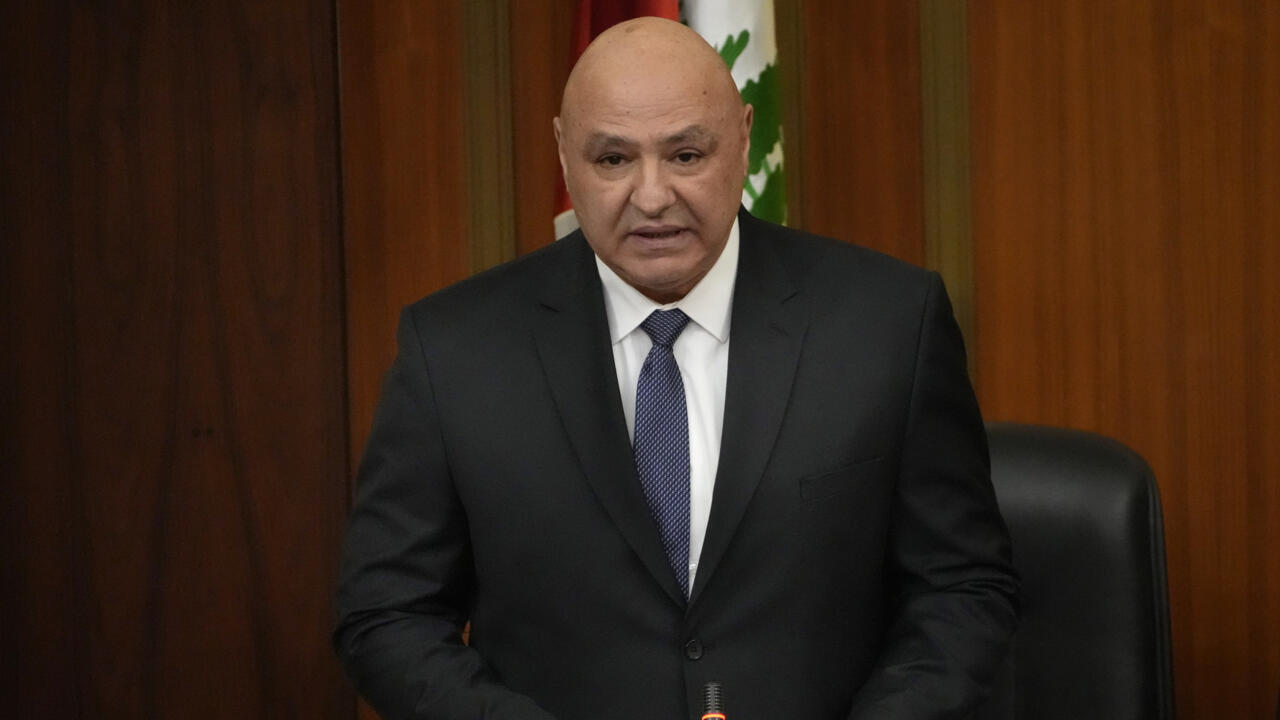
Beirut: Lebanon’s has moved to underline its independent position in ongoing regional developments, amid attempts to link the country to the broader conflict involving Iran, the United States and Israel.
President Joseph Aoun, while announcing the appointment of former US ambassador Simon Karam as Lebanon’s representative in talks with Israel, made it clear that Karam would be the sole representative for Lebanon and that there would be no substitute.
The move comes in response to what the Lebanese officials see as efforts by Iran to tie Lebanon’s situation to the wider regional conflict. Iran had indicated that there would be no ceasefire involving the US, Israel and Iran unless it also included a ceasefire in Lebanon.
Some groups, including Hezbollah and its supporters, had expressed support for linking the situations, citing concerns that the Lebanese government has limited leverage in negotiations with Israel. Lebanon is not formally a party to the conflict, and its army is considered weak.
However, others, including Prime Minister Nawaf Salam, have opposed this approach. They view Iran’s stance as an attempt to influence Lebanon’s internal affairs and see it as undermining the country’s sovereignty.
Officials backing the government’s position say the move is aimed at reaffirming Lebanon’s sovereignty and ensuring that decisions about peace and ceasefire within the country are not dictated externally.
They also see it as a safeguard, so that any breakdown in talks between the US, Israel and Iran does not automatically lead to renewed conflict in Lebanon.