Google celebrates birth centenary of poet Amrita Pritam with special doodle
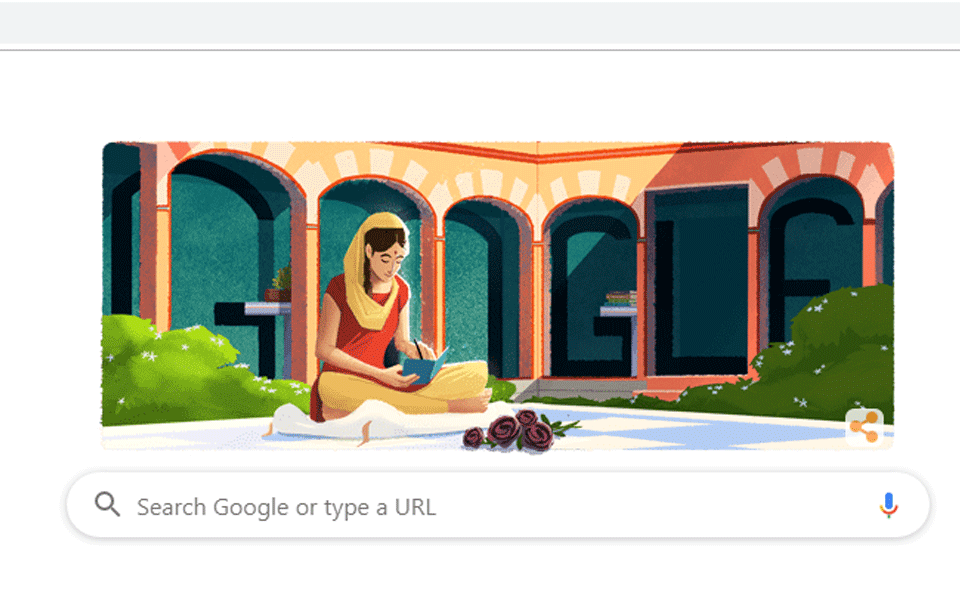
New Delhi: Internet giant Google on Saturday marked the 100th birth anniversary of celebrated poet and author Amrita Pritam with a special doodle tribute that had a touch of Punjabi culture.
Pritam, one of the most prominent writers and poets of the 20th century, is best remembered for her Punjabi poem 'Ajj aakhaan Waris Shah nu' ('Ode to Warish Shah'), which poignantly captures her anguish over the massacres during the Partition in 1947.
Born on August 31, 1919 in Gujranwala (now in Pakistan) of Punjab province in undivided India, she migrated to India after the Partition.
In the doodle, the poet-author is seen wearing a traditional Punjabi salwar suit, sitting beside a bunch of roses, as she pens something in a diary.
In 'Ode to Warish Shah', an 18th century poet, she captures the pangs and pains of people and the country being cleaved, and one of the moving lines from the poem reads -- "Arise, o friend of the afflicted; arise and see the state of Punjab, Corpses strewn on fields, and the Chenaab flowing with much blood".
Among her plethora of novels, 'Pinjar' (The Skeleton), written against the backdrop of the Partition, is considered to be one of the best literatures written on the subject, with a memorable character 'Puro'.
The novel was later adapted into an award-winning film 'Pinjar' in 2003. In 1947 at the time of the Partition she moved to New Delhi, where she began to write in Hindi, according to the website of SAWNET (South Asian Women's Network).
A number of her works have been translated into English, including her autobiographical works "Black Rose" and "Rasidi Ticket" ('Revenue Stamp'), it said.
She became a published writer in 1936, when she was barely 17 years old. And, she joined the Progressive Writers' Movement to inspire people through her literary works.
Pritam received Sahitya Akademi award and Padma Vibhushan, among many other accolades for here literary contribution, according to Culture India website.
Let the Truth be known. If you read VB and like VB, please be a VB Supporter and Help us deliver the Truth to one and all.
Anbumani asks PM Modi to ban sale of cigarettes for those born after 2009
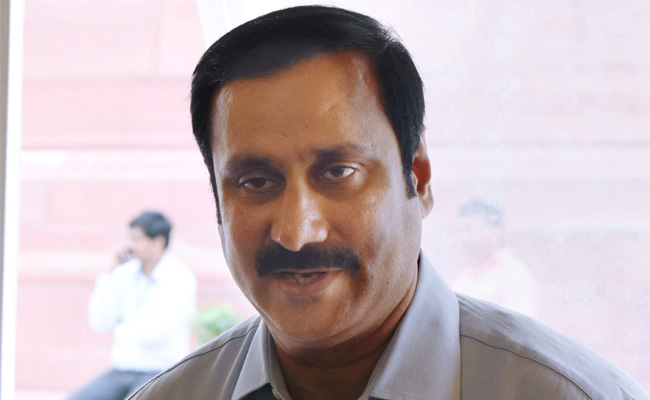
Chennai (PTI): PMK leader Anbumani Ramadoss on Saturday urged Prime Minister Narendra Modi to take legislative measures to prohibit smoking and the sale of cigarettes to individuals born on or after January 1, 2009, thereby creating a smoke-free generation.
Anbumani, former Union minister for health and family welfare, said, "Once implemented, it (ban on cigarettes) will ensure that future generations are legally prevented from ever accessing tobacco products", he said in a letter to Modi.
"I write to you with a deep sense of urgency and responsibility, drawing your kind attention to a critical public health issue that continues to endanger the lives of millions of Indians, particularly among the younger generation who are affected by cigarette smoking", he claimed.
Stating that India unfortunately bears a disproportionately high burden of tobacco-related morbidity and mortality, he said, adding that, according to global health estimates, nearly 267 million Indians, approximately one in five citizens, use tobacco.
"Each year, tobacco consumption directly accounts for over 1.35 million deaths, while exposure to second-hand smoke contributes to a total of approximately 2.3 million deaths annually", he said, adding, "these figures are alarming and reflect a public health crisis of immense magnitude".
He pointed out that Scientific evidence unequivocally establishes tobacco use as a leading cause of cancer and numerous non-communicable diseases, including cardiovascular ailments, chronic respiratory diseases such as COPD, and multiple forms of malignancies. "In India alone, tobacco is responsible for nearly 40–50 per cent of all cancer cases, with over 4.7 lakh deaths annually attributed to tobacco-induced cancers", he added.
"In this context, I strongly urge the Union government to consider enacting a transformative law similar to that of the United Kingdom, that permanently prohibits the sale and consumption of tobacco products for individuals born on or after a specified year (such as 2009). Such a generational ban would mark a decisive step towards eliminating tobacco use in India over time", he said.