Google launches project to preserve, digitise Indian Railways' culture

New Delhi, Sep 28 : In a first-of-its-scale heritage mapping and digitisation project, Google and Ministry of Railways on Friday launched a project that aims to preserve the cultural heritage of the Indian Railways.
The two-year digitisation project "The Railways-Lifeline of a Nation" is a comprehensive digital document viewable on Google's Arts and Culture website. It was launched at the National Rail Museum here.
The project is divided into "Journeys", "People", "Heritage" and "Engineering" sections, each containing visual and textual narratives that rail enthusiasts can access for free.
It comprises photographs, documentaries, text, virtual tours, 360-degree videos, online exhibits, and maps, pertaining to the Indian Railways.
Minister of Railways, Piyush Goyal via video-conferencing said that the project is an experience for the "1.3 billion people of India about what the 1.3 million railway employees are doing for serving them".
"From the Nilgiri mountains to the Chhatrapati Shivaji Terminus Station, let the people of India relive their childhood... through the train journey to Madhira and through the Darjeeling toy train; let's show them the Kangra Valley, the Kalka-Shimla experience so that it could be enjoyed by someone in Coimbatore or Ooty," he said.
Along with several railway lines, the project also documents stories of 32 railway employees including engineers, ticket checkers, trackmen, and shunters.
Also capturing stories from the Indian Railways are other sections like the street art, literature, Bollywood, music, and sports, which demonstrate the inseparability of trains and culture.
The online project will also materialise as digital exhibits at 22 stations in India including New Delhi, Bengaluru, Coimbatore, Guwahati, Howrah, Secunderabad and Varanasi, Google said.
The event also saw the inauguration of a permanent exhibition of these online resources in the National Rail Museum premises.
Notably, the Indian Railways started its journey in 1853 between Boribunder and Thane, and has expanded to be the fourth largest railway network in the world.
Let the Truth be known. If you read VB and like VB, please be a VB Supporter and Help us deliver the Truth to one and all.
TN Assembly elections: Eight-month pregnant homemaker wins Thiru Vi Ka Nagar seat for TVK
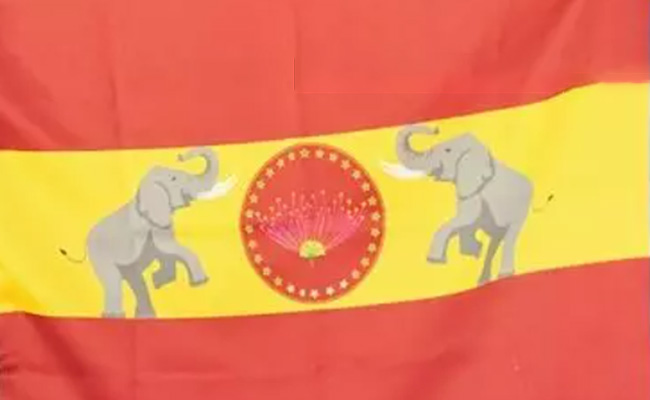
Chennai (PTI): Before giving birth, she had already delivered a mandate—a symbol of hope for Thiru Vi Ka Nagar.
Echoing Delhi’s 2013 “common citizen” political churn associated with the rise of the Aam Aadmi Party (AAP), an eight-month-pregnant homemaker, M R Pallavi, has been elected as an MLA from Chennai’s Thiru Vi Ka Nagar constituency, emerging as one of the notable first-time faces of the Vijay-led TVK in the recently held Tamil Nadu Assembly elections.
In the narrow lanes of Thiru Vi Ka Nagar, a steady stream of media personnel has been making their way to Pallavi’s residence—a scene reminiscent of the result day in Delhi when journalists thronged the modest home of Rakhi Birla, who had won from Mangolpuri on an AAP ticket.
Pallavi, 36, a homemaker educated up to class XII, defeated the DMK candidate K S Ravichandran by a margin of 22,333 votes in the reserved Thiru Vi Ka Nagar Assembly constituency.
Tamilaga Vettri Kazhagam emerged as the single largest party by winning 108 seats, while DMK and AIADMK got 59 and 47, respectively.
Pallavi’s victory has drawn attention due to her personal circumstances. She campaigned extensively while eight months pregnant, going door-to-door to reach voters.
According to local accounts, she even fainted once during the campaign but continued her outreach.
She has not spoken to the media following her victory, as doctors have advised her to rest. Her husband, Rajesh, briefly recounted her campaign efforts.
A self-professed admirer of actor-turned-politician Vijay, Pallavi joined TVK soon after its formation and is now among its first-time legislators.
Doctors have advised her to be hospitalised around May 20, as she is expecting her second child. Ahead of that, voters in Thiru Vi Ka Nagar have entrusted her with representing them in the state Assembly.
Political observers say the rise of candidates like Pallavi signals a possible shift in Tamil Nadu’s political landscape, with voters backing a new party and candidates from non-traditional backgrounds.