Google Takes the Blame for UIDAI Number Showing Up in People's Phones
New Delhi, Aug 03: Google has finally put the controversy of UIDAI contact showing up seemingly randomly in people's phones at rest and confirmed that the issue didn't result from any directive by any authority in India but due to a software issue in Android. The controversy under which UIDAI's now-decommissioned toll-free number was spotted by many mobile phone users in the country can be traced back to 2014, Google said, when the then UIDAI number and the 112 distress helpline number were "inadvertently coded" within the Android setup wizard and has remained on devices, the company confirmed to Gadgets 360 via an emailed statement late on Friday.
"Our internal review has revealed that in 2014, the then UIDAI helpline number and the 112 distress helpline number were inadvertently coded into the SetUp wizard of the Android release given to OEMs for use in India and has remained there since," a Google spokesperson said in a statement emailed to Gadgets 360. "Since the numbers get listed on a user's contact list, these get transferred accordingly to the contacts on any new device. We are sorry for any concern that this might have caused, and would like to assure everyone that this is not a situation of any unauthorised access of their Android devices. Users can manually delete the number from their devices."
The spokesperson also confirmed that the issue is set to be fixed in an upcoming release of the setup wizard that will be provided to OEMs over the next few weeks.
If you are wondering how iPhone users reported the number showing up in their contacts, it's likely down to the fact that they synced their contacts with a Gmail account that already had the said contact added to its list after being used on an impacted Android device.
The controversy arose after a large number of mobile phone users on social media reported the sudden placement of a contact featuring the old helpline number of Unique Identification Authority of India (UIDAI). UIDAI refuted media reports in a series of tweets earlier on Friday and highlighted that the helpline number spotted by the users, which was 18003001947, was no longer a valid toll-free number, and it was changed to 1947 two years ago. "UIDAI has reiterated that it has not asked or advised anyone including any telecom service providers or mobile manufacturers or Android to include 18003001947 or 1947 in the default list of public service numbers," the authority behind Aadhaar had said.
It was initially speculated that the helpline number was pushed from the telcos. However, the Cellular Operators Association of India (COAI) denied any role in the matter by its associated telcos while responding to an emailed query. "The inclusion of a certain unknown number in the phonebooks of various mobile handsets is not from any telecom service provider," COAI had said
Courtesy: ndtv.com
Let the Truth be known. If you read VB and like VB, please be a VB Supporter and Help us deliver the Truth to one and all.
MI beat PBKS by 6 wickets
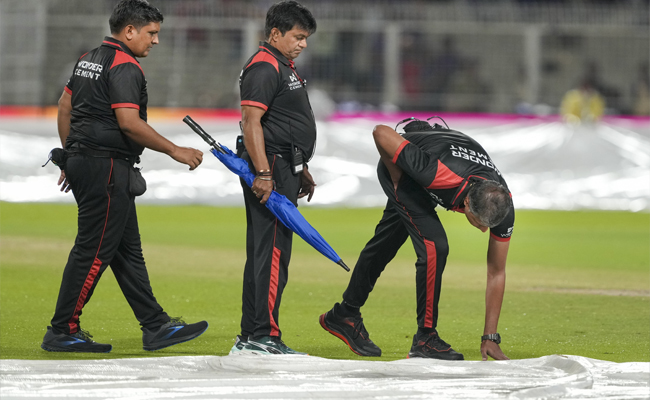
Dharamsala (PTI): Already out of play-offs race, Mumbai Indians beat Punjab Kings by six wickets in their IPL match here on Thursday.
Tilak Varma remained not out on 75 off 33 balls as MI chased down the target of 201 with one ball to spare. Will Jacks gave Varma company with 25 not out off 10 balls as MI reached 205 for 4 in 19.5 overs.
For Punjab, Azmatullah Omarzai was the most successful bowler with figures of 2/36.
Earlier, Shardul Thakur returned with excellent figures of 4 for 39 for MI, who are already out of the IPL play-offs race, but Punjab Kings still scored 200 for 8.
Deepak Chahar (2/36), Corbin Bosch (1/42) and Raj Bawa (1/11) were the other MI wicket takers.
Brief Scores:
Punjab Kings: 200 for 8 in 20 overs (Prabhsimran Singh 57; Shardul Thakur 4/39).
Mumbai Indians: 205 for 4 in 19.5 overs (Tilak Varma 75 not out; Azmatullah Omarzai 2/36).