Gopal Rai calls meeting of depts for effective implementation of air pollution control plan
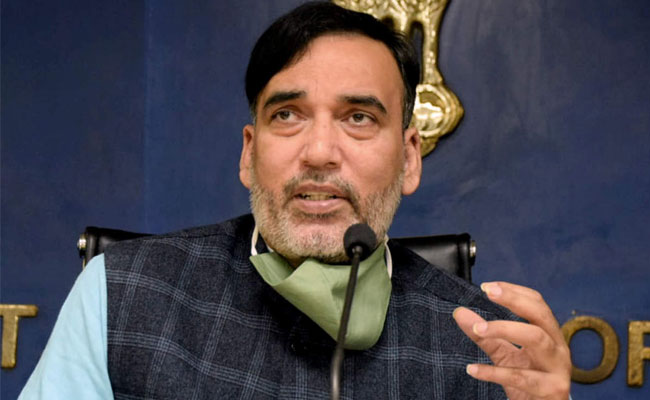
New Delhi (PTI): Delhi Environment Minister Gopal Rai will on Thursday hold a meeting with departments on the effective implementation of measures outlined in the Centre's air pollution control plan, officials said. The meeting will be held at the Delhi Secretariat at 1 pm, an official said.
Rai had previously reprimanded the departments concerned for their negligence in executing the air pollution control plan and urged them to establish a monitoring mechanism for overseeing the teams responsible for enforcing anti-air pollution measures.
Delhi's air quality fluctuated between the 'very poor' and 'severe' categories on Thursday due to unfavourable meteorological conditions hindering the dispersion of pollutants.
The capital's Air Quality Index stood at 393 at 9 am on Thursday.
Its 24-hour average AQI, recorded at 4 pm every day, stood at 401 on Wednesday. It was 397 on Tuesday. It was 358 on Monday and 218 on Sunday, 220 on Saturday, 279 on Friday and 437 on Thursday.
Recent findings from a joint project by the Delhi government and IIT-Kanpur revealed that vehicular emissions accounted for about 38 per cent of the national capital's air pollution on Wednesday. This is projected to rise to 40 per cent on Thursday.
Calm winds and low temperatures are allowing accumulation of pollutants and relief is unlikely over the next few days, an official at the India Meteorological Department (IMD) said.
Let the Truth be known. If you read VB and like VB, please be a VB Supporter and Help us deliver the Truth to one and all.
Karnataka: College student dies by suicide in Dharwad, 3 policemen suspended
Dharwad (Karnataka) (PTI): A college student allegedly died by suicide here, following which three policemen were suspended over allegations of harassment linked to his death by the victim's family.
Aditya Myageri, a BSc student at a private college here, was among 18 students detained by the Vidyagiri police on April 25 during an anti-drug drive, police said on Wednesday.
He hailed from Belur village in Bagalkot district, but was staying with his friends at a rented accommodation in Girinagar area of Dharwad city, police said.
Among the 18 students tested, Aditya was among the 10 who had tested negative for ganja consumption and was subsequently released.
Some of his roommates, however, tested positive.
According to police, Aditya's family alleged that despite testing negative, he was harassed by police. They also claimed some policemen demanded Rs 2,000 to settle the matter and threatened legal action if he failed to pay.
He had called his mother asking for money, but she could not arrange it immediately, the family claimed.
On Monday night, Aditya allegedly died by suicide by hanging from a ceiling fan at his rented accommodation, with his family alleging police harassment and pressure over demand for money drove him to the extreme step, a senior police officer said.
Police Commissioner N Shashi Kumar told PTI that an unnatural death case has been registered at Vidyagiri police station. Three policemen have been suspended over the allegations, and further investigation is underway.