Government committed to quota in faculty positions: Javadekar
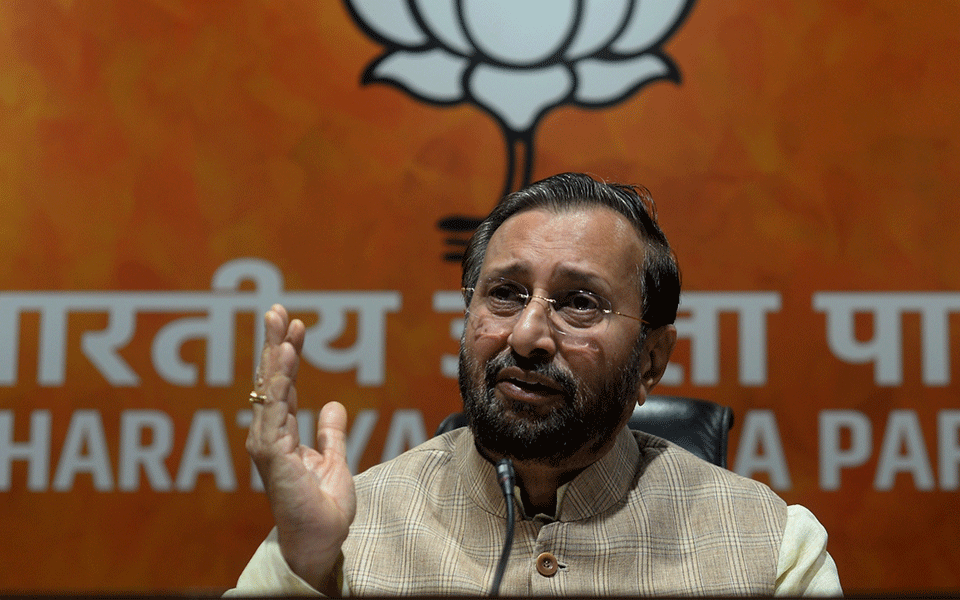
New Delhi, July 19 : Union HRD Minister Prakash Javadekar on Thursday said the Modi government was committed to reservation in the faculty positions of universities and that it does not agree with a court order quashing the 50 per cent reservation.
"The University Grants Commission (UGC) was forced to issue a 13-point roster after an Allahabad High Court ruling last year. But we do not agree with the court order," Javadekar said.
"We have filed two SLPs (special leave petitions). The hearing is scheduled on August 13," Javadekar told the Rajya Sabha after some members raised the issue during Zero Hour.
He said that the Human Resources Development (HRD) Ministry had already put on hold all interviews for recruitment for teaching positions in universities and colleges which were to be held under the roster pending a decision on the SLPs.
"We are hopeful we will be able to save reservation for Scheduled Castes, Sscheduled Tribes and OBCs. We will neither let it go, nor let others abolish it," he said.
The issue was raised by Samajwadi Party leader Ram Gopal Yadav. He termed the March 5 UGC roster that kept nine out of every 13 teaching positions as unreserved, giving three to OBCs and one to Scheduled Castes, as a "conspiracy" to deprive the SC, ST and the Other Backward Classes (OBCs) of their due as guaranteed by the Constitution.
Yadav was seconded by senior Congress leaders Ghulam Nabi Azad and P.L Punia besides a number of other members siding with the cause.
The Allahabad high Court had in April last year struck down a UGC circular prescribing institution-wise reservation to fill vacant faculty positions. The Supreme Court too upheld the High Court's order, prompting the UGC to issue a circular for reserving seats for SC, ST and OBCs department-wise.
Let the Truth be known. If you read VB and like VB, please be a VB Supporter and Help us deliver the Truth to one and all.
Gehlot changes profile pic to 'Save Aravalli', asks Centre to reconsider definition
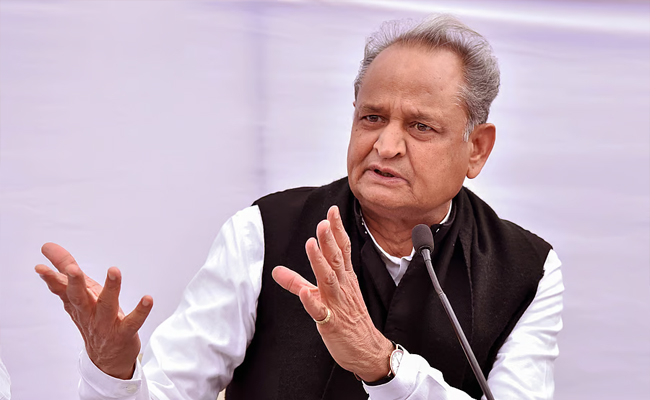
Jaipur (PTI): Congress leader Ashok Gehlot on Thursday urged the Centre to reconsider its definition of the Aravallis, warning that any damage to the mountain range posed a serious threat to the ecological future of north India.
Gehlot, a former Rajasthan chief minister, changed his social media profile picture in support of the nationwide 'SaveAravalli' campaign amid growing debate over mining and environmental safeguards in the Aravalli Range.
It was his symbolic protest against the new interpretation under which hills lower than 100 metres are no longer being recognised as part of the Aravalli system, he said.
ALSO READ:In open letter, RJD MP appeals to parliamentarians to oppose VB-G RAM G Bill
"The Aravalli cannot be judged by tape measures or height alone. It must be assessed by its ecological importance," Gehlot said, adding that the revised definition raised "a big question" over the future of north India.
Appealing to the Centre and the Supreme Court, Gehlot said the issue must be reconsidered in the interest of future generations and environmental security. He also urged citizens to participate in the campaign by changing their display pictures online to draw attention to the issue.
He said the Aravalli range functioned as a natural green wall against the expansion of the Thar desert and extreme heatwaves, protecting Delhi, Haryana and western Uttar Pradesh. Opening up smaller hills and so-called gap areas for mining would allow desertification to advance rapidly, he warned.
Gehlot also flagged concerns over air pollution, saying the hills and forests of the Aravallis acted as the "lungs" of the National Capital Region by checking dust storms and absorbing pollutants.
"When pollution levels are so alarming even with the Aravalli standing, one can imagine how disastrous the situation will be without it," he said.
Highlighting the water crisis, the former chief minister said the rocky terrain of the Aravallis played a crucial role in groundwater recharge by channelising rainwater underground.
"If the hills are destroyed, drinking water shortages will intensify, wildlife will disappear and the entire ecology will be pushed into danger," he said.
Gehlot argued that, from a scientific perspective, the Aravallis was a continuous chain and that even smaller hillocks were as vital as higher peaks.