Govt curtails tenure of two senior IPS officers in CBI
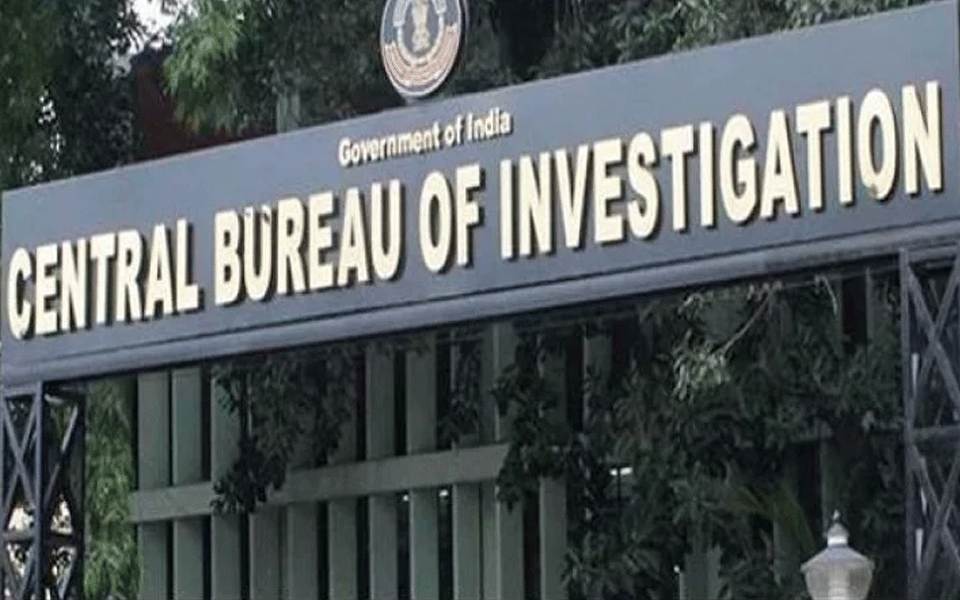
New Delhi: The tenures of two senior IPS officers -- Anish Prasad and Abhay Singh -- at the Central Bureau of Investigation (CBI) have been curtailed, according to a Personnel Ministry order issued Wednesday.
Prasad, a 2003 batch IPS officer of Tripura cadre, was reportedly at the centre of controversy involving the CBI's two former top officers -- ex-chief Alok Kumar Verma and the then Special Director Rakesh Asthana.
Both Verma and Asthana had accused each other of corruption.
Prasad, who is at present Deputy Director (Administration) in the central probe agency's headquarters here, had earlier worked in the surveillance unit of the CBI, officials said.
At the time of his tussle with Verma, Asthana had written to Central Vigilance Commission and accused the agency of snooping on his family members, they said.
Singh, a 2002 batch IPS officer of Madhya Pradesh cadre, was posted in Ranchi.
The Appointments Committee of the Cabinet has approved premature repatriation of Prasad and Singh with immediate effect, the order said without citing further details.
Both of them were working at the level of Deputy Inspector General (DIG).
While Prasad has been asked to go back to his cadre state of Tripura, the services of Singh has been placed at the disposal of the Union Home Ministry, the order said.
The government had in January curtailed the tenure of four CBI officers -- Asthana, Joint Director Arun Kumar Sharma, Deputy Inspector General Manish Kumar Sinha and Superintendent of Police Jayant J Naiknavare.
CBI Joint Director Praveen Sinha, who was looking after the probe in coal scam cases, has been elevated as the Additional Director, the order said.
Sinha is a 1988 batch IPS officer of Gujarat cadre.
Amit Kumar, who was working as Deputy Inspector General in the CBI, has been appointed Joint Director in the CBI.
Kumar, a 1998 batch IPS officer of Chhattisgarh cadre, was working in the agency's policy division.
Let the Truth be known. If you read VB and like VB, please be a VB Supporter and Help us deliver the Truth to one and all.
Unruly scenes witnessed in Punjab Assembly
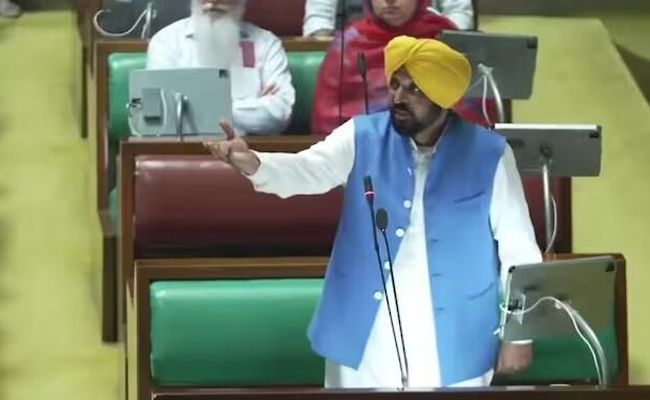
Chandigarh (PTI): The Punjab Assembly on Friday witnessed high drama on Friday after Congress MLA Sukhpal Singh Khaira made an allegedly objectionable remark against Chief Minister Bhagwant Mann during an intense argument over the alleged use of mobile phone in the house by the legislator.
During the one-day special session of the Punjab Vidhan Sabha here, Mann accused Khaira of using a mobile phone when Speaker Kultar Singh Sandhwan was reading out an official resolution on the revision of wages.
After rising from his seat, the chief minister pointed to the speaker, claiming that Khaira is busy on his mobile phone and urged him to ask the Congress MLA what Sandhwan had said about the resolution.
The speaker then asked Khaira to maintain order in the house and listen to the resolution carefully.
Mann then asked Khaira, "Why don't you go out and then use it (mobile phone)," which led to a strong verbal altercation during which the opposition MLA hurled an accusation against the chief minister. Meanwhile, the speaker appealed for order and insisted that the chair be addressed.
However, both Mann and Khaira continued arguing and could be seen pointing fingers at each other as the proceedings of the house were disrupted.
The AAP MLAs also rose from their seats with Finance Minister Harpal Singh Cheema condemning Khaira for his conduct and demanded action against him.
Cheema further alleged that Khaira "always tries to disturb the house" as he spoke about his conduct in the assembly.
The incident occurred as an official resolution on the revision of wages was presented at the special session by Labour Minister Tarunpreet Singh Sond who said it paid homage to labourers on the International Workers' Day.
"Workers are the axis of construction of the nation, the community, the state and society. Every construction project succeeds only through their blood and sweat," the resolution read.
As per the resolution, "The base rate of minimum wages for the working class in Punjab was last revised in the year 2012. Although the dearness allowance has continued to increase since 2012, there has been no increase in the base rate of minimum wages.
On this sacred occasion of May Day, in this special session of the legislative assembly, this house proposes to revise and increase the minimum wages of labourers and strongly recommends to the government to take a decision regarding the increase of minimum wages for workers, so that the contributions of the workers can be acknowledged." PRK