Govt bans PFI, associates for alleged terror activities
New Delhi(PTI): The Popular Front of India, which has allegedly been involved in a series of violence and has "links" with global terror groups like ISIS, has been banned by the Centre along with its several associates for five years following the second round of crackdown against its leaders.
The organisations which were also declared banned under the stringent anti-terror law UAPA include Rehab India Foundation (RIF), Campus Front of India (CF), All India Imams Council (AIIC), National Confederation of Human Rights Organisation (NCHRO), National Women's Front, Junior Front, Empower India Foundation and Rehab Foundation, Kerala.
More than 150 people allegedly linked with PFI were detained or arrested in raids across seven states on Tuesday, five days after a similar pan-India crackdown against the 16-year-old group had led to the arrest of over a hundred of its activities and seizure of several dozen properties.
In a late Tuesday night notification, the Union Home Ministry said some of the PFI's founding members are the leaders of the Students Islamic Movement of India (SIMI) and the PFI has linkages with Jamat-ul-Mujahideen Bangladesh (JMB). Both JMB and SIMI are proscribed organisations.
It said there had been many instances of international linkages of PFI with global terrorist groups such as the Islamic State of Iraq and Syria (ISIS).
The PFI and its associates or affiliates or fronts have been working covertly to increase the radicalisation of one community by promoting a sense of insecurity in the country, which is substantiated by the fact that some PFI cadres have joined international terrorist organisations, the notification claimed.
"Whereas, the Central government, having regard to the above circumstances, is of the firm opinion that it is necessary to declare the PFI and its associates or affiliates or fronts association outlawed with immediate effect, and accordingly, in exercise of the powers conferred by the proviso to sub-section (3) of section 3 of the said Act, declares it as outlawed," it said.
The Home Ministry said Uttar Pradesh, Karnataka and Gujarat governments had also recommended a ban on PFI.
It claimed that PFI and its associates or affiliates or fronts have been involved in violent terrorist activities with an intent to create a reign of terror in the country, thereby endangering the security and public order of the state.
The PFI, the notification alleged, is encouraging and trying to enforce a terror-based regressive regime, continue to propagate anti-national sentiments and radicalising a particular section of society to create disaffection against the country, aggravating activities which are detrimental to the integrity, security and sovereignty of the country.
The home ministry claimed investigations have established clear linkages between PFI and its associates or affiliates or fronts.
It said Rehab India Foundation collects funds through PFI members. Some PFI members are also members of Campus Front of India, Empower India Foundation, and Rehab Foundation, Kerala. The activities of Junior Front, All India Imams Council. National Confederation of Human Rights Organisation and National Women's Front are monitored/coordinated by the PFI leaders, the notification claimed
PFI created these associates or affiliates or fronts to enhance its reach among different sections of the society such as the youth, students, women, Imams, lawyers or weaker sections of the society with the sole objective of expanding its membership, influence and fund-raising capacity, it said.
The Centre, through another notification, empowered the state governments to take action against these groups which were affiliated with the PFI and the possible action against them could be seizure of places and arrest of their members.
The home ministry said these associates or affiliates or fronts have a 'hub and spoke' relationship.
PFI acts as the hub and utilises the mass outreach and fund-raising capacity of its associates or affiliates or fronts to strengthen its capability for unlawful activities and these associates or affiliates or fronts function as "roots and capillaries through which the PFI is fed and strengthened", the ministry claimed.
The PFI and its associates or affiliates or fronts operate openly as socio-economic educational and political organisations. But they have been pursuing a secret agenda to radicalise a particular section of the society, working towards undermining the concept of democracy and showing sheer disrespect towards the constitutional authority and constitutional setup of the country, it alleged.
Investigations in various cases have revealed that the PFI and its cadres have been repeatedly engaging in violent and subversive acts, the ministry claimed.
Criminal violent acts carried out by PFI include chopping off the limbs of a college professor, cold-blooded killings of persons associated with organisations espousing other faiths, obtaining explosives to target prominent people and places and destruction of public property, it said.
The notification also mentioned the names of several people who were alleged victims of the PFI's "brutal" violence and most of them belong to Kerala, Karnataka and Tamil Nadu.
The home ministry said there had been many instances of PFI's linkages with global terrorist groups and some activists of its PFI have joined ISIS and participated in terror activities in Syria, Iraq and Afghanistan.
Some of these PFI cadre were killed in these conflict theatres and some have been arrested by state police and central agencies, the Centre claimed.
The home ministry claimed the office bearers and cadre of PFI along with others are conspiring and raising funds from within India and abroad through banking channels, hawala and donations among others as part of a "well-crafted criminal conspiracy", and then transferring, layering and integrating these funds through multiple accounts to project them as legitimate and eventually using these for various criminal, unlawful and terrorist activities in India.
The sources of deposits on behalf of PFI with respect to its several bank accounts were not supported by the financial profiles of the account holders and the activities of PFI were not being carried out as per their declared objectives. Therefore, the Income Tax Department cancelled the registration granted to PFI under section 12A or 12AA of the Income Tax Act, 1961 (43 of 1961), it said.
The Income Tax Department also cancelled the registration of Rehab India Foundation.
Let the Truth be known. If you read VB and like VB, please be a VB Supporter and Help us deliver the Truth to one and all.
Sujit Nair raises concerns over speculation of DMK-AIADMK understanding to block TVK
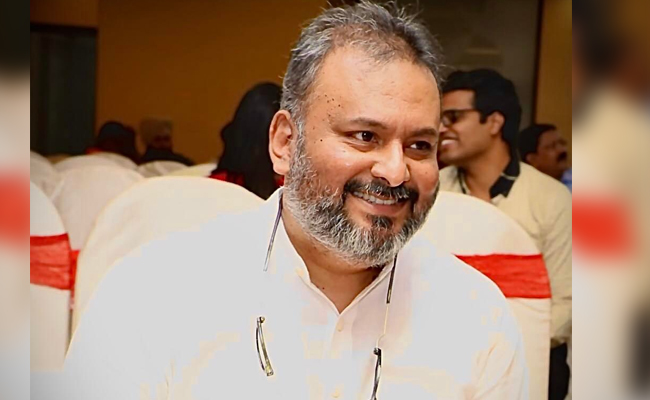
Chennai: Journalist and political commentator Sujit Nair has expressed concern over speculation that the Dravida Munnetra Kazhagam and the All India Anna Dravida Munnetra Kazhagam could explore a post-poll understanding to prevent Vijay-led Tamilaga Vettri Kazhagam from forming the government in Tamil Nadu.
In a social media post, Sujit Nair said the election verdict in Tamil Nadu reflected a clear public demand for political change and argued that the mandate should be respected irrespective of political preferences.
Referring to reports and political discussions surrounding a possible understanding between the DMK and AIADMK, he said he hoped such developments remained only speculative conversations and did not turn into reality.
Nair stated that if such an alliance were to take shape, it would raise serious questions about ideological politics in the country. He said TVK had emerged through a democratic electoral process and that the legitimacy to govern in a parliamentary democracy comes from the people’s verdict.
According to him, attempts to prevent an electoral winner from forming the government through unexpected political arrangements may be constitutionally valid, but many people could view them as politically opportunistic.
He further said that such a move could particularly affect the political image of the DMK, which has historically projected itself around ideology, social justice and opposition politics. Nair said that in ideological terms, the DMK appeared closer to TVK than to the AIADMK, and joining hands with its long-time political rival only to remain in power could weaken its broader political narrative.
He added that the same questions would apply to the AIADMK as well, as the party had spent decades positioning itself against the DMK and such an arrangement could create discomfort among its cadre and supporters.
Drawing a comparison with Maharashtra politics in 2019, Nair said he had expressed similar views when the Shiv Sena formed an alliance with the Indian National Congress and the Nationalist Congress Party after the Assembly elections.
He said post-poll alliances between long-standing political rivals often create a public perception that ideology and electoral mandates become secondary when political power equations come into play.
Nair also said such developments increase public cynicism towards politics and reinforce the belief among voters that ideology is often sidelined after elections.
He maintained that the Tamil Nadu verdict was emphatic and said respecting both the spirit and substance of the mandate was important for the credibility of democratic politics.