Govt defers proposal to make 6 airbags mandatory in cars by one year to Oct 1, 2023: Nitin Gadkari
New Delhi, Sep 29: The government has deferred the implementation of the proposal to make six airbags mandatory in passenger cars by one year to October 1, 2023, Road Transport and Highways Minister Nitin Gadkari said on Thursday.
The government had earlier planned to make six airbags mandatory in eight-seater vehicles for enhanced safety of occupants from October 1, 2022.
"Considering the global supply chain constraints being faced by the auto industry and its impact on the macroeconomic scenario, it has been decided to implement the proposal mandating a minimum of 6 Airbags in Passenger Cars (M-1 Category) w.e.f 01st October 2023," Gadkari said in a tweet.
The minister further asserted that the safety of all passengers travelling in motor vehicles irrespective of their cost and variants is the foremost priority.
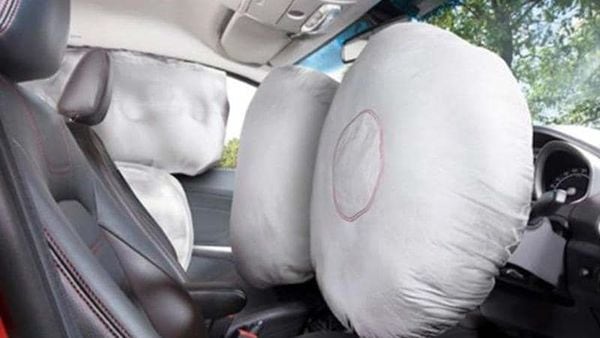
An airbag interferes between the driver and the vehicle's dashboard during a collision, thereby preventing serious injuries.
Earlier this year, the Ministry of Road Transport and Highways (MoRTH) in a statement said that in order to enhance the safety of occupants of the motor vehicle against lateral impact, it has been decided to enhance safety features by amending the Central Motor Vehicles Rules (CMVR), 1989.
"A draft notification has been issued on January 14, 2022, which mandates that vehicles of category M1, manufactured after October 1, 2022, shall be fitted with two side/side torso airbags, one each for the persons occupying front row outboard seating positions, and two side curtain/tube air bags, one each for the persons occupying outboard seating positions," it had said.
Last year, Gadkari in an interview to PTI had said small cars, mostly purchased by lower middle-class people, should also have an adequate number of airbags and had wondered why automakers are providing eight airbags only in big cars bought by rich people.
His remarks had come against the backdrop of the automobile industry raising concerns that high taxation and stricter safety and emission norms for vehicles have made their products expensive.
Mostly, lower middle-class people buy small economy cars and "if their car won't have airbags and when accidents happen, then it may result in deaths. So, I appeal to all car manufacturers to provide a minimum of six airbags across all variants and segments of the vehicle," he had said.
According to National Crime Records Bureau (NCRB) data, over 1.55 lakh lives were lost in road crashes across India in 2021 -- an average of 426 daily or 18 every single hour -- which is the highest death figures recorded in any calendar year so far.
Considering the global supply chain constraints being faced by the auto industry and its impact on the macroeconomic scenario, it has been decided to implement the proposal mandating a minimum of 6 Airbags in Passenger Cars (M-1 Category) w.e.f 01st October 2023.
— Nitin Gadkari (@nitin_gadkari) September 29, 2022
Let the Truth be known. If you read VB and like VB, please be a VB Supporter and Help us deliver the Truth to one and all.
Sujit Nair raises concerns over speculation of DMK-AIADMK understanding to block TVK
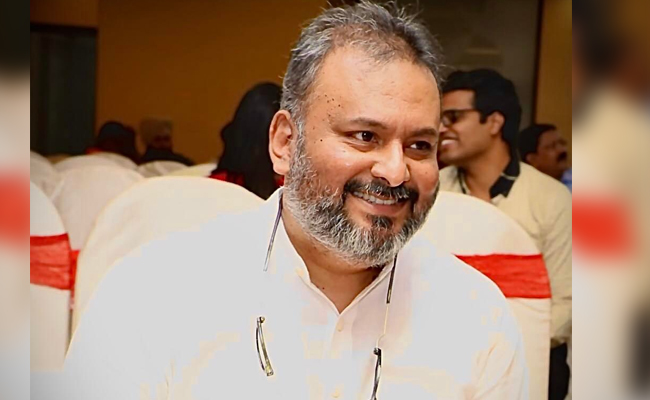
Chennai: Journalist and political commentator Sujit Nair has expressed concern over speculation that the Dravida Munnetra Kazhagam and the All India Anna Dravida Munnetra Kazhagam could explore a post-poll understanding to prevent Vijay-led Tamilaga Vettri Kazhagam from forming the government in Tamil Nadu.
In a social media post, Sujit Nair said the election verdict in Tamil Nadu reflected a clear public demand for political change and argued that the mandate should be respected irrespective of political preferences.
Referring to reports and political discussions surrounding a possible understanding between the DMK and AIADMK, he said he hoped such developments remained only speculative conversations and did not turn into reality.
Nair stated that if such an alliance were to take shape, it would raise serious questions about ideological politics in the country. He said TVK had emerged through a democratic electoral process and that the legitimacy to govern in a parliamentary democracy comes from the people’s verdict.
According to him, attempts to prevent an electoral winner from forming the government through unexpected political arrangements may be constitutionally valid, but many people could view them as politically opportunistic.
He further said that such a move could particularly affect the political image of the DMK, which has historically projected itself around ideology, social justice and opposition politics. Nair said that in ideological terms, the DMK appeared closer to TVK than to the AIADMK, and joining hands with its long-time political rival only to remain in power could weaken its broader political narrative.
He added that the same questions would apply to the AIADMK as well, as the party had spent decades positioning itself against the DMK and such an arrangement could create discomfort among its cadre and supporters.
Drawing a comparison with Maharashtra politics in 2019, Nair said he had expressed similar views when the Shiv Sena formed an alliance with the Indian National Congress and the Nationalist Congress Party after the Assembly elections.
He said post-poll alliances between long-standing political rivals often create a public perception that ideology and electoral mandates become secondary when political power equations come into play.
Nair also said such developments increase public cynicism towards politics and reinforce the belief among voters that ideology is often sidelined after elections.
He maintained that the Tamil Nadu verdict was emphatic and said respecting both the spirit and substance of the mandate was important for the credibility of democratic politics.