Govt hikes subsidy on DAP fertiliser by 140 pc; farmers to get DAP at old rate of Rs 1,200/bag
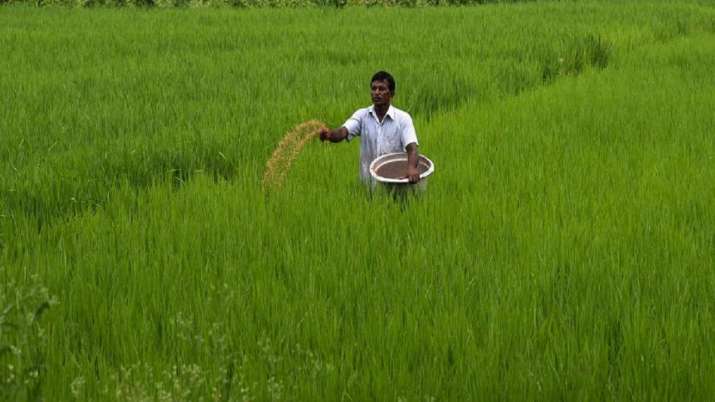
New Delhi, May 19: In a major pro-farmer decision, the Centre on Wednesday hiked the subsidy on DAP fertiliser by 140 per cent, costing the exchequer an additional Rs 14,775 crore, in a bid to ensure the soil nutrient is available to farmers at old rates despite a sharp rise in global prices.
The decision was taken at a high-level meeting chaired by Prime Minister Narendra Modi, according to a PMO statement.
"Government is committed to improving the lives of farmers. Therefore, despite increase in global prices, we have decided to make available the fertiliser at old rate," Modi tweeted in Hindi.
After urea, Di-ammonium Phosphate (DAP) is the most widely used used fertiliser in the country.
"A historic decision was taken to increase the subsidy for DAP fertiliser from Rs 500 per bag to Rs 1200 per bag, which is an increase of 140 per cent. ....With today's decision, farmers will continue to get a DAP bag for Rs 1200," the Prime Minister's Office (PMO) said.
Despite the rise in international market prices of DAP, it has been decided to continue selling it at the old price of Rs 1,200 per bag, it said.
"The central government has decided to bear all the burden of price hike. The amount of subsidy per bag has never been increased so much at once," it added.
The government spends about Rs 80,000 crore on subsidies for chemical fertilisers every year. With the increase in subsidy for DAP, the government will spend an additional Rs 14,775 crore as subsidy in the Kharif season of this year, it said.
In the meeting, the Prime Minister "stressed that farmers should get fertilisers at old rates despite the international rise in prices", the statement said.
The PM also said his government is committed to the welfare of farmers and will take all efforts to ensure that they do not have to face the brunt of price rise, the PMO added.
According to the statement, the high-level meeting discussed in detail the increase in domestic fertiliser rates due to the rising global prices of raw materials such as phosphoric acid and ammonia used in the making of DAP fertiliser.
Recently, global prices of phosphoric acid and ammonia have gone up by 60-70 per cent. So the actual price of DAP is now Rs 2,400 per bag, which was to be sold by fertiliser companies at Rs 1,900 after considering a subsidy of Rs 500, it said.
Last year, the actual price of DAP was Rs 1,700 per bag, on which the central government was giving a subsidy of Rs 500. The companies were, therefore, selling the fertiliser to farmers for Rs 1,200 per bag, it added.
This is the second major decision in the farmers' interest, after directly transferring Rs 20,667 crore to farmers' accounts under the PM-KISAN scheme on the day of Akshay Tritiya, the statement added.
Retail prices of non-urea fertilisers such as DAP, Muriate of Potash (MoP) and NPK are decontrolled and determined by manufacturers, while the Centre gives them fixed subsidies each year.
Recently, the government had requested fertiliser companies to sell old stock of non-urea fertilisers at old rates in the interest of farmers. However, some companies had hiked the rates of DAP, taking cues from the global market.
Let the Truth be known. If you read VB and like VB, please be a VB Supporter and Help us deliver the Truth to one and all.
Allahabad HC orders probe into 'reinstatement' of teacher in UP's Barabanki
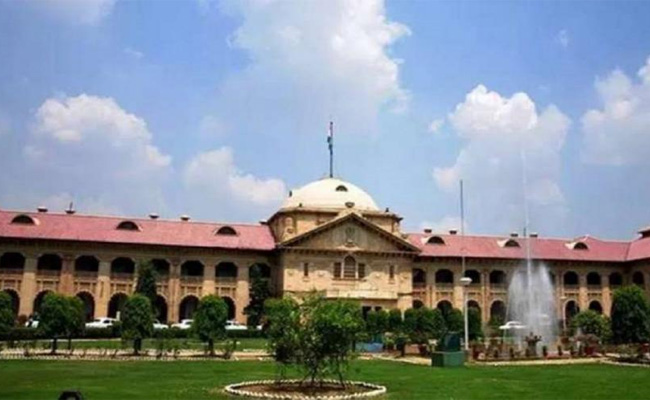
Lucknow (PTI): The Lucknow Bench of the Allahabad High Court on Friday ordered a probe by the special task force (STF) into alleged irregularities in the rejoining of a teacher at City Intermediate College in Barabanki, observing that the reinstatement appeared to be prima facie illegal.
The court also directed the recovery of the salary paid to the teacher during the disputed period.
A bench of Justice Rajeev Singh passed the order on a petition filed by the college management committee. The court expressed doubts over the roles of the District Inspector of Schools (DIOS), Barabanki, the college principal and the teacher concerned and hence, directed a detailed inquiry into the matter.
Taking note of alleged manipulation of records and misleading submissions, the court ordered the immediate transfer of the Barabanki DIOS to ensure a fair probe. It also directed the initiation of disciplinary proceedings against the then joint director of education of the Ayodhya division.
In its order, the court found that the teacher, Abhay Kumar, was initially appointed as an assistant teacher in 2018 but joined an Eklavya Model Residential School in Chhattisgarh as a lecturer in June 2024 without obtaining permission from the management. His subsequent request to retain the lien was rejected.
Despite this, he was allowed to rejoin the Barabanki College in September 2025 on the directions of the joint director of education and the DIOS, and was even paid the salary for October 2025. The court termed the rejoining "wholly illegal" and lacking any legal basis.
The bench also expressed concern over lapses in communication within the education department and directed the Uttar Pradesh chief secretary to ensure that official orders are communicated through email and WhatsApp as well, to prevent disputes.
The matter is next listed for hearing on May 28 when a compliance report is sought.