Govt issues advisory to social media companies on Rashmika Mandanna deep fake video
New Delhi, Nov 7: The Centre has asked all social media platforms, including X, Instagram and Facebook to remove morphed images within 24 hours of receiving a complaint under the IT rules, an official source said on Tuesday.
A deep fake video of actress Rashmika Mandanna has been circulating on social media platforms. Netizens claimed the video has been morphed and the actual video is of an Indian-origin person living in the UK.
"An advisory has been issued to all social media platforms citing clause of IT rules and obligations of social media companies," the source told PTI.
As per the advisory, social media platforms should take all measures to remove or disable content which is in the nature of impersonation in an electronic form, including artificially morphed images of such individuals within 24 hours from the receipt of a complaint in relation to the content.
The advisory mentions that social media intermediaries shall observe due diligence, including ensuring the rules and regulations, privacy policy or user agreement and inform users not to host any content that impersonates another person.
"MeitY (Ministry of Electronics and Information Technology) will act after social media companies fail to act as per the rule," the source said.
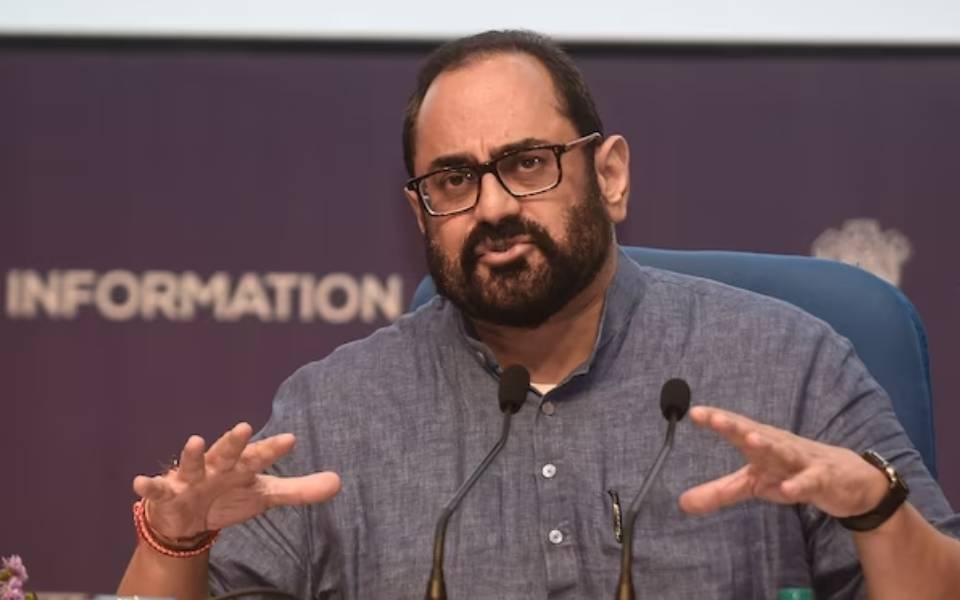
Minister of State for Electronics and IT Rajeev Chandrasekhar on Monday had reacted to the deep fake video of the actress on X where he said social media companies are bound to remove any misinformation.
The minister had said that if platforms do not comply with IT rules notified in April 2023, Rule 7 will apply and platforms can be taken to court by aggrieved persons under provisions of IPC.
"Deepfakes are the latest and even more dangerous and damaging form of misinformation and need to be dealt with by platforms," the minister had said
Let the Truth be known. If you read VB and like VB, please be a VB Supporter and Help us deliver the Truth to one and all.
Rickelton's ton in vain as SRH beat MI by 6 wickets
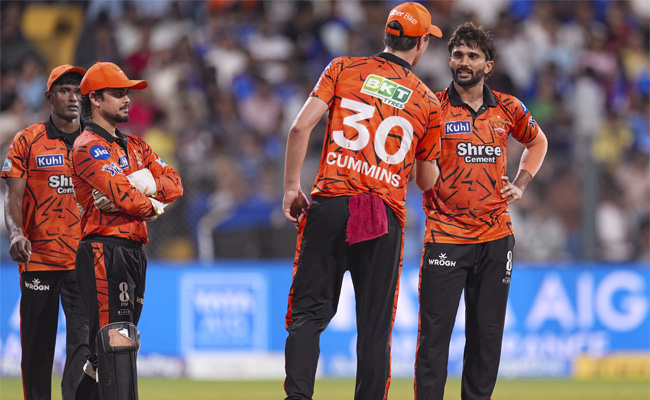
Mumbai (PTI): Ryan Rickelton's whirlwind unbeaten ton was overshadowed by Heinrich Klaasen's unbeaten 65 as Sunrisers Hyderabad defeated Mumbai Indians by six wickets in an IPL match here on Wednesday.
Chasing an imposing 244-run target, Travis Head (76 off 30) and Abhishek Sharma (45 off 24) shared 129 runs for the opening wicket to set the platform for SRH.
Klaasen (65 not out off 30 balls) then displayed his all-round hitting abilities to guide SRH home with the help of Nitish Kumar Reddy (21) and Salil Arora (30 not out off 10) in 18.4 overs.
Earlier, Rickelton's knock powered MI to 243 for five.
MI rode on a 93-run stand between Rickelton (123 not out off 55 balls) and Will Jacks (46 off 22) in 7.1 overs for the opening stand to power the side.
MI skipper Hardik Pandya scored a valuable 31 off 15 balls before being dismissed.
Praful Hinge (2/54), Eshan Malinga (1/29), Sakib Hasan (1/39) and Nitish Kumar Reddy (1/31) were the wicket-takers for SRH.
Brief Scores:
Mumbai Indian: 243 for 5 in 20 overs (Ryan Rickelton 123 not out; Praful Hinge 2/54).
Sunrisers Hyderabad: 249 for 4 in 18.4 overs (Travis Head 76, Heinrich Klaasen 65 not out; AM Ghazanfar 2/51).