Govt issues guidelines on COVID management in rural, peri-urban areas
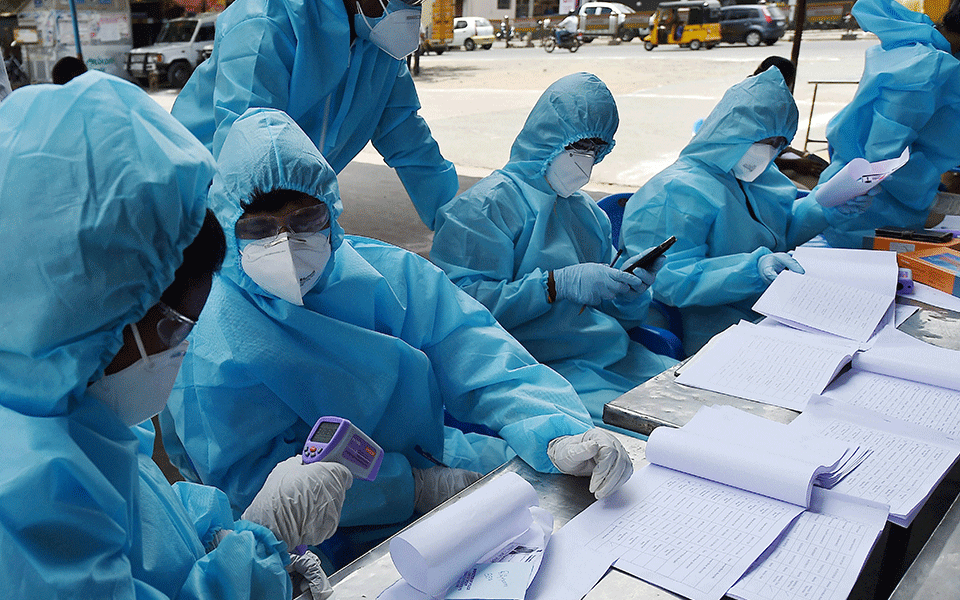
New Delhi: As rural areas see a rise in COVID-19 cases, the Centre on Sunday issued new guidelines for containment of the virus advising that peri-urban and rural areas plan a minimum 30-bedded COVID Care Centre for asymptomatic cases with comorbidities or mild cases where home isolation is not feasible.
Provision of Rapid Antigen Test (RAT) kits should be made at all public health facilities including Sub-centres or Health and Wellness Centres and Primary Health Centres, the Union Health Ministry said.
Noting that besides urban areas reporting a large number of cases, a gradual ingress is now being seen in peri-urban, rural and tribal areas as well, the ministry released the 'SOP on COVID-19 Containment and Management in Peri-urban, Rural & Tribal areas' to enable communities strengthen primary level healthcare infrastructure at all levels to intensify COVID-19 response.
It said COVID Care Centres (CCC) can admit a suspect or confirmed case but should have separate areas for suspected and confirmed cases with preferably separate entry and exit for each.
"Suspect and confirmed cases should not be allowed to mix under any circumstances," the SOP said.
According to the SOP, in every village, active surveillance should be done for influenza-like illness/ severe acute respiratory infections(ILI/SARI) periodically by ASHA with help of Village Health Sanitation and Nutrition Committee (VHSNC).
Symptomatic cases can be triaged at village level by tele-consultation with Community Health Officer (CHO), and cases with comorbidity or low oxygen saturation should be sent to higher centres.
Identified suspected COVID cases should link for testing to health facilities either through COVID-19 rapid antigen testing or by referral of samples to nearest COVID-19 testing laboratory, in accordance with ICMR guidelines.
CHOs and ANMs should be trained in performing Rapid Antigen Testing. Provision of RAT kits should be made at all public health facilities including Sub-centres, Health and Wellness Centres and Primary Health Centres, the document said.
Depending upon the intensity of surge and number of cases, as far as feasible, contact tracing should be done as per Integrated Disease Surveillance Programme's (IDSP's) guidelines, it stated.
"Nearly 80-85 per cent COVID-19 cases are asymptomatic/ mildly symptomatic. These patients do not require hospitalisation and may be managed at home or in Covid care isolation facilities," the SOP stated.
As monitoring of oxygen saturation is important for monitoring of COVID patients, it is desirable for each village to have adequate number of pulse oximeters and thermometers.
The SOP recommended developing a system of providing pulse oximeters and thermometers on loan to families with a confirmed case of COVID through ASHA/ Anganwadi workers and village-level volunteers.
Pulse oximeters and thermometers should be sanitised after each use with cotton or cloth soaked in alcohol-based sanitiser.
Follow-ups for patients undergoing isolation or quarantine could be done through household visits by a frontline worker/ volunteers/ teacher duly following required infection prevention practices including use of medical mask and other appropriate precautions.
"Home Isolation kit shall be provided to all such cases which should include required medicines such as Paracetamol 500 mg, Tab. Ivermectin, cough syrup, multivitamins (as prescribed by the treating doctor) besides a detailed pamphlet indicating precautions to be taken, medication details, monitoring proforma for patient condition during home isolation, contact details in case of any major symptoms or deterioration of health condition and the discharge criteria," the SOP stated.
The health infrastructure planned for peri urban, rural and tribal areas shall be aligned to the already mentioned 3-tier structure -- COVID Care Centre (CCC) to manage mild or asymptomatic cases, Dedicated COVID Health Centre (DCHC) to manage moderate cases and Dedicated COVID Hospital (DCH) to manage severe cases, according to the document.
The CCCs are makeshift facilities under the supervision of nearest PHC/CHC and may be set up in schools, community halls, marriage halls, panchayat buildings in close proximity of hospitals or healthcare facilities, or tentage facilities in panchayat land, school ground, etc.
These CCCs should be mapped to one or more Dedicated COVID Health Centres and at least one Dedicated COVID Hospital for referral purposes.
Such COVID care centres should also have a Basic Life Support Ambulance (BLSA) networked among such CCCs equipped with sufficient oxygen support on 24x7 basis, for ensuring safe transport of patients to dedicated higher facilities if the symptoms progress from mild to moderate or severe.
Primary Health Centres or Community Health Centres and Sub District Hospitals in these areas shall be the Dedicated COVID Health Centre for management of COVID-19. The facility may plan a minimum of 30 bedded DCHC. District should be prepared to increase DCHC beds as per the case trajectory and expected surge of cases, the document stated.
These centres shall offer care for all cases that have been clinically assigned as moderate (Patient breathless; Respiratory Rate more than 24 per minute; Saturation between 90 to <94% on room air).
District hospitals or other identified private hospitals or a block of these hospitals shall be converted as dedicated COVID Hospitals.
In addition, sub-district or block level hospitals fulfilling the requirements may also be designated as dedicated COVID hospitals for the identified CCC and DHCC in their catchment area.
The upgradation in health facilities shall be undertaken based on case trajectory or the surge in cases, the SOP stated.
Let the Truth be known. If you read VB and like VB, please be a VB Supporter and Help us deliver the Truth to one and all.
KSCA expresses disappointment over missing IPL playoffs, says it was ready to host matches in B’luru
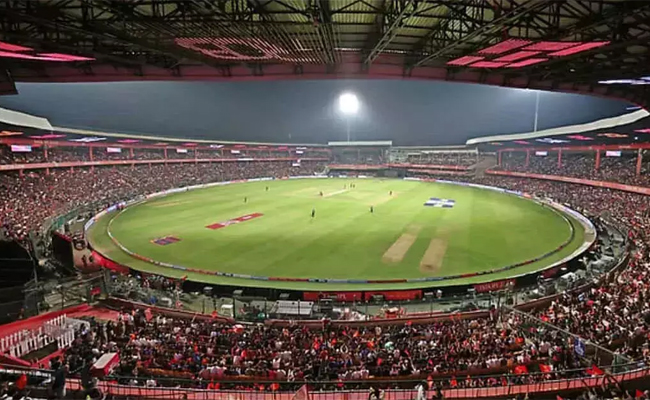
Bengaluru: The Karnataka State Cricket Association (KSCA) has issued a clarification stating that it was fully prepared to host the IPL playoffs and final matches in Bengaluru but the fixtures were allotted to other venues.
In a media note, KSCA said it was disappointed with the decision. The association stated that its president, former India cricketer Venkatesh Prasad, had been in touch with the Board of Control for Cricket in India (BCCI) and had formally conveyed the association’s readiness and interest in hosting the matches at the M. Chinnaswamy Stadium.
KSCA said the IPL matches held in Bengaluru this season were appreciated for smooth conduct, crowd management and overall experience for spectators. It said this reflected its ability to handle high-profile matches.
The association also stated that it had sent a detailed communication to the BCCI explaining its preparedness and the operational arrangements followed during the current IPL season. According to KSCA, these systems have been in place since the start of the Indian Premier League in 2008 and were followed consistently, including during previous playoff matches hosted in Bengaluru.
The clarification added that the communication sent to the BCCI was only meant to provide factual and operational details and to bring clarity on logistical and stakeholder-related requirements involved in hosting such matches.
KSCA said that although it had shown willingness and preparedness, the BCCI has decided to allocate the playoff matches to other venues. It added that the reasons for this decision have not been formally shared with the association, but it respects the authority of the board in taking such decisions.
The association further said it remains ready to host matches of national and international importance and will continue to cooperate with the BCCI, franchises, government authorities and other stakeholders for conducting cricket events.
The statement was issued by KSCA official spokesperson Vinay Mruthyunjaya, who also thanked the media and cricket fans for their continued support.