Govt launches DigiYatra for passengers at 3 airports; Scindia says data stored in encrypted format
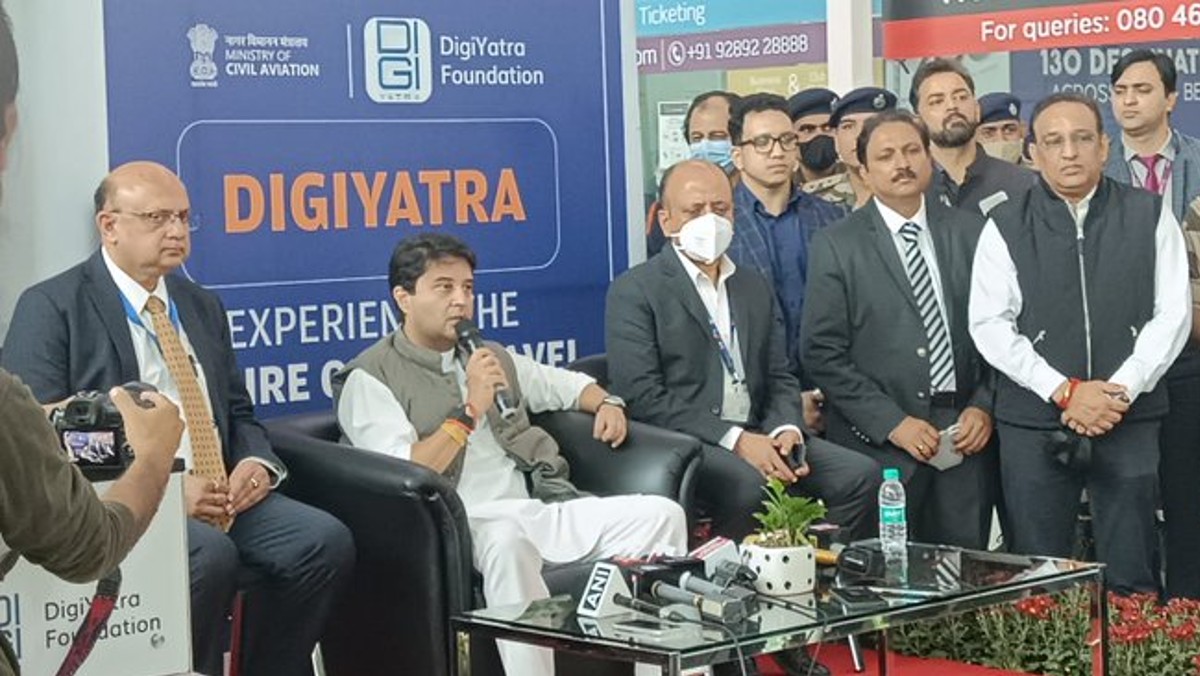
New Delhi, Dec 1: The government on Thursday launched DigiYatra which will provide a seamless entry and embarkation process for air passengers at the airports in the national capital, Bangalore and Varanasi.
After launching DigiYatra, which is based on facial recognition technology, at the airport in Delhi, Civil Aviation Minister Jyotiraditya Scindia said data shared by the passengers will be stored in an encrypted format and in a decentralised manner.
DigiYatra will be launched at four more airports -- Hyderabad, Pune, Vijayawada and Kolkata -- by March next year.
Later, DigiYatra will be rapidly rolled out across all other airports, Scindia said at a briefing here.
The airlines that operate in these three airports -- Delhi, Bangalore and Varanasi -- are fundamentally onboard, he said with respect to DigiYatra.
It will be available for passengers taking domestic flights.
DigiYatra app is available on Android and ioS platforms. Currently at the Delhi airport, DigiYatra will be available for passengers taking domestic flights from Terminal 3 (T3).
Amid concerns in certain quarters about data theft and privacy issues, Scindia said the data shared for DigiYatra will be stored in an encrypted format in a decentralised manner.
"First, we thought of a centralised system that would house all the data but then issues of privacy, data theft, rightfully came up. So, we moved to a decentralised system which would house the passenger information.. on the mobile phones of every single passenger," the minister said.
The secured, encrypted information on a passenger's phone can be provided to the airport from which he or she is flying out, 24 hours before the journey.
"We have moved to a decentralised system and your data is going to be in an encrypted format and it is going to be residing only in your (passenger) mobile phone... 24 hours after your travel, that data is mandatorily going to be purged from the servers at that airport. The data you upload gets completely wiped out in 24 hours even though it is protected by blockchain technology," the minister said.
For availing the service, a passenger has to register their details on DigiYatra app using Aadhaar-based validation and a self image capture. In the next step, the boarding pass has to be scanned and the credentials are shared with the airport.
At the airport e-gate, the passenger has to first scan the bar coded boarding pass and the facial recognition system installed at the e-gate will validate the passenger's identity and travel document. Once this process is done, the passenger can enter the airport through the e-gate.
The passenger will have to follow the normal procedure to clear the security and board the aircraft.
Talking about the benefits of facial recognition technology being used at airports, the minister said it is helping save time for passengers at various international airports, including at Dubai, Singapore, Atlanta, Narita (Japan).
At Atlanta airport, the time taken is around "9 minutes per aircraft boarding", he added.
Scindia said DigiYatra provides a seamless process from the entry point until the embarkation point on planes, and no identification or boarding pass has to be shown by the passengers.
While noting that DigiYatra is being adopted on a piece meal basis in the country, he said the Indian system is a tad more efficient than other systems across the world.
"We are also working with IATA to ensure that new advancements are adopted at a very very early stage in India," the minister said.
The International Air Transport Association (IATA) is a global grouping of airlines.
Digi Yatra Foundation, a not-for-profit company, is the nodal body for DigiYatra.
The foundation's shareholders are Airport Authority of India (AAI), Cochin International Airport Ltd (CIAL), Bangalore International Airport Ltd (BIAL), Delhi International Airport Ltd (DIAL), Hyderabad International Airport Ltd (HIAL) and Mumbai International Airport Ltd (MIAL).
Let the Truth be known. If you read VB and like VB, please be a VB Supporter and Help us deliver the Truth to one and all.
Kerala poll turnout rises to 79.70 pc after inclusion of service voters’ postal ballots: CEO
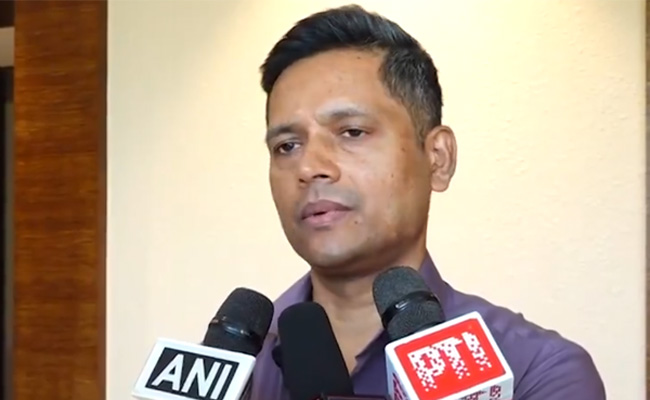
Thiruvananthapuram (PTI): Kerala’s voter turnout in the April 9 Assembly elections has tentatively risen to 79.70 per cent after the inclusion of service voters’ postal ballots, CEO Rathan U Kelkar said on Sunday.
Addressing a press conference here, Kelkar also outlined elaborate arrangements for the counting of votes scheduled for Monday.
He said the polling percentage for the Assembly election was 79.63 per cent, excluding postal ballots of service voters.
The chief electoral officer said 53,984 postal ballots had been issued to service voters, of which 20,028 had been received as of May 1.
“Service voters can submit postal ballots till before counting begins. We have directed the postal department that postal ballots received from service voters, including on Saturdays, Sundays, and holidays, should be handed over to the returning officers without delay,” he said.
He said the receipt of service voters’ postal ballots had increased the polling percentage by 0.07 percentage points.
“The present voting percentage, after including service voters’ inputs, stands at 79.70 per cent on a tentative basis,” he said.
Kelkar said the final turnout figure would be announced only after the Election Commission of India releases its official index card, usually 48 hours after counting.
Counting of votes in all 140 Assembly constituencies will begin at 8 am across 43 locations in the state, he said.
As per Election Commission guidelines, postal ballots will be counted first, followed by the counting of EVM votes after a gap of 30 minutes.
Round-wise counting data will be uploaded in real time on the Election Commission’s mobile application and the official portal result.eci.gov.in, he said.
A total of 15,465 counting personnel have been deployed for the exercise, while 32,301 police personnel, including 20 companies of Central Armed Police Forces, have been deployed for security at counting centres.
Each Assembly constituency will have a dedicated counting observer, mostly senior IAS officers, to supervise the process, Kelkar said.
Only persons with QR-based identity cards will be allowed entry into counting centres, he said.
Kelkar said counting staff and security personnel had undergone detailed training, and strict instructions had been issued to ensure there was no haste in the counting process.
“There is no award for finishing first. But any lapse will invite strict disciplinary action,” he said.
District administrations have been empowered to regulate or restrict victory processions if required to maintain law and order, he said, adding that the Model Code of Conduct will remain in force till May 6 or until withdrawn by the Election Commission.
Kelkar also warned against the spread of misinformation related to election results.
“Legal action will be taken against those spreading false news or misinformation. The public should rely only on official information released by the Election Commission,” he said.