Govt-run bodies, experts told not to talk to media on Joshimath situation without permission
New Delhi, Jan 14: The National Disaster Management Authority (NDMA) and the Uttarakhand government have asked over a dozen government-run organisations and institutes and their experts not to make any unauthorised comment or statement on the situation in Joshimath.
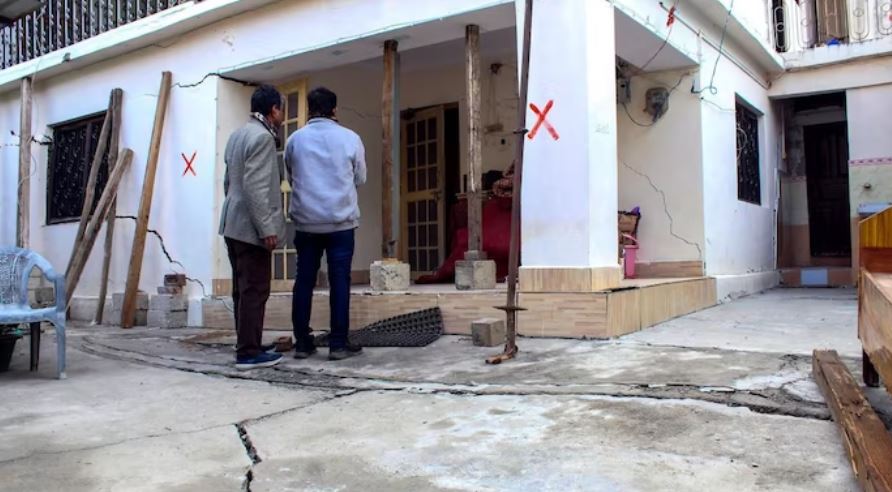
In its communication to the heads of these organisations and institutes, the NDMA said people associated with them should not interact with the media and share data on social media regarding the ground subsidence in Joshimath, where cracks have developed in buildings and other infrastructure.
Official sources said the purpose of the advisory is not to deny information to the media but to avoid confusion because so many institutions are involved in the process and they are giving their own interpretation of the situation.
The NDMA said it has observed that various government institutions are releasing data related to the subject on social media platforms and also they are interacting with the media with their own interpretation of the situation.
The statements on Joshimath are creating confusion not only among affected residents but also among citizens of the country, the NDMA said.
It said the issue was highlighted during a meeting convened by the central government on January 12 and subsequently discussed at a meeting led by the NDMA on the same day.
The NDMA said an expert group has been formed for assessment of the ground subsidence in Joshimath in Uttarakhand.
The NDMA asked the organisations to sensitise its experts about the matter and added they should refrain from posting anything on media platforms until the final report of the expert group is released by the NDMA.
In a similar communication, the Uttarakhand government conveyed to the organisations that some of the institutions and agencies are publishing and uploading the information or reports about Joshimath without taking due permission from the competent authorities that is adversely impacting the ground situation as well as triggering panic among the community.
The Uttarakhand government said the ground subsidence around Joshimath has aggravated and the authorities are taking all necessary measures for the safety of habitation in the affected areas.
The state government has deployed team of experts from various scientific and technical institutions to assess the situation and providing the mitigation measures of the town.
The media is also propagating this blatantly, it said.
The communication said the organisations, before publishing or uploading any such reports or information, should obtain prior approval either from the respective central ministries or the Uttarakhand State Disaster Management Authority.
The NDMA directive has gone to the Central Building Research Institute (CBRI), Roorkee, Geological Survey of India (GSI), National Remote Sensing Centre (NRSC) of the ISRO, Hyderabad, Central Ground Water Board (CGWB), New Delhi, Surveyor General of India, Dehradun and Indian Institute of Remote Sensing, Dehradun.
The communication has also been sent to the National Geophysical Research Institute, Hyderabad, National Institute of Hydrology, Roorkee, Wadia Institute of Himalayan Geology, Dehradun, Indian Institute of Technology, Roorkee, National Institute of Disaster Management, New Delhi, Uttarakhand State Disaster Management Authority.
The Uttarakhand government sent the communication to the Geological Survey of India (GSI), Uttarakhand Space Application Centre, Wadia Institute of Himalayan Geology, Dehradun, Indian Institute of Remote Sensing, National Geophysical Research Institute, Central Building Research Institute, Indian Institute of Technology, Roorkee, National Remote Sensing Centre (NRSC) of the ISRO and National Seismological Centre, Dehradun.
Let the Truth be known. If you read VB and like VB, please be a VB Supporter and Help us deliver the Truth to one and all.
Bengaluru: Asia’s largest AI-based water command centre set to launch
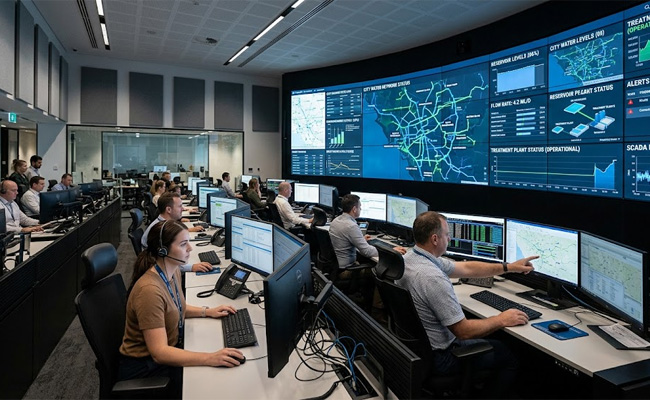
Bengaluru: The Bangalore Water Supply and Sewerage Board (BWSSB) is set to launch one of Asia’s largest AI-powered command centres to monitor water supply and sewage systems in real time, aiming to reduce leaks and improve efficiency, The Indian Express reported.
The Integrated Intelligent Water and Sewerage Management Centre, located at Shimsha Bhavan in Jayanagar, will use Artificial Intelligence (AI) to track, analyse and manage the city’s water network.
In addition to drinking water systems, all sewage treatment plants in the city are connected to the SCADA platform. The system checks if it adheres to National Green Tribunal (NGT) standards and tracks biogas generation from these facilities.
BWSSB Chairman Ram Prasath Manohar said the system will oversee the 775 MLD Cauvery Stage 5 water supply, which serves nearly 110 villages, while also integrating Bengaluru’s broader water distribution and wastewater systems.
A major feature of the system is its use of AI to estimate water demand across different parts of the city. The platform will also detect leakages in pipelines instantly, helping reduce water losses, often referred to as Unaccounted-for Water (UFW) or Non-Revenue Water (NRW). Officers say this will be a key step towards creating a digital replica of Bengaluru’s entire water network.
Bengaluru loses about 28 per cent of its water supply either to leakage or theft.
SCADA has been developed with the financial assistance of the Japan International Cooperation Agency (JICA). The facility is located at Shimsha Bhavan in Jayanagar and is expected to be inaugurated soon by Deputy Chief Minister D K Shivakumar.
BWSSB says the initiative reflects a shift towards a data-driven administration in urban water management. The centre is expected to improve transparency, improve efficiency, and strengthen service delivery in a city that has a continuously growing water demand and infrastructure challenges.
Describing the project as a milestone, Manohar said, “The SCADA centre would bring a new phase in how Bengaluru manages its water and wastewater systems, combining scale with advanced technology.”