Govt seeking dates as no merit in NSA case against Sonam Wangchuk, says wife Gitanjali Angmo
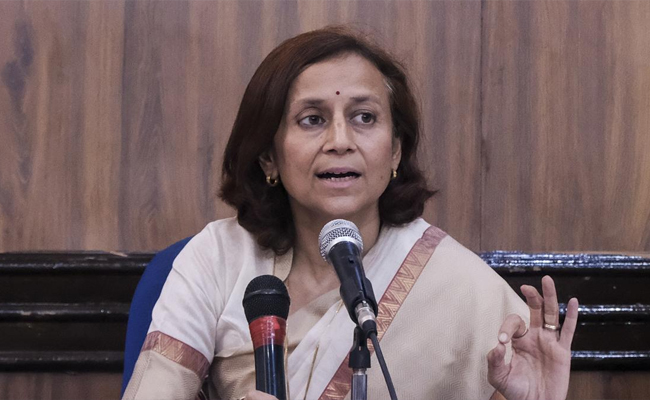
New Delhi (PTI): Climate activist Sonam Wangchuk's wife Gitanjali Angmo has said his arrest reflects the state of democracy in the country where power is used to "illegally detain" people, and contended that the case has "no merit" as fresh dates are repeatedly sought by the government in court.
In an interview with PTI, Angmo alleged that Wangchuk should already be out of prison considering "procedural lapses" by authorities, and said it is an "open and shut case".
Angmo said she was, however, "a bit disappointed" the detention has not faced stronger pushback. "We cannot afford to be silent," she said, calling for a collective and louder opposition to his arrest.
"...it's not just about Sonam Wangchuk as an individual, but about the state of democracy in this country, about the use of power for illegal detention of people who have been working for this country. If it can happen to Sonam, it can happen to anybody else," she said.
Wangchuk, a Magsaysay Award-winning climate activist and educator, was detained under the stringent National Security Act (NSA) on September 26, two days after protests demanding statehood and Sixth Schedule status for Ladakh left four people dead and 90 injured in the Union territory, and was taken to Jodhpur jail.
The climate activist is accused of making "provocative statements" that led to the violence.
Angmo, who has co-founded the Himalayan Institute of Alternatives, Ladakh, with Wangchuk, has filed a habeas corpus petition challenging his detention and seeking his immediate release.
"It has been quite an uphill task, getting the detention order and meeting Sonam needed a habeas corpus to be filed in the Supreme Court and even after that was filed, to get his handwritten notes was a challenge," Angmo said.
The handwritten notes prepared by Wangchuk regarding his detention are part of legal documentation submitted to the Supreme Court.
The Supreme Court on Tuesday adjourned to January 29 the hearing of a plea filed by Angmo against Wangchuk's detention under the NSA.
Earlier, the top court had deferred the matter on November 24 last year, after Solicitor General Tushar Mehta, representing the Centre and the Union Territory of Ladakh, sought time to respond to a rejoinder filed by Angmo.
On October 29, the court had sought responses from the Centre and the Ladakh administration on an amended plea of Angmo.
Angmo told PTI that as per the NSA, authorities should provide all documents, including the ones that establish the grounds of detention, to the detainee within "five or maximum 10 days".
"But these four videos were given to him on the 28th day, on October 23. This is a very big procedural lapse, based on which the detention order should be made void ab initio and quashed," she said.
"In a way, it is an open and shut case just on this alone because it violates Section 8 of the National Security Act. Corollary to this is that because he did not get these videos, he was denied a chance to make an effective representation -- Section 11 of the NSA -- in front of the advisory board," she said.
Angmo said the grounds of detention used against Wangchuk "are stale" and some of them "rely on videos that are one and a half years old or one year old".
She said out of the five FIRs that have been relied upon, three don't name him. Among the two that name him, one dates back to August 2025, to which no notice was given or inquiry made, she said.
Angmo added that the district magistrate's detention order is a "copy-paste" of the proposal given by the Superintendent of Police.
"...the district magistrate should apply his mind and not just cut copy-paste whatever is given to him," she said. "There are several judgments to this effect that if application of mind has not happened, then that also makes the detention infructuous."
When asked about Wangchuk's detention being raised in the recent Parliament session, she said she was thankful to those who raised it, including Ladakh MP Mohmad Haneefa whose "mic was muted" when he brought it up.
"But I am also a bit disappointed that it hasn't been raised to the extent that it should have been," she added.
The educator stressed that they are not trying to make the case political but rued the "delays".
"The Solicitor General of India, who represents the Union (government), always keeps taking dates after dates, employing delay tactics, because I think they have realised that there is no merit in the case," she said.
However, she added, "I am told that compared to other cases, we still are getting dates which are quick enough".
Angmo also said that over the last three and a half months, she observed that society is becoming more and more "polarised".
"You know, we are either belonging to this party or that, or this sect or that. My appeal to everybody would be to become a true citizen of independent India, you know, with a mind and wisdom of our own. To be above even party ideologies and to think in the larger interest of the nation," she said.
"Let us not lose our wisdom and discernment and be swayed by narratives and party ideologies," she stressed.
Asked about their institutes, HIAL and SECMOL (Students' Educational and Cultural Movement of Ladakh), she said, "I would like to really applaud our second line of leadership, who have really risen to the occasion and have not allowed any disruption to happen".
She added, however, that the case has led to delays in the new projects they were planning.
"The new projects that we were envisaging, which I was personally leading, like the teacher training fellowship and the kindergarten K-12 school that we were planning to launch this year, have been delayed," Angmo said.
She also said many who were funding their institutions have said "they are being pressured" not to stop funding.
"The silver lining is that a lot of people earlier used to tell me that people don't know about HIAL as much. But now more and more people know about the school. I'm sure once we tide this over, there will again be a lot of support and open support," she added.
Let the Truth be known. If you read VB and like VB, please be a VB Supporter and Help us deliver the Truth to one and all.
EC can choose counting personnel, no further order needed: SC on TMC plea
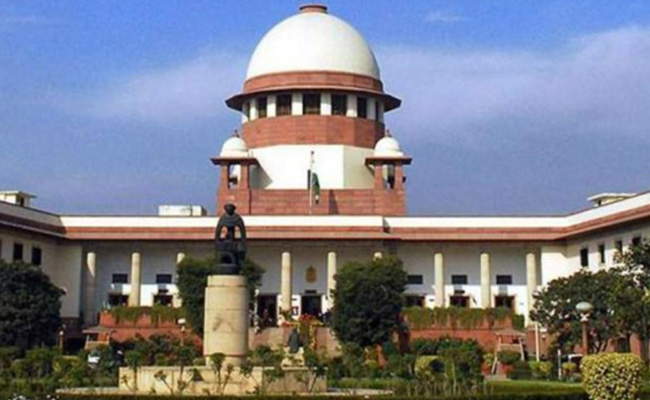
New Delhi (PTI): The Supreme Court on Saturday said no further order was necessary on the TMC's plea challenging the Calcutta High Court's dismissal of its petition against an Election Commission circular on the deployment of central government personnel for vote counting in West Bengal.
A special bench of Justices P S Narasimha and Joymalya Bagchi said the Election Commission can choose the counting personnel, and its April 13 circular, which provides for deployment of state government employees as well, cannot be said to be incorrect.
The poll body said the apprehensions of Trinamool Congress (TMC) of any wrongdoing is misplaced, as the circular very clearly states that there will be a mix of central and state government employees.
The Election Commission assured the court that the circular would be implemented in letter and spirit, and there would be state government employees also during the counting of votes on May 4.
At the outset, senior advocate Kapil Sibal, appearing for the TMC, said the circular was dated April 13, but they came to know about it on April 29.
ALSO READ: Anbumani asks PM Modi to ban sale of cigarettes for those born after 2009
He said there are four issues: One, the circular appointing Central employees was issued to DEOs on April 13, but came to their knowledge only on April 29; Two, the Election Commission says it has apprehensions of irregularity, despite having a Central nominee in the counting process; Three, the poll body already has a Central government officer at each counting table in the form of a micro observer, and four, the commission has not appointed state nominees even though the circular provides so.
Sibal submitted that the Chief Electoral Officer's communication states that there are apprehensions expressed from various quarters regarding possible irregularities in counting.
"That is like pointing a finger at the state government..." Sibal said, adding, "There must be some data. Where is (the proof of) the apprehension (raised) from each booth? They have not disclosed this. And why not tell us that they are going to have a Central government nominee?"
The bench, which held a special sitting, told Sibal that even if the Election Commission's circular had provided for the appointment of Central employees as both the counting supervisor and the counting assistant, the court could not have faulted the decision.
"The option is open for the Election Commission: whether the counting supervisor and assistant may be of the Central or the state government. When that option is open, we cannot hold that the notification is contrary to regulations. Even if the EC says that both of them can be Central government employees, we could not have faulted them. Because regulations say that either the Central government or state government officers can be appointed," Justice Bagchi told Sibal.
Sibal then submitted that the court may ask the Election Commission to follow the impugned circular in its entirety, which provides for a state government nominee.
"All we want is, in terms of the circular, the state government nominee should be there," he said.
Justice Bagchi asked if he wants compliance with the circular, then why is the TMC before the court.
Senior advocate D S Naidu, appearing for the Election Commission, submitted that the returning officer is a state government employee with overarching power to deploy personnel from any pool of government employees.
"We are saying that there will be state government employees during the counting of votes," Naidu submitted, adding that each candidate will also have their own counting agent.
"The TMC's apprehension of any wrongdoing is completely misplaced," he reiterated.
The bench then disposed of the plea, saying that no further order is necessary and reiterated that the Election Commission will follow its circular in letter and spirit.
Polling for the 294-member West Bengal Assembly was held in two phases -- April 23 and April 29. The counting of votes will be taken up on May 4.
On April 30, the Calcutta High Court dismissed the TMC's petition against the Election Commission circular, saying there was no illegality in the poll panel's decision to appoint counting supervisors and assistants from Central government and Public Sector Undertaking (PSU) employees, instead of the state government staff.
In the high court, the TMC had challenged an April 13 communication issued by the additional chief electoral officer of West Bengal that stated that at least one of the counting supervisors or assistants at each table should be a Central government or PSU employee.
The TMC's counsel had argued before the high court that the communication was issued without jurisdiction and was based on mere apprehension.
The EC's counsel had contended before the high court that the Representation of the People Act, 1951, allows delegation of the commission's functions and that the directive was valid.
The poll panel's counsel had also submitted that the communication was issued on April 13, but the petition was filed only on April 30, close to the counting date, alleging that the move was intended to stall the process.
The high court had not agreed with the TMC's allegation that its main opponent, the Bharatiya Janata Party (BJP), controls the employees of the Central government or PSUs, making them susceptible to suggestions and control by the Union government.
It had also noted that apart from the counting supervisors and assistants, micro-observers, counting agents of candidates, and other personnel would also be present in the counting hall.