Govt to soon launch national tele-mental health prog, toll-free helpline no.
New Delhi (PTI): The government is working on launching a national tele-mental health programme and a toll-free helpline number soon to enable wider access to mental health assistance across the country.
The national tele-mental health programme (NTMHP) was first announced by Union Finance Minister Nirmala Sitharaman in the Union Budget 2022-23.
"The pandemic has accentuated mental health problems in people of all ages. To better the access to quality mental health counselling and care services, a 'National Tele-Mental Health Programme' will be launched," she had said.
This will include a network of 23 tele-mental health centres of excellence, with the National Institute of Mental Health and Neurosciences (NIMHANS) being the nodal centre and the International Institute of Information Technology, Bengaluru (IIITB) providing technological support.
As part of the programme, at least one tele-MANAS (Tele-Mental Health Assistance and Nationally Actionable Plan) cell would be established in each state and union territory and there will be five regional coordinating centres, an official source told PTI.
A toll-free helpline number will also be set up across the country, allowing callers to select the language of choice for availing services. The calls would be routed to tele-MANAS cells in the respective state and union territory, the source stated.
According to a Lancet study published in October last year, the percentage increase in the prevalence of clinically significant depression and anxiety disorders due to the COVID-19 pandemic in 2020 was estimated to be approximately 35 per cent in India.
There has been a 10 per cent rise in the number of suicides reported in 2020 in India as compared to 2019, according to National Crime Records Bureau (NCRB) data.
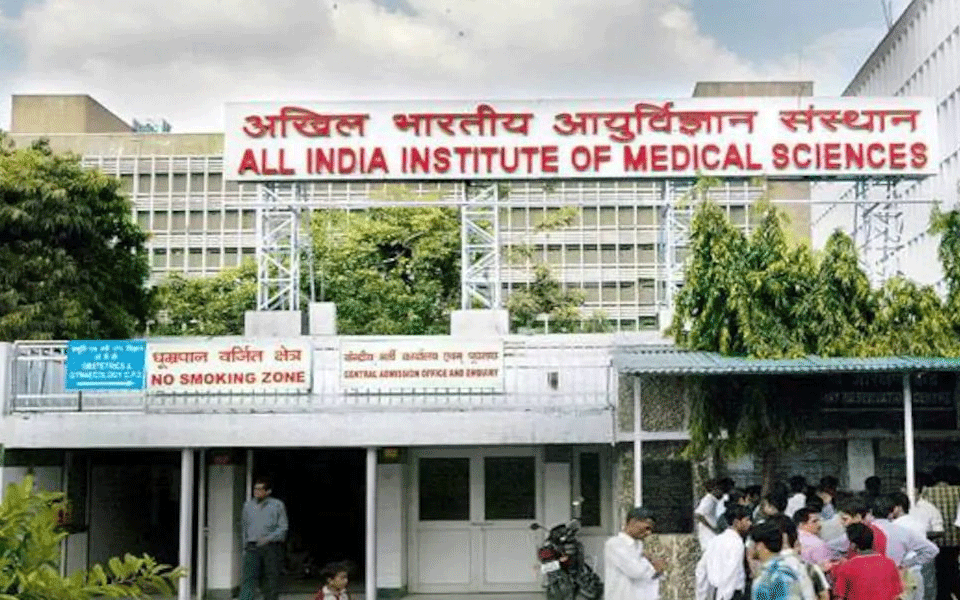
A study published this year by Dr Rajesh Sagar, professor of psychiatry at AIIMS, stated that India has a huge burden due to mental health problems with one in every seven persons estimated to be suffering from a clinically diagnosable mental disorder.
Further, the COVID-19 pandemic had significant direct and indirect negative effects on the mental health of the entire population, he said in his study titled 'National Tele-Mental Health Program in India: A step towards mental health care for all?'
The study stated that the vision of tele-MANAS involves linking these new tele-mental health centres with the existing network of locally available mental health resources at nearby centres of excellence, medical colleges, district hospitals, and other mental health services run by the central and/or state governments.
This will help in providing immediate mental health care to a person in acute psychological distress and facilitate continuity of care by making appropriate referrals to nearby specialised mental health services depending upon the person's convenience and severity of the mental health problem, it said.
The NTMHP also envisions linking tele-mental health services with other health-related schemes and services provided by the government under the Ayushman Bharat Digital Mission (national digitalisation of health records and services) and the e-Sanjeevani platform (national tele-consultation service).
The effects of COVID-19 on mental health are prevalent. Long-term social distance protocols, fear of illness, death and future unpredictability, loss of educational and employment opportunities, economic downturn, and high work stress environment experienced by frontline healthcare workers have all been raised as concerns regarding the impact on mental health, Dr Sagar said.
"Social media misinformation and excessive screen time have become major issues in a society that is growing. Increasing common mental disorders at an alarming rate is a trend seen today (PTSD, anxiety, depression, suicidality, substance abuse, and post-Covid syndrome).
"Much stress brought on by infection prevention and control because of lockdown, self-isolation, and quarantine has led to a detrimental effect on mental health," he said.
"Although toll-free numbers and telepsychiatry consultations have had a favourable impact on people's decisions to seek care, prioritising the need of the most vulnerable individuals when allocating resources for mental health care is crucial," he said.
Let the Truth be known. If you read VB and like VB, please be a VB Supporter and Help us deliver the Truth to one and all.
Sujit Nair raises concerns over speculation of DMK-AIADMK understanding to block TVK
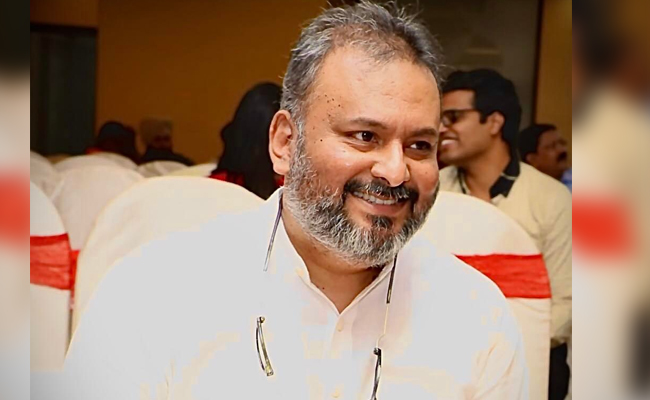
Chennai: Journalist and political commentator Sujit Nair has expressed concern over speculation that the Dravida Munnetra Kazhagam and the All India Anna Dravida Munnetra Kazhagam could explore a post-poll understanding to prevent Vijay-led Tamilaga Vettri Kazhagam from forming the government in Tamil Nadu.
In a social media post, Sujit Nair said the election verdict in Tamil Nadu reflected a clear public demand for political change and argued that the mandate should be respected irrespective of political preferences.
Referring to reports and political discussions surrounding a possible understanding between the DMK and AIADMK, he said he hoped such developments remained only speculative conversations and did not turn into reality.
Nair stated that if such an alliance were to take shape, it would raise serious questions about ideological politics in the country. He said TVK had emerged through a democratic electoral process and that the legitimacy to govern in a parliamentary democracy comes from the people’s verdict.
According to him, attempts to prevent an electoral winner from forming the government through unexpected political arrangements may be constitutionally valid, but many people could view them as politically opportunistic.
He further said that such a move could particularly affect the political image of the DMK, which has historically projected itself around ideology, social justice and opposition politics. Nair said that in ideological terms, the DMK appeared closer to TVK than to the AIADMK, and joining hands with its long-time political rival only to remain in power could weaken its broader political narrative.
He added that the same questions would apply to the AIADMK as well, as the party had spent decades positioning itself against the DMK and such an arrangement could create discomfort among its cadre and supporters.
Drawing a comparison with Maharashtra politics in 2019, Nair said he had expressed similar views when the Shiv Sena formed an alliance with the Indian National Congress and the Nationalist Congress Party after the Assembly elections.
He said post-poll alliances between long-standing political rivals often create a public perception that ideology and electoral mandates become secondary when political power equations come into play.
Nair also said such developments increase public cynicism towards politics and reinforce the belief among voters that ideology is often sidelined after elections.
He maintained that the Tamil Nadu verdict was emphatic and said respecting both the spirit and substance of the mandate was important for the credibility of democratic politics.