Govt wants Rs 3.6 lakh crore from RBI, a third of its reserves, central bank says no
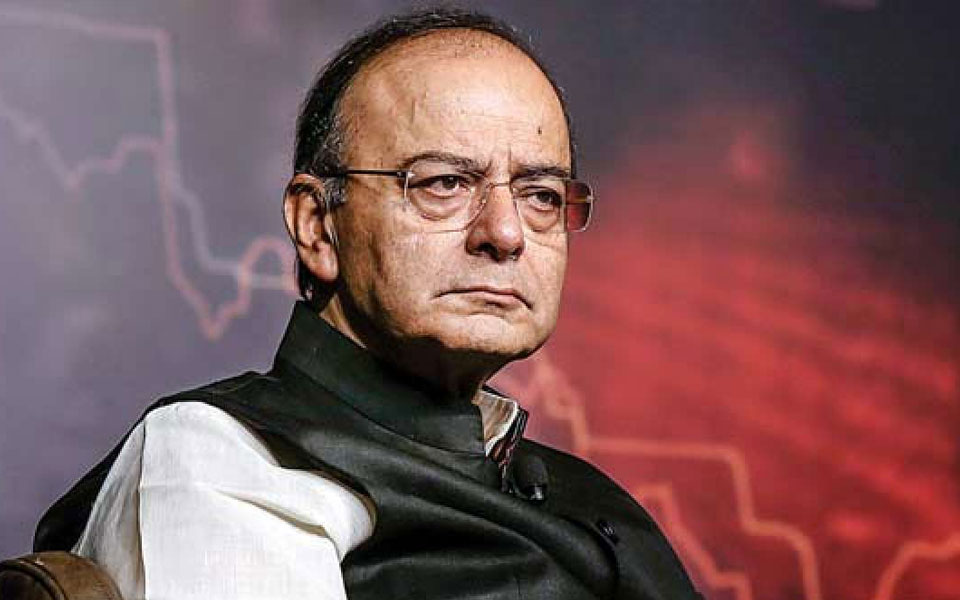
New Delhi : At the heart of the RBI-government standoff is a proposal by the Finance Ministry seeking to transfer a surplus of Rs 3.6 lakh crore, more than a third of the total Rs 9.59 lakh crore reserves of the central bank, to the government. The ministry has suggested that this surplus can be managed jointly by the RBI and the government.
The Finance Ministry claims that the existing economic capital framework — which governs the RBI’s capital requirements and terms for the transfer of its reserves to the government — is based on a very “conservative” assessment of risk by the central bank.
Sources have confirmed to The Indian Express that the RBI views this attempt by the Government to dip into its reserves can adversely impact macro-economic stability. And so the RBI has not accepted the proposed changes, sources said.
For its part, the Finance Ministry argues that the current framework was “unilaterally” adopted by the RBI in July 2017 because both the government nominees on the Board were not present during the meeting. The government did not accede to this framework and has since then been constantly seeking discussions with the RBI.
The government is of the view that RBI has over-estimated its capital reserves requirements resulting in excess capital of Rs 3.6 lakh crore.
That’s why, sources said, the government has proposed that the use of these funds be decided in consultation with the RBI. These funds can be used, for example, to recapitalise public sector banks, help them expand their loan book and come out of the Prompt Corrective Action framework.
The RBI, however, feels strongly that using central bank reserves has pitfalls. In its opinion, this does not tantamount to any fresh income, and was essentially in the nature of issuing new securities to fund government expenditure. Not only does it hurt the government’s commitment to fiscal prudence, it also affects the confidence of the financial markets.
The finance ministry has also raised objections to the staggered surplus distribution policy (SSDP) of the central bank, under which the RBI transfers its surplus to the government. The ministry’s view is that RBI has been “conservative” and at times “arbitrary,” especially when it came to the transfer of the interim surplus.
Sources said the ministry proposed that from 2017-18, the RBI should transfer the entire surplus to the government after taking into account its capital requirement. This is another area where the government and the RBI differ.
In 2017-18, the RBI transferred a surplus of Rs 50,000 crore to the government (comprising an interim transfer of Rs 10,000 crore), up from Rs 30,659 crore in 2016-17, but lower than in the previous three years.
The government believes that, when compared with global central banks, the RBI holds much higher total capital as a percentage of its total assets (at about 28 per cent).
Countries including the US, the UK, Argentina, France, Singapore maintain much lower capital as a percentage of total assets, while the same for countries including Malaysia, Norway and Russia are much higher than India.
The RBI maintains various types of reserves to cover various risks including market risk, operational risk, credit risk and contingency risk. For the year ending June 2018, RBI had total reserves of Rs 9.59 lakh crore, comprising mainly currency and gold revaluation account (Rs 6.91 lakh crore) and contingency fund (Rs 2.32 lakh crore).
While Contingency Fund represents the provisions made for unforeseen contingencies, the Currency and Gold Revaluation Account represent unrealised marked to market gains/losses.
In his speech on October 26, which brought into open the tussle between the finance ministry and the central bank, RBI Deputy Governor Viral Acharya said how a transfer of excess reserves from a central bank to government can be “catastrophic,” as had been proven in the case of Argentina. The transfer of $6.6 billion of its central bank’s reserves to the national treasury, sparked off “the worst constitutional crises in Argentina and led to “a grave reassessment of its sovereign risk”, Acharya asserted.
To buttress his point, Acharya quoted former Deputy Governor Rakesh Mohan to warn against the pitfalls of the government using central bank’s reserves. “The longer-term fiscal consequences would be the same if the government issued new securities today to fund the expenditure. (Raiding) the RBI’s capital creates no new government revenue on a net basis over time, and only provides an illusion of free money in the short term.”
Last Wednesday, the finance ministry said that the autonomy for the RBI “is an essential” and both the government and the RBI have to be “guided by public interest and the requirements of the Indian economy”. The government tried to defuse the tension in its relations with the RBI, which soured over the ministry starting consultations over a range of issues with the central bank under the Section 7 of the RBI Act.
Queries sent to the finance ministry and the RBI seeking comments for the story did not elicit any response.
Many economists and expert committees have in the past argued that the RBI is holding much higher capital that required to cover all its risks and contingencies. Former Chief Economic Adviser Arvind Subramanian said in Economic Survey2016-17 that the RBI is “is already exceptionally highly capitalized” and nearly Rs 4 lakh crore of its capital transfer to the government can be used for recapitalizing the banks and/or recapitalizing a Public Sector Asset Rehabilitation Agency. This proposal was opposed by the then RBI Governor Raghuram Rajan.
The Malegam Committee in 2013 estimated that the RBI was holding Rs 1.49 lakh crore of reserves and buffers in excess of its requirements.
courtesy : indianexpress.com
Let the Truth be known. If you read VB and like VB, please be a VB Supporter and Help us deliver the Truth to one and all.
CM Siddaramaiah alleges ‘criminal conspiracy’ in Sringeri recount, vows legal action
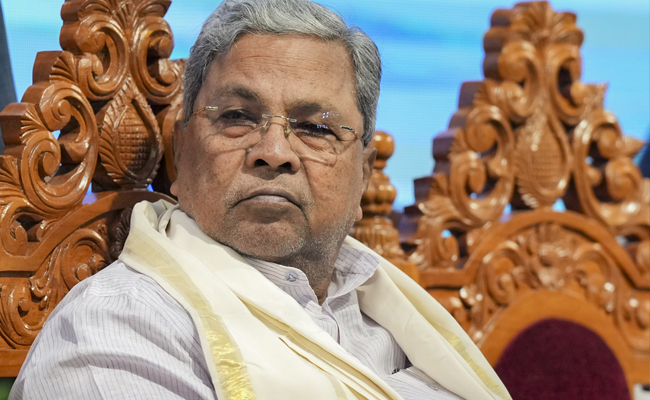
Bengaluru (PTI): Alleging a “criminal conspiracy” by BJP candidate D N Jeevaraj in the Sringeri Assembly poll recounting, Karnataka CM Siddaramaiah on Tuesday said the outcome was manipulated after valid postal ballot votes in favour of Congress leader T D Raje Gowda were tampered with during the recounting process.
Following a Karnataka High Court order on an election petition filed by Jeevaraj, challenging Raje Gowda’s election, the reverification and recounting were conducted on Saturday.
After the reverification and recount of postal ballots for the Sringeri Assembly constituency, votes polled in favour of Raje Gowda were reduced by 255, the returning officer said.
A report on the matter has been submitted to the Election Commission of India for further action, the officer added.
Congress leader Raje Gowda had won the 2023 Assembly polls from Sringeri by 201 votes, defeating his nearest rival Jeevaraj.
Addressing a press conference in Bengaluru, Siddaramaiah said the High Court had directed the recounting of postal ballots and that irregularities were noticed during the exercise conducted on May 2.
“This is a clear case of criminal conspiracy,” Siddaramaiah said, alleging that valid votes cast in favour of Raje Gowda were altered after being accepted by counting agents of all parties, including Congress, BJP, and JD(S).
He claimed that during the recounting of postal ballots, 255 votes were initially accepted as valid by all agents but were later tampered with by subordinate officials.
“There is a second mark on the votes polled in favour of Raje Gowda. They had accepted these as valid votes. Subsequently, another mark was made by officials. This is a clear case of criminal conspiracy,” he said.
When asked who was behind the alleged conspiracy, the CM replied, “It was hatched by Jeevaraj and others. It is planned.”
Siddaramaiah further alleged that the returning officer acted improperly by declaring the result despite the presence of an Election Commission observer during the recounting.
“Immediately after the counting, the returning officer announced the result. He should not have done so; this is against the law,” he said.
He pointed out that Raje Gowda had originally won by 201 votes, but after the recounting, the BJP candidate was declared the winner by 52 votes.
“The BJP has committed a criminal act of conspiracy. This is not vote chori but vote dacoity,” he alleged.
The CM said a police complaint had already been filed by Raje Gowda’s election agent, Sudhir Kumar, and emphasised the need for electoral integrity.
“We want transparency and free and fair elections. That is what our Constitution mandates,” he added.
Stating that the government would pursue legal remedies, Siddaramaiah said, “We are preparing an appeal challenging the returning officer’s announcement in a court of law.”
Responding to a separate query on elections in other states, the CM said there appeared to be an anti-incumbency factor in West Bengal, while results in Tamil Nadu were “surprising,” adding that Vijay’s party was emerging as the largest there.
Following the victory of party candidates in Bagalkote and Davanagere South, Siddaramaiah expressed confidence about future electoral prospects in Karnataka.
“Even in 2028, we will win the Assembly elections. We will come back,” the CM said.
Siddaramaiah added that he would order a forensic examination into the alleged tampering of postal ballots.