Govt warns wholesalers, traders against hoarding of essential food items
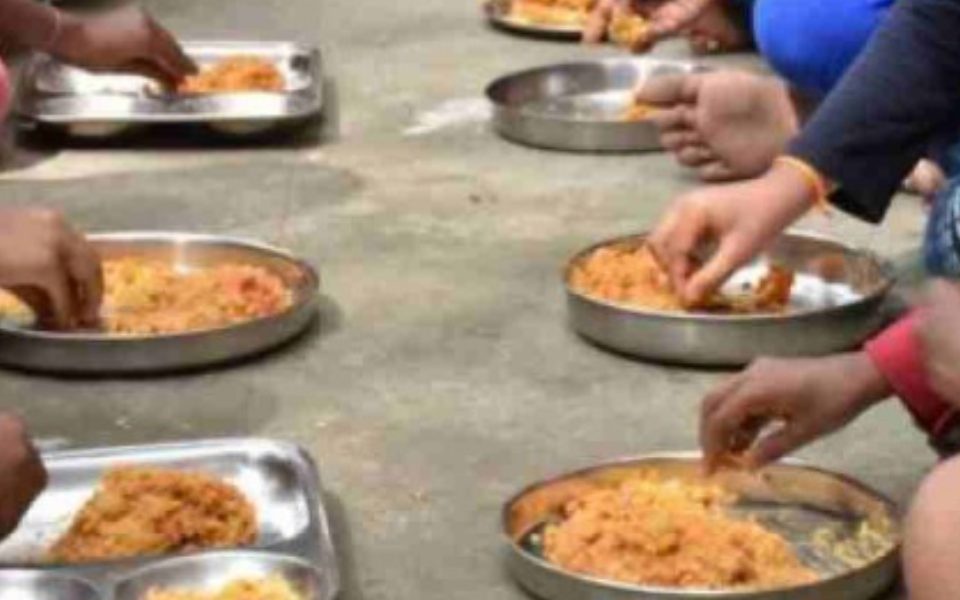
New Delhi, May 9 (PTI): The government on Friday said the country has ample food stocks to meet domestic demand but warned traders and wholesalers against hoarding of essential food items creating artificial shortage.
The warning came as the conflict between India and Pakistan widened with Pakistan resorting to unprovoked shelling and drone attacks in border towns.
In a social media post, Union Food and Consumer Affairs Minister Pralhad Joshi also urged citizens not to panic or rush to the markets to purchase foodgrains.
"Don’t believe in propaganda messages regarding food stocks in the country. We have ample food stocks, far exceeding required norms. DONT PAY HEED TO SUCH MESSAGES".
"Traders, wholesalers, retailers or business entities which engage in trading of Essential Commodities are directed to cooperate with Law Enforcement agencies. Any person indulging in hoarding or stockpiling, shall be prosecuted under relevant sections of the Essential Commodities Act," Joshi said.
Later in an official statement, Joshi asserted there is no shortage of essential commodities in the country.
"I want to assure everyone that we currently have stocks many times higher than the normal requirement-whether it is rice, wheat, or pulses such as chana, tur, masoor, or moong. There is absolutely no shortage, and citizens are advised not to panic or rush to the markets to purchase food grains,” he said.
Meanwhile, Union Agriculture Minister Shivraj Singh Chouhan on Friday reviewed the food stock situation in the country as well as preparedness for ensuing kharif sowing season which starts with the onset of monsoon rains.
The agriculture minister directed officials to be prepared to assist farmers in bordering states with sowing operations to ensure that they do not face difficulties due to the ongoing conflict between India and Pakistan.
Chouhan said he would speak with chief ministers of bordering states/UT like Jammu and Kashmir and Punjab regarding requirements in case villages need evacuation.
Elaborating on the food supply situation, the food ministry said the current rice stock stands at 356.42 lakh tonne against a buffer norm of 135 lakh tonne. Similarly, wheat stock is 383.32 lakh tonne against a buffer norm of 276 lakh tonne.
"Thus, demonstrating a strong surplus over the required buffer norms, ensuring nationwide food security," the statement said.
In addition, India currently holds about 17 lakh tonne of edible oil stocks.
"Domestically, the availability of mustard oil is ample during the ongoing peak production season, further supplementing edible oil supply," it said.
The ongoing sugar season started with a carry-over stock of 79 lakh tonne. Production is estimated at 262 lakh tonne, after accounting for the diversion of 34 lakh tonne for ethanol production.
Sugar marketing year runs from October to September.
As of now, around 257 lakh tonne of sugar has already been produced.
Considering the domestic consumption of 280 lakh tonne and exports of 10 lakh tonne in 2024-25 marketing year, the closing stock is expected to be around 50 lakh tonne which is more than the consumption of two months.
The production outlook for the 2025-26 sugar season is also promising due to favourable climatic conditions, the ministry said.
Let the Truth be known. If you read VB and like VB, please be a VB Supporter and Help us deliver the Truth to one and all.
Maharashtra sets up state vaccination task force to strengthen immunisation programme
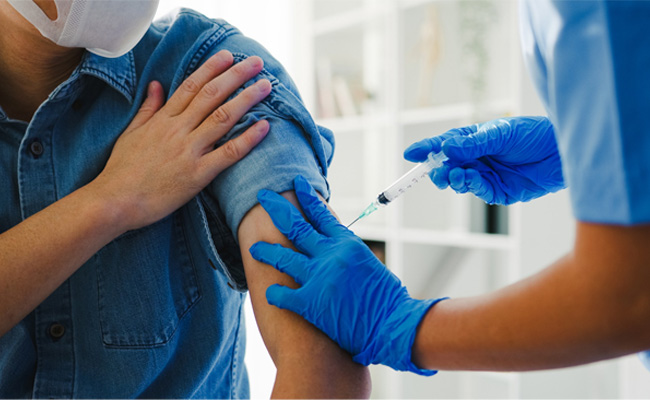
Mumbai (PTI): The Maharashtra government has set up a State Vaccination Task Force to strengthen the regular immunisation programme and review the progress of related campaigns, a health department official said on Monday.
The State Vaccination Task Force will comprise at least 29 members and will be headed by the administrative head of the health department, he informed.
The government has also constituted separate district-level and municipal vaccination task forces to improve implementation and address challenges at the grassroots level, he said.
Municipal task forces, chaired by respective civic commissioners, have been constituted in view of the vast urban population in Maharashtra and the role of civic bodies in implementing different health programmes.
The district-level task forces will function under the chairmanship of collectors.
"Complete immunisation of children at the appropriate age is an extremely simple, cost-effective and highly effective measure to reduce child mortality and the prevalence of diseases among kids. Immunisation is a powerful tool for reducing illness in children," maintained the official.
To ensure full vaccination of all children, the state government implements various campaigns from time to time as per the central government guidelines, he pointed out.
"Active participation and cooperation of other relevant government departments are essential (in making these campaigns successful)," according to the official.
The state-level body will review the regular immunisation programme, associated campaigns and vaccine-preventable diseases in detail. It will also conduct focused assessments of high-risk districts and municipal corporations, including vacancies at district, municipal and sub-district levels, availability of cold chain equipment, resource gaps and training requirements, he noted.
The state task force will review allocation and utilisation of funds for immunisation and ensure timely action by officers concerned based on reports from district and municipal task forces and state-level monitoring mechanisms, the official said.
It will also ensure active coordination and participation of other government departments in immunisation drives, while district and municipal task forces will carry out similar functions at their respective levels, the official added.