Govt's negative opinion about me proves my judicial independence: Outgoing Rajasthan HC's CJ
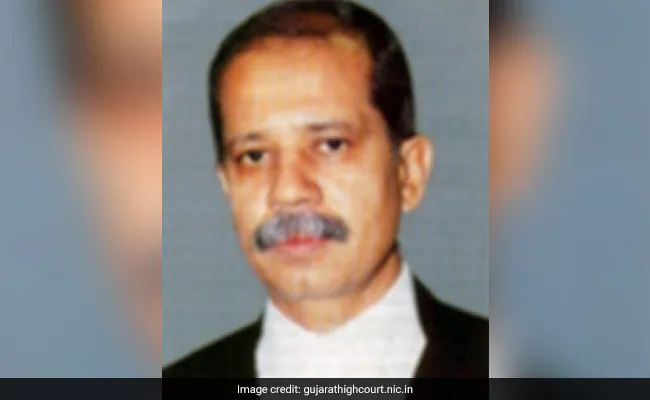
Jodhpur, Mar 5: The outgoing chief justice of the Rajasthan High Court, Justice Akil Abdulhamid Kureshi, on Saturday said the government's negative perception about him is a certificate of his judicial independence.
Justice Kureshi made the remark referring to some observations made by a former chief justice of India in his biography, explaining why the Rajasthan CJ's recommendations on the appointment of the CJs of the Madhya Pradesh and Tripura high courts were rejected.
Addressing the members of the bar and bench of the Rajasthan High Court on the last day of his office, outgoing Chief Justice Kureshi also expressed surprise over the alleged heavy pruning by the Supreme Court the list of advocates sent by high courts for their appointment as judges.
This will lead to a dearth of bright judicial minds on the bench, he cautioned.
Though Justice Kureshi did not name the former CJI, he apparently referred to former CJI Ranjan Gogoi, whose autobiography released last December, had reportedly mentioned about the much-talked-about transfers of Justice Kureshi, then a judge of the Gujarat High Court and Justice V K Tahilramani, the then CJ of the Madras High Court, amongst others.
I have not read the biography but going by the media reports, he has made certain disclosures regarding changing of my recommendations for the CJs of MP and Tripura. It is stated that the government had some negative perceptions about me based on my judicial opinions, he said.
As a judge of a constitutional court whose most primary duty is to protect the fundamental and human rights of citizens, I consider it as a certificate of independence, he added.
Referring to the elevation of advocates to the bench, Justice Kureshi said he was surprised to see the list of advocates recommended by high courts for appointment to the bench being pruned heavily by the Supreme court.
Whatever is the reason for this difference in the perception between high courts and the Supreme Court, it must be resolved quickly or else we will find it increasingly difficult to have good advocates to join the bench, he said.
While talking about his stint as the Rajasthan High Court's chief justice, Justice Kureshi also mentioned the shortage of judges, attributing it to the burden and burnout effect on judges .
When I joined, there were only 36 judges. I do not think this number was ever crossed. During this period, work has increased manifold. It puts an inhuman burden on judges and it has its burnout effects, he said.
Kureshi, who had joined the Rajasthan High Court as its chief justice on October 12, 2021, said the very reason for the existence of courts was to protect the rights of citizens .
He stated that far more than any direct affront, it is stealthily encroaching on the democratic values and rights of citizens, which should worry all, he said.
Justice Kureshi also called upon young lawyers to live by principles, and said, Success is sweeter when you reach your destination through a straight path and failure as a product of principled living was more satisfying than success founded on compromises.
Let the Truth be known. If you read VB and like VB, please be a VB Supporter and Help us deliver the Truth to one and all.
Congress using hijab issue to pacify minority anger, alleges Karnataka LoP R Ashoka
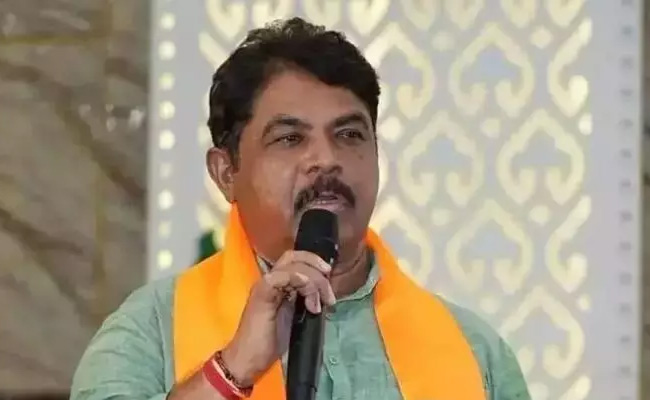
Bengaluru: Leader of Opposition in the Assembly R. Ashoka has accused the Congress government of using the hijab issue to placate what he described as discontent among minority voters after the Davanagere by-election.
In a post on X on Wednesday, Ashoka alleged that the state government, instead of addressing issues such as price rise, corruption, farmers’ distress and law and order, was attempting to retain its minority vote base by reviving the hijab issue.
Referring to the 2022 dress code introduced by the BJP government, which prohibited hijab in schools and colleges, Ashoka said the Karnataka High Court had upheld the policy and emphasised the importance of discipline in educational institutions.
He questioned the Congress government’s move to revisit the issue and asked whether setting aside the court-backed policy to benefit one community could be described as secularism.
Ashoka further alleged that while the government was willing to permit hijab, it continued to prohibit saffron shawls.
He accused the government of dividing students on religious lines rather than treating schools and colleges as spaces of equality.
Drawing a comparison with Mamata Banerjee’s government in West Bengal, Ashoka claimed that excessive appeasement politics had harmed the state and warned that the Congress in Karnataka could face a similar political response.
He said voters in Karnataka would teach the Congress a lesson for what he termed “vote-bank politics” and for compromising constitutional and judicial principles.