'Eco Friendly' green crackers with 30% less toxic pollution to be available in markets this Diwali

New Delhi, Oct 5: Green crackers with 30 per cent less emissions have entered the market, Union Minister Harsh Vardhan announced on Saturday, noting that the step has been taken so that people's sentiments are taken care of without harming the environment.
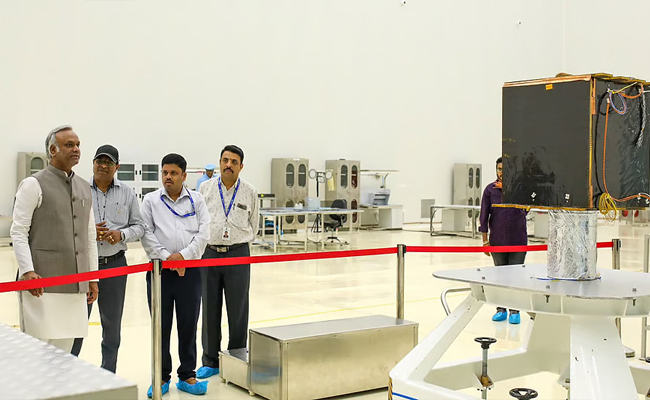
The green crackers were displayed by the minister and scientists of Council for Scientific and Industrial Research (CSIR) who were involved in their making at an event here.
The Health Minister said the new and improved crackers have been introduced to deal with the menace of pollution.
"I am happy to announce that we have green crackers with reduced emission by minimum 30 per cent. These are environmental friendly. We had appealed to our scientists to come up with an alternative to the polluting fire crackers so that people's sentiment are taken care of without harming the environment," the minister said.
Showcasing the crackers, the minister and scientists from CSIR said they are available in the market at lesser cost due to the changed composition.
"The green crackers will be available at a cheaper price. It will not be more than the existing ones. The composition of the chemicals has changed which has reduced their cost," said Sadhana Rayalu, chief scientist and head of environmental materials division, CSIR-NEERI.
The scientists, however, did not reveal the exact price of the new crackers .
In 2018, just before Diwali, the Supreme Court had banned manufacturing of polluting firecrackers and ruled that only green crackers with reduced emission will be allowed to be sold in the country in order to control the pollution level.
The court had passed the order after the Centre had suggested that emission level in crackers could be reduced by changing the chemical composition and termed it green crackers. However, most manufactures and sellers were left clueless at that time and hardly any green crackers were available in the market.
CSIR-NEERI has developed eco-friendly ‘green crackers’ which are now available in the market for consumers for coming Diwali. Addressing media in Delhi today at Anusandhan Bhawan, I said these have been developed jointly with firework manufacturers.@PMOIndia @CSIR_IND pic.twitter.com/NOl79AMxqa
— Dr Harsh Vardhan (@drharshvardhan) October 5, 2019
Let the Truth be known. If you read VB and like VB, please be a VB Supporter and Help us deliver the Truth to one and all.
Man arrested with Rs 2.54-crore heroin in Mumbai

Mumbai (PTI): Police have arrested a man and seized over 500 grams of heroin worth Rs 2.54 crore in the illicit market from him in Mumbai, officials said on Friday.
The police's Anti-Narcotics Cell (ANC) made the drug seizure in Santacruz in the western suburbs. The operation was conducted by the Kandivali unit of the ANC on Thursday as part of a special crackdown against drug trafficking in the area, they said.
Acting on specific inputs, an ANC team conducted a raid in Santacruz (East) and intercepted a man. During a search, the team recovered 508 grams of high-grade heroin from his possession, an official said.
The seized contraband, a highly addictive, opioid drug derived from morphine, is estimated to be worth Rs 2.54 crore in the international market, he informed.
Following the seizure, a case was registered against the man under relevant sections of the Narcotic Drugs and Psychotropic Substances (NDPS) Act, 1985, and he was formally placed under arrest in the early hours of Friday.
The police are currently investigating the source of the drug and trying to identify the intended recipients of the consignment, he said.