GST collections rise by 9 pc to Rs 1.89 lakh cr in Sep
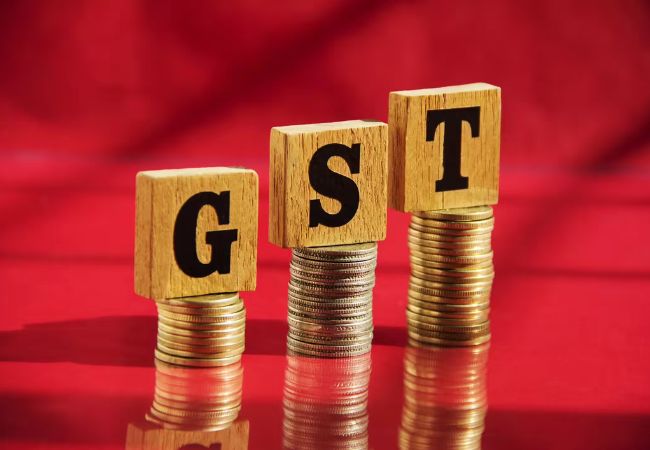
New Delhi (PTI): GST collections clocked near double-digit growth to amass Rs 1.89 lakh crore in September -- a month in which the reduced tax rates came into effect in the second half.
The GST collections were 9.1 per cent higher than the same month a year ago and over 1.5 per cent higher than the previous month.
Gross Goods and Services Tax (GST) mop-up was Rs 1.73 lakh crore in September 2024. Last month, the collection was Rs 1.86 lakh crore, as per government data released on Wednesday.
It is to be noted that GST 2.0 reforms in the form of rate rationalisation, which came into force on September 22, have been reflected in the collections.
Prices of as many as 375 items, including kitchen staples to electronics, from medicines and equipment to automobiles, got cheaper from September 22. The month has seen increased demand due to rate cuts.
During the month, the gross domestic revenue grew 6.8 per cent to Rs 1.36 lakh crore, while tax from imports rose 15.6 per cent to Rs 52,492 crore in September.
However, GST refunds also rose by a steep 40.1 per cent year-on-year to Rs 28,657 crore.
Net GST revenue stood at Rs 1.60 lakh crore in September 2025, recording 5 per cent year-on-year growth.
Deloitte India partner MS Mani said the increase in gross GST collections to Rs 1.89 lakh crore for the month indicates that there has not been any significant slowdown in economic activity in anticipation of the GST rate cuts during August, as this data relates to transactions in August.
With these collections for September, he said, the average monthly collections during FY26 are just a little short of Rs 2 lakh crore a month, marking a significant increase compared to FY25 when the average monthly collections till September 2024 were Rs 1.8 lakh crore.
The impact of the surge in consumption from September 22 and the slowdown in demand from September 1-21, 2025, seems to have balanced each other as far as GST revenues are concerned, Tax Connect Advisory partner Vivek Jalan said.
However, he said, what could not balance out is the consumption in the manufacturing states (Maharashtra, Gujarat, Tamil Nadu & Karnataka) due to the slowdown in inter-state stock transfers and supplies till September 21 due to fears of ITC accumulation on rate reduction and the continued slowdown due to scarcity of vehicles from September 22, 2025.
Let the Truth be known. If you read VB and like VB, please be a VB Supporter and Help us deliver the Truth to one and all.
India, New Zealand ink free trade agreement
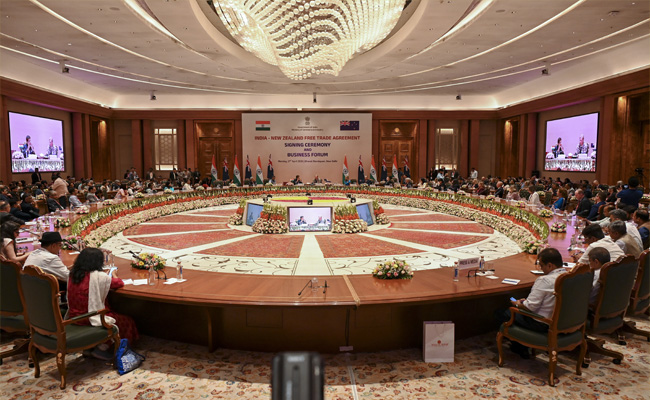
New Delhi (PTI): India and New Zealand on Monday inked a free trade agreement, aimed at boosting two-way commerce and investments.
The pact was signed by Commerce and Industry Minister Piyush Goyal and visiting New Zealand's Trade and Investment Minister Todd McClay.
The FTA provides duty-free access for 100 per cent of India's exports to New Zealand, covering all tariff lines or produce categories, and is expected to significantly boost MSMEs and employment by enhancing competitiveness in labour-intensive sectors such as textiles, apparel, leather, footwear, gems and jewellery, engineering goods, and processed foods.
Earlier, New Zealand maintained peak tariffs of up to 10 per cent on key Indian exports, including ceramics, carpets, automobiles, and auto components.
With zero-duty market access from entry into force as New Zealand's other trade partners, Indian products will be fully competitive in that country, enjoying a level playing field.
ALSO READ: Cal HC urges EC to dispose of TMC complaint over police observer's meeting with BJP nominee
Significantly, India also secured duty-free inputs for its manufacturing sector, including wooden logs, coking coal, and waste and scraps of metals, lowering production costs and enhancing the global competitiveness of the Indian industry.
On the other hand, India has offered tariff liberalisation on 70.03 per cent of tariff lines covering 95 per cent of bilateral trade value, while keeping 29.97 per cent of tariff lines excluded to protect India's sensitive sectors.
The products that are kept in exclusion are mainly -- dairy (milk, cream, whey, yoghurt, cheese etc.), animal products (other than sheep meat), agricultural products (onions, chana, peas, corn, almonds), sugar, artificial honey, animal, vegetable or microbial fats and oils, arms and ammunition, gems and jewellery, copper and articles thereof (cathodes, cartridges, rods, bars, coils), aluminium and articles thereof (ingots, billets, wire bars) among others.
On 30 per cent of tariff lines of New Zealand, India will provide duty elimination on goods such as wood, wool, sheep meat, and leather-raw hides.
Similarly, 35.60 per cent of tariff lines are subject to phased elimination over 3, 5, 7, and 10 years, including petroleum oil, malt extract, vegetable oils, selected electrical and mechanical machinery, and peptones.
New Zealand products which enjoy tariff reductions include wine, pharmaceutical drugs, polymers, aluminum, iron and steel articles, and goods that only 0.06 per cent fall under tariff rate quotas, including Manuka honey, apples, kiwi fruit, and albumins, including milk albumin.
The FTA also includes a commitment to facilitate USD 20 billion in investment into India.
A rebalancing clause is incorporated into the Agreement to provide a framework for addressing any shortfall in investment delivery, thereby ensuring robust and tangible economic outcomes.
Total bilateral trade in goods and services reached USD 2.4 billion in 2024.