GST exemption on domestic supplies, commercial imports of COVID drugs to make them costlier: FM
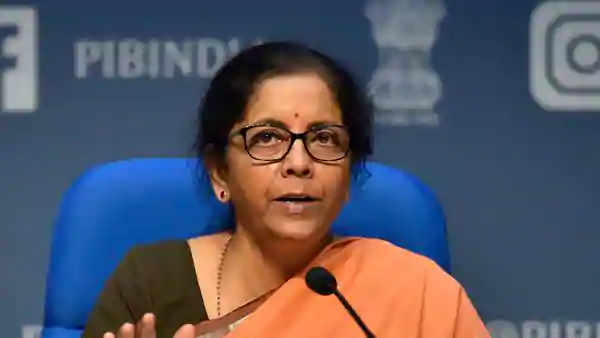
New Delhi, May 9: Finance Minister Nirmala Sitharaman on Sunday said GST exemption to domestic supplies and commercial import of COVID drugs, vaccines and oxygen concentrators would make these items costlier for consumers as manufacturers would not be able to offset the taxes paid on inputs.
Currently, domestic supplies and commercial imports of vaccines attract a 5 per cent Goods and Services Tax (GST), while it is 12 per cent in case of COVID drugs and oxygen concentrators.
"If full exemption from GST is given, vaccine manufacturers would not be able to offset their input taxes and would pass them on to the end consumer/citizen by increasing the price. A 5 per cent GST rate ensures that the manufacturer is able to utilise ITC and in case of overflow of ITC, claim refund. Hence exemption to vaccine from GST would be counterproductive without benefiting the consumer," Sitharaman tweeted.
She further said that if Integrated GST (IGST) Rs 100 is collected on an item, Rs 50 accrues to the Centre and the States each as Central GST and State GST respectively. Further 41 per cent of the CGST revenue is devolved to States. So out of a collection of Rs 100, as much as Rs 70.50 is the share of the states.
From the GST collected on vaccine, half is earned by the Centre and the other half by the States. Further, 41 per cent of Centre's collections also get devolved to the States. So states end up receiving almost 70 per cent of the total revenue collected from vaccines.
"In fact, a nominal 5 per cent GST is in the interest of the domestic manufacturer of vaccine and in the interest of the citizens," Sitharaman said.
West Bengal Chief Minister Mamata Banerjee earlier in the day wrote to Prime Minister Narendra Modi seeking exemption from GST and customs duty any donations of oxygen concentrators, cylinders, cryogenic storage tanks and COVID related drugs from organisations or agencies.
The Finance Minister tweeted her response to the Chief Minister's letter, saying these items are already exempted from customs duty and health cess. Besides, Integrated GST (IGST) is also exempted on all COVID relief material imported by the Indian Red Cross for free distribution in the country.
Also IGST exemption has been given in case of goods when imported free of cost for free distribution in the country by any entity, state government, relief agency or autonomous body on the basis of a certificate issued by a state government.
"In order to augment the availability of these items, government has also provided full exemption from basic customs duty and health cess to their commercial imports," Sitharaman said.
The government has already exempted from customs duty import of a host of COVID-related relief materials, including Remdesivir injection and its APIs, Inflammatory diagnostic (markers) kits, medical grade oxygen, oxygen therapy related equipment such as oxygen concentrators, cryogenic transport tanks, etc, and Covid vaccines.
Besides, effective May 3, the government exempted IGST on import of COVID-relief material received as donation for free distribution in the country, a move which helped speed up customs clearances of such imports. This exemption would be subject to nodal authorities, appointed by the state governments, authorising any entity, relief agency or statutory body, for free distribution of such relief material.
The said goods can be imported free of cost by a state government or, any entity/ relief agency/ statutory body, authorized in this regard for free distribution anywhere in India.
Let the Truth be known. If you read VB and like VB, please be a VB Supporter and Help us deliver the Truth to one and all.
Gold, silver soar as US-Iran deal hopes lift bullion demand
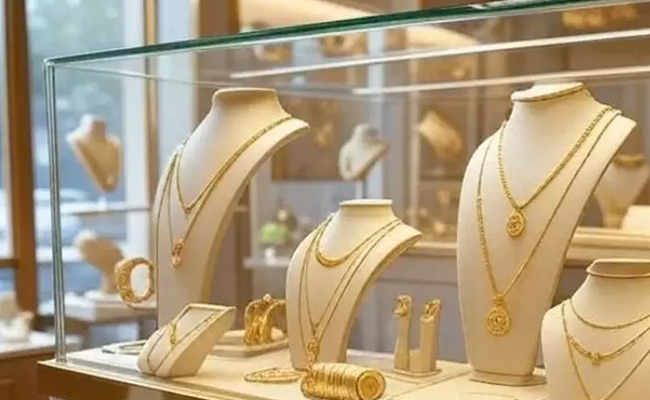
New Delhi (PTI): Gold prices rebounded by Rs 2,900 to Rs 1.55 lakh per 10 grams in the national capital on Wednesday, while silver climbed to Rs 2.54 lakh per kilogram as easing geopolitical tensions triggered a pullback in oil rates, boosting demand for precious metals.
According to the All India Sarafa Association, the yellow metal of 99.9 per cent purity jumped by Rs 2,900, or nearly 2 per cent, to Rs 1,55,400 per 10 grams (inclusive of all taxes) from Tuesday's closing level of Rs 1,52,500 per 10 grams.
Traders attributed the surge in bullion prices to reports that Washington and Tehran are close to finalising a framework agreement to end months of conflict, raising the prospects of smoother flows through the Strait of Hormuz and easing inflation concerns tied to energy markets.
"Gold rallied strongly on Wednesday as easing geopolitical tensions triggered a sharp reversal in key macro drivers that had recently pressured precious metals," Saumil Gandhi, Senior Analyst - Commodities at HDFC Securities, said.
Silver prices also advanced for the third straight session by rising Rs 3,500, or 1.4 per cent, to Rs 2,54,500 per kg (inclusive of all taxes). The metal had settled at Rs 2,51,000 per kg in the previous session, as per the Association.
"The prospect of a diplomatic breakthrough triggered a steep decline in oil prices and the US dollar, easing concerns about inflation while boosting demand for precious metals," Gandhi said.
Globally, spot gold increased by USD 106.15, or 2.33 per cent, to USD 4,663.70 per ounce while silver gained USD 3.40, or 4.68 per cent, to USD 76.24 per ounce.
"Gold witnessed a sharp rally as markets reacted positively to reports that the US and Iran are moving closer to a one-page agreement framework aimed at ending the conflict," Jateen Trivedi, VP Research Analyst - Commodity and Currency, LKP Securities, said.
Despite strong international gains, rupee strength limited the upside in domestic gold prices. The market is now highly focused on final confirmation and execution of the proposed deal, he added.
Any negative surprise or breakdown in negotiations could trigger a sharp sell-off in gold, while a successful agreement and sustained ceasefire could push the bullion prices higher in the near-term, Trivedi said.