GST revenue collection for July at over Rs 1.16 lakh crore

New Delhi: GST revenue for the month of July stood at over Rs 1.16 lakh crore, 33 per cent higher than the collection in the same month of 2020, indicating that the economy is recovering at a fast pace, the finance ministry said on Sunday.
Goods and Services Tax (GST) collection in July 2020 was Rs 87,422 crore, Sequentially, it was Rs 92,849 crore in June this year.
The gross GST revenue collected in the month of July 2021 is Rs 1,16,393 crore of which Central GST is Rs 22,197 crore, State GST Rs 28,541 crore, Integrated GST Rs 57,864 crore (including Rs 27,900 crore collected on import of goods) and cess is Rs 7,790 crore (including Rs 815 crore collected on import of goods).
The revenues for the month of July 2021 are 33 per cent higher than GST collected in the same month last year and include GST returns filed between July 1-31 as well as IGST and cess collected from imports for the same period.
During the month, revenues from import of goods were 36 per cent higher and the collection from domestic transactions (including import of services) were 32 per cent higher than the revenues from these sources during the same month last year.
"GST collection, after posting above Rs 1 lakh crore mark for eight months in a row, dropped below Rs 1 lakh crore in June 2021 as the collections during the month of June 2021 predominantly related to the month of May 2021...," the finance ministry said.
During May 2021, most of the states/union territories were under either complete or partial lockdown due to COVID, it said.
"With the easing out of COVID restrictions, GST collection for July 2021 has again crossed Rs 1 lakh crore, which clearly indicates that the economy is recovering at a fast pace. The robust GST revenues are likely to continue in the coming months too," the ministry said in a statement.
Let the Truth be known. If you read VB and like VB, please be a VB Supporter and Help us deliver the Truth to one and all.
Bihar: Over 150 children fall ill after consuming 'mid-day meal' in Saharsa
Saharsa (PTI): More than 150 children were taken ill after allegedly consuming food that was part of the mid-day meal in a school in Bihar’s Saharsa district, a senior official said on Thursday.
The incident occurred at a middle school in Baluaha village of the district.
The official said that 115 children were undergoing treatment at the Sadar Hospital, while around 50 students were admitted to Mahishi Public Health Centre.
“We received information that several children fell ill after consuming the mid-day meal in Baluaha. The children were initially treated at the primary health centre, but later, many were referred to the Sadar Hospital,” Saharsa District Magistrate Deepesh Kumar told reporters.
“According to doctors, the health condition of the children has improved, but they will be kept under observation for some time. There is no need to panic. Some kids are having mild fever. They are being treated accordingly,” Kumar said.
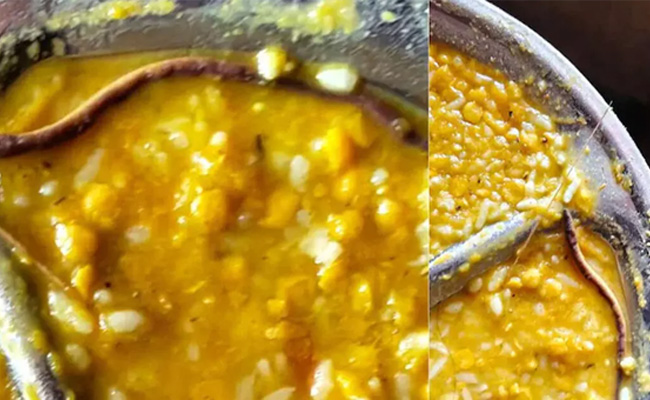
Meanwhile, family members of some children claimed that a snake was found in the container in which cooked pulses was stored at the school.
Of the 545 students present in the school, 200 had already eaten their meals by the time the snake was spotted, and later complained of stomach ache and vomiting, they said.
Regarding the claims, the DM said food samples have been collected from the school.
“We will be able to comment on this only after the results of the tested samples arrive,” he said.