Guj IAS officer had fixed bribe rates as collector, used to take 50 per cent share: ED tells court

Ahmedabad (PTI): IAS officer and former Surendranagar collector Rajendrakumar Patel had allegedly fixed bribe rates ranging from Rs 5 to Rs 10 per square metre for approving change of land use (CLU) applications, according to the Enforcement Directorate investigating a money laundering angle.
Bribes were systematically demanded and collected as "speed money" to expedite CLU applications and routed through a network of intermediaries operating from the district collector's office in Gujarat, the ED stated in a remand application submitted before a special PMLA court in Ahmedabad on January 2.
The court remanded Patel to ED custody till January 7.
ALSO READ: India becomes world's largest rice producer, surpasses China: Agri minister
A "hisaab" (accounts) of bribe collections was maintained and periodically transmitted to the district collector’s personal assistant, as per the digital evidence.
Investigations have so far traced more than 800 CLU applications where bribes were allegedly paid, resulting in the generation of proceeds of crime exceeding Rs 10 crore, which is part of the larger proceeds of crime.
The ED stated that Patel, a 2015-batch IAS officer and the then Surendranagar collector, was the key beneficiary and final decision-maker in the bribery-linked money laundering racket involving CLU approvals.
Patel was transferred without posting a week earlier, following the ED’s arrest of a deputy mamlatdar (revenue officer), Chandrasingh Mori, from his office in connection with the case.
The federal agency is investigating alleged money laundering involving Patel, Mori, and others after registering an Enforcement Case Information Report (ECIR) under the Prevention of Money Laundering Act (PMLA).
Seeking custodial remand, the ED told the court that bribes were systematically demanded and collected as "speed money" to expedite CLU applications. The rates were allegedly pre-fixed at Rs 5 to Rs 10 per square metre, depending on the nature of the application and applicable legal provisions.
The agency said that Patel, as the district collector at the relevant time, was the ultimate authority for granting CLU approvals under the Saurashtra Gharkhed, Tenancy Settlement and Agricultural Lands Ordinance, 1949, and the Gujarat Land Revenue Code, 1879. His position enabled him to control and influence the pace and outcome of CLU applications.
The ED stated that while the generation of proceeds of crime has been established prima facie, the layering, concealment, and integration of these funds are yet to be fully ascertained, making custodial interrogation necessary.
Statements recorded under the PMLA allegedly indicate a fixed sharing arrangement of the bribe amounts. Of the total bribe collected, 50 per cent allegedly went to Patel, 10 per cent was retained by an intermediary, and the remaining amount was distributed among other officials in the collectorate, including the resident additional collector, a mamlatdar, and a clerk.
The ED cited the statement of one Chetan Kanzaria, who allegedly admitted that the prevailing rate for CLU approvals was Rs 10 per square metre and that he had personally paid around Rs 65 lakh in bribes to the Surendranagar collector’s office to secure approvals.
In his statement, Patel’s PA, Jayrajsinh Zala, said that he used to share details of bribe collections with the collector from time to time and that 50 per cent of the total bribe money collected from CLU applicants was handed over to Patel.
Mori had earlier stated that Zala collected the collector’s share from him and delivered it to Patel.
Digital evidence recovered from mobile phones allegedly showed WhatsApp communications, PDF files, and photographs showing the maintenance of "hisaab" (accounts) of bribe collections and their periodic transmission to the district collector’s personal assistant.
WhatsApp communications retrieved from Mori’s phone allegedly showed that the entire network was managed and controlled as per the collector’s instructions.
The ED further alleged that although a flat in Ahmedabad was purchased in Patel’s name, the rental income was received in his mother’s bank account. The agency also claimed that Patel did not pay his children’s school fees, suggesting that household expenses were met using unaccounted cash.
Let the Truth be known. If you read VB and like VB, please be a VB Supporter and Help us deliver the Truth to one and all.
Lebanon appoints new representative for talks with Israel, rejects linkage to Iran
Beirut: Lebanon’s has moved to underline its independent position in ongoing regional developments, amid attempts to link the country to the broader conflict involving Iran, the United States and Israel.
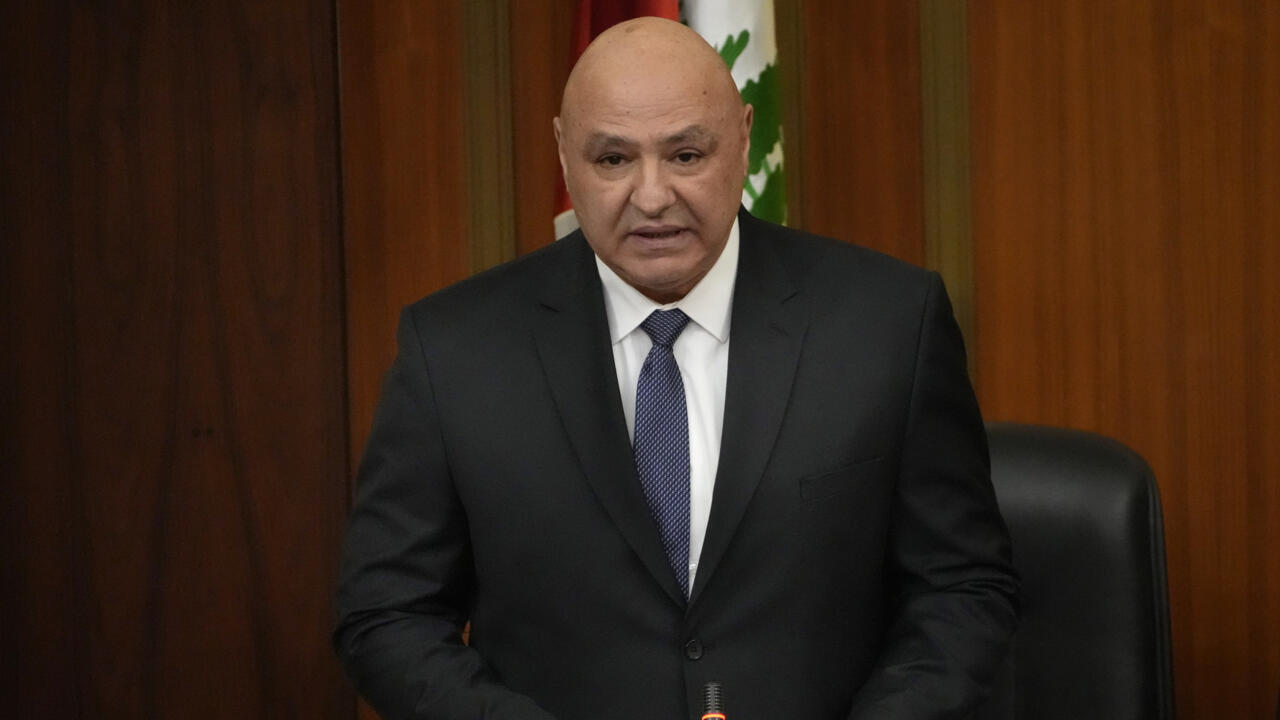
President Joseph Aoun, while announcing the appointment of former US ambassador Simon Karam as Lebanon’s representative in talks with Israel, made it clear that Karam would be the sole representative for Lebanon and that there would be no substitute.
The move comes in response to what the Lebanese officials see as efforts by Iran to tie Lebanon’s situation to the wider regional conflict. Iran had indicated that there would be no ceasefire involving the US, Israel and Iran unless it also included a ceasefire in Lebanon.
Some groups, including Hezbollah and its supporters, had expressed support for linking the situations, citing concerns that the Lebanese government has limited leverage in negotiations with Israel. Lebanon is not formally a party to the conflict, and its army is considered weak.
However, others, including Prime Minister Nawaf Salam, have opposed this approach. They view Iran’s stance as an attempt to influence Lebanon’s internal affairs and see it as undermining the country’s sovereignty.
Officials backing the government’s position say the move is aimed at reaffirming Lebanon’s sovereignty and ensuring that decisions about peace and ceasefire within the country are not dictated externally.
They also see it as a safeguard, so that any breakdown in talks between the US, Israel and Iran does not automatically lead to renewed conflict in Lebanon.