Gujarat govt praises MGNREGA scheme; calls it 'lifesaver' for labourers during pandemic
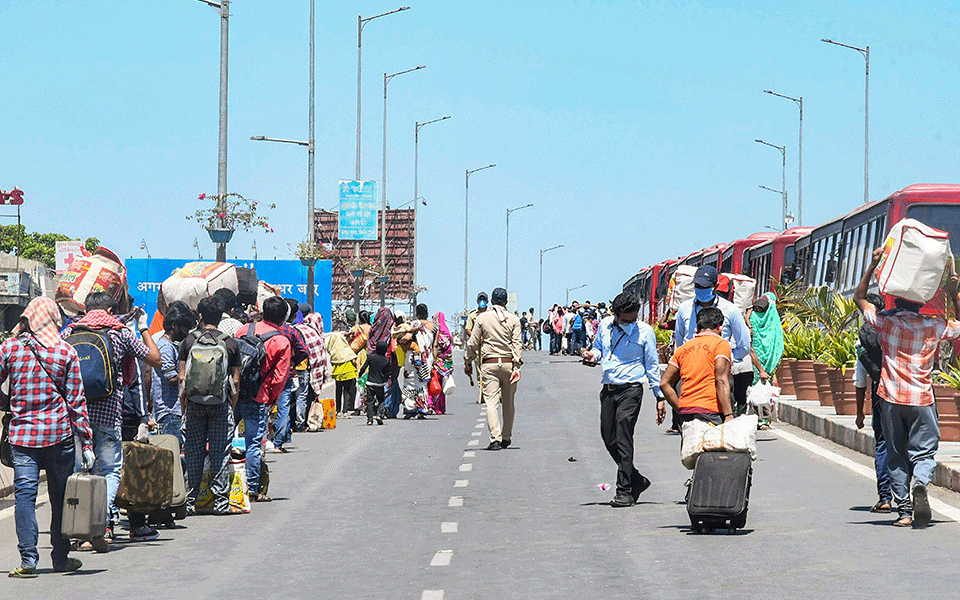
Ahmedabad: The BJP government in Gujarat has hailed the Mahatma Gandhi National Rural Employment Guarantee Act (MGNREGA) scheme as a "lifesaver" for the migrant workers, who returned to their native villages in the state due to the lockdown last year.
The state government praised the scheme in its report Implications of COVID-19 on Gujarat on Energy, Emissions, Climate and Development Perspectives', which was released by Chief Minister Vijay Rupani last Saturday on the occasion of World Environment Day.
MGNREGA is the Centre's work guarantee scheme for rural people with predetermined minimum wage. It was launched by the Congress-led United Progressive Alliance (UPA) government in 2006.
"The MGNREGA scheme of guaranteed employment has been a lifesaver for labourers, compelled to return to their homes following the COVID-19 pandemic," the report said.
Although in comparison to what these migrants were earning in cities, the wages under MGNREGA are minimum, they still consider it to be sufficient to sustain their families during such crisis situations induced by COVID-19, it said.
"Under the MGNREGA, the minimum wage paid is Rs 224 per day, which has been increased from earlier wage of Rs 198 per day. On a brighter note, living in their own village made them save more money, which otherwise was spent in travelling and rents," said the report, which was prepared by the state's climate change department together with IIM Ahmedabad and IIT Gandhinagar.
The report cited the "positive role of MGNREGA in helping people vulnerable to pandemic sustain livelihood" through examples of villages in tribal-dominated Dahod district, which offered the largest number of employment under the scheme during that time.
A contractual worker managed to enrol himself to MGNREGA, and "although the maize cultivated on his small farm was sufficient to feed his family, employment under MGNREGA provided him with a better livelihood support, it said.
However, skilled workers in a village called Pavdi in the same district, despite being pleased to have some source of income support through MGNREGA, were still hoping for the factories to resume operation. Insufficient use of their skill under the minimum wages programme was their major concern, said the report.
Dahod district (2.38 lakh - number of labourers engaged under MGNREGA) reported the highest labourer engagement under MGNREGA, followed by Bhavnagar (77,659) and Narmada (59,208), the report said. A majority of the projects were under the Pradhan Mantri Awas Yojana and state's Sujalam Sufalam Jal Sanchay Yojana.
The report called for "re-strategizing" the MGNREGA to include "skill-mapping, long-term risk coverage and income assurance" as a crucial policy response towards prioritising agriculture as a part of the solution when it comes to migration.
It said so while highlighting how agriculture was able to "cushion migrant workers from the COVID-19 crisis by providing them with some subsistence earnings" and their return "helped in managing shortage of agricultural labourers."
Citing the example of Saurashtra, where several migrants working in diamond polishing units in Surat returned during the lockdown, the report said they engaged themselves with land tilling activities and as farm labourers.
The report also suggested that the government should allow wage increase to match the demand for labour in the agricultural sector with that of the migrant labourers. "Agriculture should be prioritised as a part of the solution and should not be overlooked when it comes to migration...There is a need for a long-term strategy that takes into account underlying causes of migration including the links between agricultural policies and causes for migration," it said.
Let the Truth be known. If you read VB and like VB, please be a VB Supporter and Help us deliver the Truth to one and all.
Sujit Nair raises concerns over speculation of DMK-AIADMK understanding to block TVK
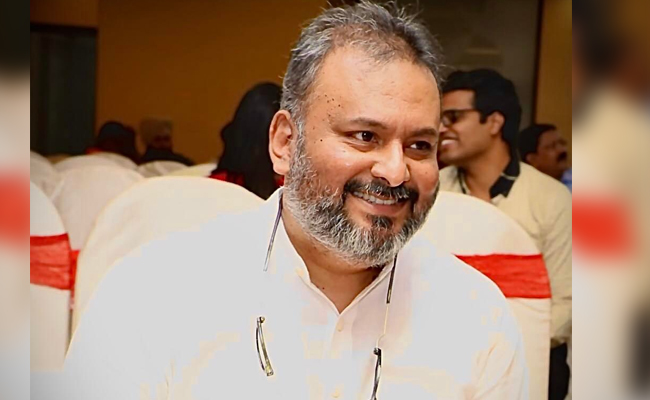
Chennai: Journalist and political commentator Sujit Nair has expressed concern over speculation that the Dravida Munnetra Kazhagam and the All India Anna Dravida Munnetra Kazhagam could explore a post-poll understanding to prevent Vijay-led Tamilaga Vettri Kazhagam from forming the government in Tamil Nadu.
In a social media post, Sujit Nair said the election verdict in Tamil Nadu reflected a clear public demand for political change and argued that the mandate should be respected irrespective of political preferences.
Referring to reports and political discussions surrounding a possible understanding between the DMK and AIADMK, he said he hoped such developments remained only speculative conversations and did not turn into reality.
Nair stated that if such an alliance were to take shape, it would raise serious questions about ideological politics in the country. He said TVK had emerged through a democratic electoral process and that the legitimacy to govern in a parliamentary democracy comes from the people’s verdict.
According to him, attempts to prevent an electoral winner from forming the government through unexpected political arrangements may be constitutionally valid, but many people could view them as politically opportunistic.
He further said that such a move could particularly affect the political image of the DMK, which has historically projected itself around ideology, social justice and opposition politics. Nair said that in ideological terms, the DMK appeared closer to TVK than to the AIADMK, and joining hands with its long-time political rival only to remain in power could weaken its broader political narrative.
He added that the same questions would apply to the AIADMK as well, as the party had spent decades positioning itself against the DMK and such an arrangement could create discomfort among its cadre and supporters.
Drawing a comparison with Maharashtra politics in 2019, Nair said he had expressed similar views when the Shiv Sena formed an alliance with the Indian National Congress and the Nationalist Congress Party after the Assembly elections.
He said post-poll alliances between long-standing political rivals often create a public perception that ideology and electoral mandates become secondary when political power equations come into play.
Nair also said such developments increase public cynicism towards politics and reinforce the belief among voters that ideology is often sidelined after elections.
He maintained that the Tamil Nadu verdict was emphatic and said respecting both the spirit and substance of the mandate was important for the credibility of democratic politics.