Gujarat HC dismisses PIL seeking ban on loudspeakers at mosques
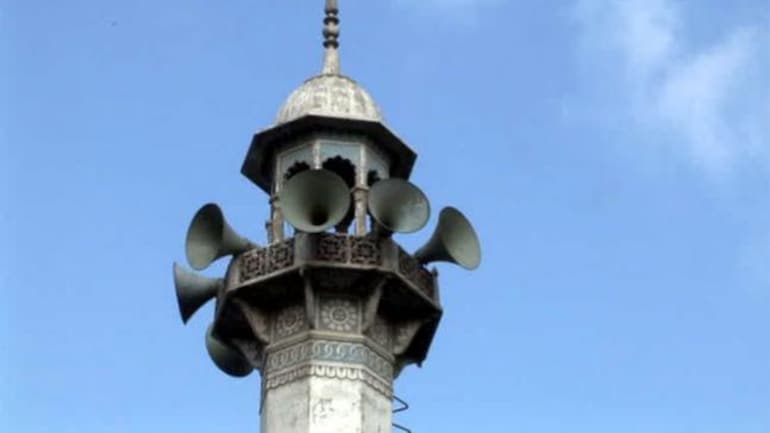
Ahmedabad, Nov 28: The Gujarat High Court on Tuesday dismissed a Public Interest Litigation seeking a ban on the use of loudspeakers for azaan or the Islamic call to prayer at mosques, terming the plea as "wholly misconceived."
A division bench of Chief Justice Sunita Agarwal and Justice Aniruddha P Mayee also asked, during the hearing, if it was the petitioner's case that the noise of bells and gongs during `aarti' at a temple is not heard outside.
The petition, filed by Bajrang Dal leader Shaktisinh Zala, claimed that "noise pollution" caused by azan when played through loudspeakers affects people's, especially children's health and causes inconvenience otherwise.
But the high court noted that the claims in the petition had no scientific foundation.
Azan is conducted for a maximum of ten minutes at a time at different hours of the day, the court pointed out.
"We fail to understand how the human voice making azan through loudspeaker in the morning could achieve the decibel (level) to the extent of creating noise pollution, causing health hazards for the public at large," it further said.
"We are not entertaining this kind of PIL. It is a faith and practice going for years, and it is for 5-10 minutes. In your temple, the morning aarti with drums and music also starts early at 3 am. So it does not cause any kind of noise to anyone? Can you say the noise of ghanta (bell) and ghadiyal (gong) remains in temple premises only, does not percolate outside the temple?" the court asked the petitioner's lawyer.
There is a scientific method for measuring noise pollution, but the petition does not provide any data to show that a ten-minute azan causes noise pollution, the court noted.
Let the Truth be known. If you read VB and like VB, please be a VB Supporter and Help us deliver the Truth to one and all.
Karnataka School Edu Dept prohibits children from being made to dance to obscene songs
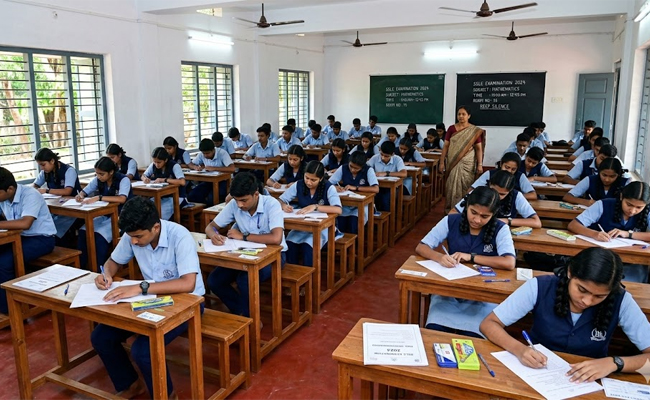
Bengaluru (PTI): The Karnataka School Education Department has issued a circular strictly prohibiting children from being made to dance to obscene songs in educational and cultural programmes.
It stated that such dances would negatively impact students' mental health and moral values. It will create indiscipline and harm the sanctity of education.
"All the Deputy Directors (Administration) of the state's School Education Department have been asked to take strict measures to prevent children or students from dancing to obscene songs in all government, aided and unaided schools in the state," the office of the commissioner of the School Education Department said in a recent circular.
"If it is found that children are being made to dance to obscene songs, appropriate action will be taken against the headmaster or management of such school," it added.
The department also listed certain measures in this regard, which include: strictly prohibiting children from being made to dance to obscene songs during educational and cultural programmes; selecting songs that are inspiring, positive, instilling national pride in children and reflecting the greatness, dignity, values, culture, and morality of the state.
Stating that the school headmaster and management are responsible for selecting songs and dances for cultural programmes, it said, they should also ensure that students wear decent clothes in dance or cultural programmes.