Gujarat HC grants fresh bail to Asaram for 3 months on medical grounds after split verdict
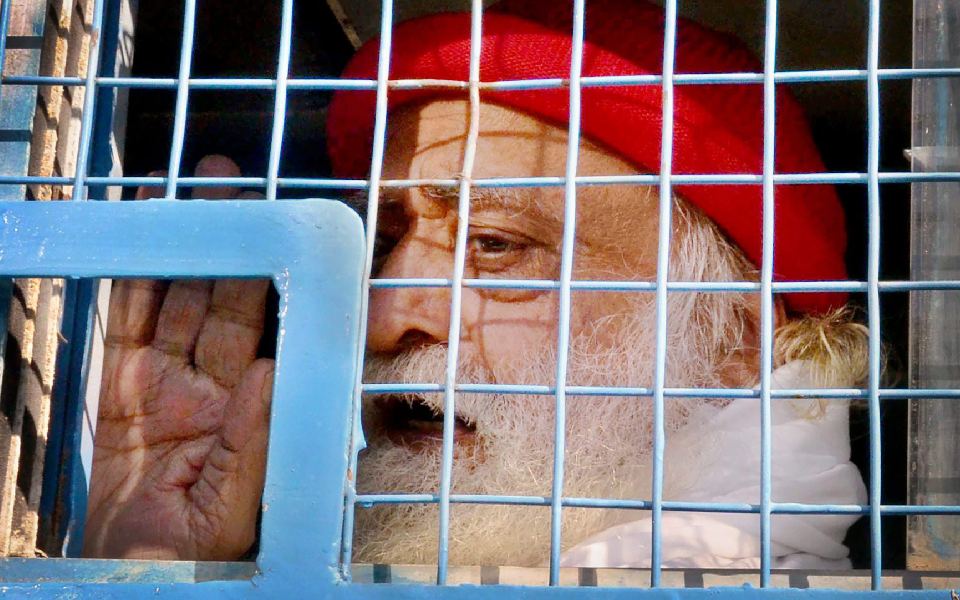
Ahmedabad, Mar 28 (PTI): The Gujarat High Court on Friday granted fresh temporary bail for three months to self-styled godman Asaram, who is serving life imprisonment in a rape case, on medical grounds following a split verdict.
The Supreme Court had on January 7 granted interim bail to Asaram till March 31 in this case registered by the Gujarat police. At present, he is undergoing ayurvedic treatment in Jodhpur, Rajasthan.
As the three-month period was coming to an end on Monday, his lawyers moved the high court seeking bail for another three months, starting from April 1.
The matter came up before a division bench of Justice Ilesh J Vora and Justice Sandeep Bhatt earlier in the day.
After hearing both sides, the bench gave a split verdict as Justice Vora granted him bail while Justice Bhatt expressed a dissenting view and dismissed the application.
The matter was then listed before a third judge, Justice A S Supehia, in the afternoon.
His lawyer senior advocate Shalin Mehta argued that 86-year-old Asaram was suffering from heart and kidney ailments, and the only treatment available to him was ayurvedic `panchakarma'.
The treatment at a Jodhpur-based ayurvedic facility had only just begun and would take another three months, the lawyer said.
The SC, while passing the bail order in January, had given liberty to Asaram to approach the Gujarat HC for any relief on medical grounds after March 31, he pointed out.
After getting relief here, his client will have to approach the Rajasthan High Court to get bail in another case, advocate Mehta said, adding that otherwise Asaram will have to go behind bars in Jodhpur on April 1.
Advocate Hardik Dave, representing the Gujarat government, argued that though the state was not against Asaram getting treatment, the HC needed to verify if he really needed it.
After going through the documents on record, Justice Supehia granted Asaram bail for three months, noting that he had not fully recovered yet, and had not misused his previous bail.
After the apex court on January 7 granted interim bail to Asaram in the case of rape registered by the Gujarat police, the Rajasthan High Court granted him interim bail in the Jodhpur rape case. He was released late on the night of January 14.
Asaram's interim bail marks a temporary release after spending more than 11 years in jail.
He was sentenced to life imprisonment in April 2018 for raping a girl at his ashram in Jodhpur in 2013.
In 2023, Asaram was convicted by a court in Gujarat for raping a woman disciple at his ashram in Motera area of Ahmedabad.
Let the Truth be known. If you read VB and like VB, please be a VB Supporter and Help us deliver the Truth to one and all.
SC refuses to adjourn hearing on pleas against EC law, says this matter is more important
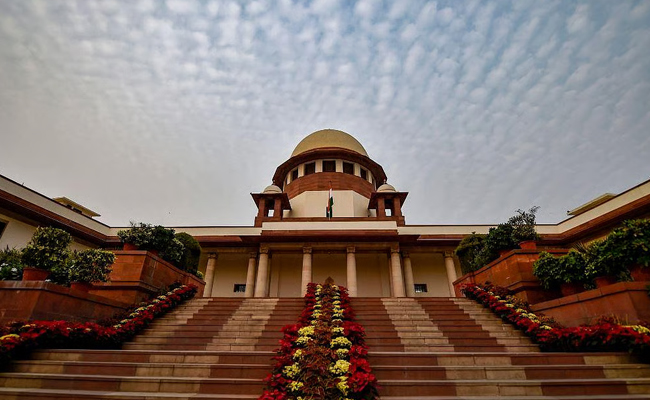
New Delhi (PTI): The Supreme Court on Wednesday refused to accede to the Centre's request to adjourn the hearing on pleas challenging the constitutional validity of a 2023 law that removed the CJI from a committee responsible for appointing the chief election commissioner and the deputies, saying the matter is "more important" than the Sabarimala case.
A nine-judge constitution bench headed by Chief Justice Surya Kant is currently hearing petitions regarding discrimination against women at religious sites, including the Sabarimala temple in Kerala, as well as the scope of religious freedom across various faiths.
A bench comprising justices Dipankar Datta and Satish Chandra Sharma turned down the request by Solicitor General Tushar Mehta, appearing for the Centre, to adjourn the hearing on the ground that he was currently occupied before a nine-judge bench in the Sabarimala reference case.
Referring to the gravity of the current challenge to the Chief Election Commissioner and Other Election Commissioners (Appointment, Conditions of Service and Term of Office) Act, 2023, Justice Datta said, "This matter is more important than any other matter."
"Let your (solicitor general's) associates take notes today. Let the petitioners start. All matters are important. We read in the newspapers that there is an observation that the PIL in Sabarimala should not have been entertained by the court. So, with due respect to the judges, nine judges are occupied in a matter where there is an observation that it should not have been entertained in the first place," Justice Datta said.
ALSO READ: Girl mauled to death by stray dogs in Punjab's Hoshiarpur
The bench then directed the petitioners to conclude their arguments by Thursday, allowing the Centre to present its submissions on a subsequent date. The bench then proceeded with the hearing which is underway.
Earlier on March 20, CJI Surya Kant recused himself from hearing the petitions. "I will be accused of conflict of interest. There is a conflict of interest," the CJI had said. The law, enacted by Parliament in December 2023, came months after a landmark verdict by which the apex court directed that election commissioners be appointed by a committee comprising the prime minister, the leader of the Opposition, and the chief justice of India.
The bench had said that the system will remain in force till a law is enacted.
Under the 2023 Act, the selection committee consists of the prime minister, a Union minister nominated by the prime minister and the leader of Opposition (or leader of the largest opposition party in the Lok Sabha).
The PILs said the exclusion of the CJI from the panel undermines the independence of the appointment process.
The law has been challenged by multiple petitioners, including Congress leader Jaya Thakur and the Association for Democratic Reforms.
Earlier, the Centre defended in the Supreme Court the appointment of two new election commissioners under the 2023 law that excludes the chief justice of India from the selection committee, saying the independence of the Election Commission does not arise from the presence of a judicial member on the committee.
In an affidavit filed in the apex court, the Union law ministry rejected the petitioner's claim that the two election commissioners were hastily appointed on March 14, 2024, to "pre-empt" the orders of the top court the next day, when the matters challenging the 2023 law were listed for hearing on interim relief.
The apex court also refused to stay the appointment of new election commissioners under the 2023 law.
A five-judge constitution bench had in March 2023 ruled that the chief election commissioner and election commissioners shall be appointed on the advice of a committee comprising the prime minister, the leader of the Opposition in the Lok Sabha and the chief justice of India.