Gujarat’s little-known parties collected ₹4,300 crore in donations, spent almost nothing: Report
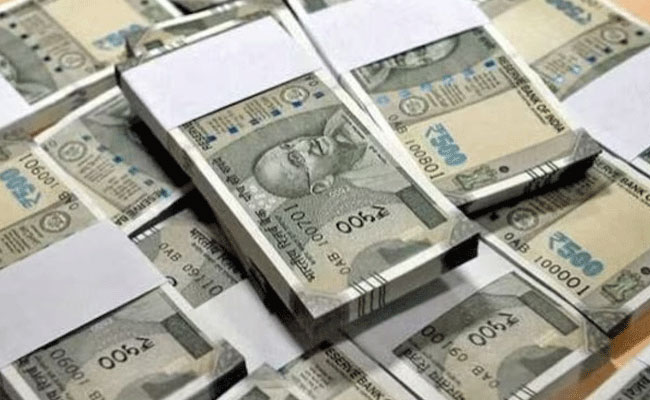
Ahmedabad: A startling case of financial irregularities has come to light in Gujarat. Ten little-known political parties, largely unheard of by the public, collected over ₹4,300 crore in donations between 2019–20 and 2023–24. Together, these parties contested only 43 candidates across three elections, the 2019 and 2024 Lok Sabha polls and the 2022 Gujarat Assembly election, and secured a mere 54,069 votes.
According to a Dainik Bhaskar investigation, the election expenditure declarations filed with the Election Commission showed a combined spend of just ₹39.02 lakh. However, the audited financial statements of the same parties listed their expenditure at over ₹3,500 crore, raising serious doubts of large-scale fund diversion.
Party-Wise Breakdown
Lokshahi Satta Party – Donations: ₹1,045 crore | Reported spend: ₹1,031 crore | Actual spend: ₹2.27 lakh
Satyavadi Rakshak Party – Donations: ₹416 crore | Reported spend: ₹416 crore | Actual spend: ₹1.43 lakh
New India United Party – Donations: ₹608 crore | Reported spend: ₹407 crore | Actual spend: ₹1.61 lakh
Bharatiya National Janata Dal – Donations: ₹962 crore | Reported spend: ₹961 crore | Actual spend: ₹2.83 lakh
Swatantra Abhivyakti Party – Donations: ₹663 crore | Reported spend: ₹73 crore | Actual spend: ₹12.18 lakh
Bharatiya Jan Parishad – Donations: ₹249 crore | Reported spend: ₹247 crore | Actual spend: ₹14.5 lakh
Saurashtra Janata Party – Donations: ₹200 crore | Reported spend: ₹199 crore | Actual spend: ₹1.47 lakh
Jan Man Party – Donations: ₹133 crore | Reported spend: ₹133 crore | Actual spend: ₹1.31 lakh
Manavadhikar National Party – Donations: ₹120 crore | No audit details | Actual spend: ₹82,000
Garib Kalyan Party – Donations: ₹138 crore | No audit details | Actual spend: ₹3.27 lakh
Violations and loopholes
Investigations found that at least one party, the Satyavadi Rakshak Party, received hundreds of crores in donations without submitting valid PAN details, which are mandatory for large contributions. Officials also noted that while election-time expenses were negligible, audit reports showed inflated expenditure, suggesting funds were diverted elsewhere.
Donations to these parties came not only from Gujarat but from 23 states across India, further complicating the trail of money.
ADR raises red flag
The Association for Democratic Reforms (ADR) has highlighted these discrepancies as clear signs of money laundering and tax evasion, calling for stricter oversight of political funding.
Election Commission crackdown
On the recommendation of Gujarat’s Chief Election Officer, the Income Tax Department has been asked to investigate these parties. The Election Commission has also cancelled their registrations, effectively removing them from the list of recognised political entities.
This revelation comes amid ongoing debates about Electoral Bonds and the opacity of political financing in India. While attention has mostly focused on big national and regional parties such as the BJP, Congress, TMC, SP, and NCP, the Gujarat case reveals how obscure parties functioned as conduits for massive financial transactions, sidestepping transparency and accountability in the democratic process.
Let the Truth be known. If you read VB and like VB, please be a VB Supporter and Help us deliver the Truth to one and all.
Mizoram class 12 results out, pass percentage at 87.67
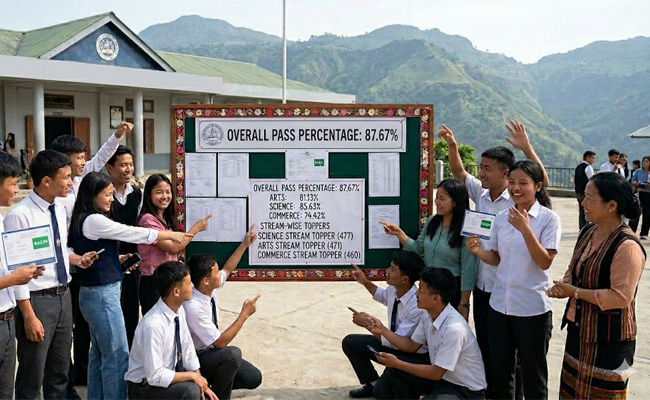
Aizawl (PTI): Mizoram recorded a pass percentage of 87.67 in the class 12 board examinations on Wednesday, with boys scoring marginally higher than girls,
Across the Arts, Science, and Commerce streams, boys secured an 87.7 per cent success rate, while girls followed closely at 87.66 per cent, according to the results published by the Mizoram Board of School Education (MBSE).
Of the 12,243 students who sat for the examinations held between February and March, 10,734 passed, 1,394 could not, and 115 qualified for compartmental examinations.
Academic performance was strongest in the Commerce stream, which saw a 90.51 per cent success rate among 759 candidates.
The Science stream followed with 89.24 per cent pass rate out of 2,770 students who appeared for the exam, while the Arts stream, with 87,14 students, recorded a pass percentage of 86.93.
In terms of institutional performance, the results revealed that deficit schools, which receive regular government grants, maintained their status as top performers with an average 93.80 per cent pass rate across all streams, followed by private schools at 91.55 per cent, while state-run schools recorded a success rate 83.13 per cent.