Gulam Nabi Azad equates Modi with Mohammad Bin Tughlaq
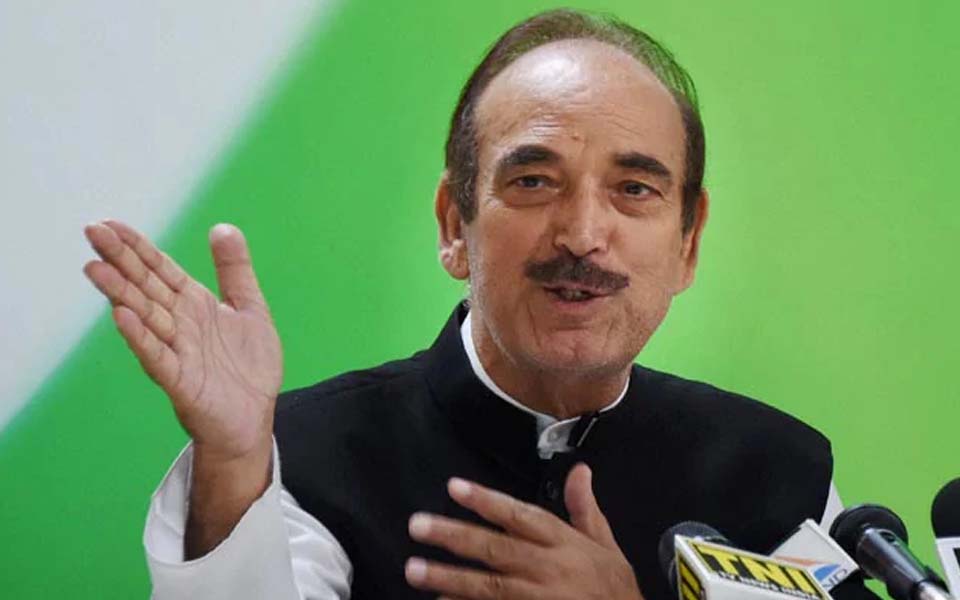
Shimla, May 16: Congress leader Gulam Nabi Azad on Thursday likened Prime Minister Narendra Modi's decisions to that of the controversial 14 century Delhi ruler Mohammad Bin Tughlaq.
Criticising the 2016 demonetisation move, the leader of opposition in Rajya Sabha alleged that Modi gave many 'Tughlaqi farman' (diktats) during his rule due to which common people suffered.
"Modi changed the currency notes of Rs. 500 and Rs. 1,000 with new currency notes as Tughlaq had done by issuing currency of brass and copper during his rule," Azad told reporters.
Tughlaq, who ruled the Delhi Sultanate for a short period of time in the 14th century, was known for his controversial decisions like shifting the capital of the Sultanate from Delhi to Daulatabad and introducing non-precious metal currency.
"Modi withdrew Rs 500 and Rs 1,000 currency notes during demonetisation claiming that it will check black money but later he circulated Rs 2,000 currency notes, which was contradictory in itself," Azad said.
The former Jammu and Kashmir chief minister alleged that Modi took the decision of demonetisation "without getting the consent of the RBI governor and the cabinet".
Azad claimed that demonetisation and wrongly implemented Goods and Services Tax (GST) had adversely affected the economy, especially small and medium scale industries due to which over 4.5 crore people became jobless.
Talking about Pradhanmantri Fasal Bima Yojna, he claimed that the insurance companies were benefited "to the tune of Rs 3000 crores from this scheme implemented by Modi government, while only 45 per cent farmers were covered under this scheme".
"I asked in Parliament if this scheme has been implemented for the benefit of farmers or for insurance companies, but Modi did not give any reply," he said.
Asked if it is appropriate to equate a democratically elected prime minister with Tughlaq, Azad replied, I have not equated Modi with Tughlaq. I just said Modi is like Tughlaq."
Let the Truth be known. If you read VB and like VB, please be a VB Supporter and Help us deliver the Truth to one and all.
Four booked for tying 18-year-old to tree, beating him up in UP's Pratapgarh

Pratapgarh (UP) (PTI): Four people were booked here for the abduction and assault of a man who they allegedly tied to a tree and beat up, police said on Wednesday.
The incident, a video of which has gone viral, took place on Tuesday afternoon under the Kunda police station limits.
The FIR was registered on Wednesday evening based on a complaint from the victim's father.
According to Keshav Prasad Yadav, a resident of Mauli village, some people called his 18-year-old son Nikhil Yadav on the phone and asked him to come out of his house around 2.30 pm on Tuesday.
As he reached outside the village as instructed, the accused allegedly forced him into a car and took him towards the Tinpedwa forest area, where they tied him to a tree and assaulted, the complainant said.
The attackers also recorded a video of the incident and circulated it on social media. The purported video shows the men thrashing Nikhil one after another, while one of them is assumed to have recorded the act.
Kunda Station House Officer Manoj Pandey confirmed the incident and said efforts are underway to identify and arrest all the accused.
Meanwhile, Samajwadi Party president Akhilesh Yadav has shared the video on social media, describing the incident as reflective of a "dominant mindset" against the PDA (Pichda or Backward, Dalit, and Alpasankhyak or Minority), and demanded strict action against the accused.
_vb_80.png)