Guwahati gets India’s first ‘nature-themed’ airport
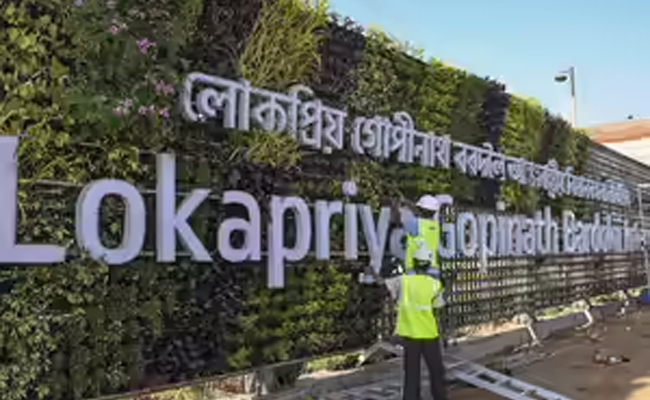
Guwahati (PTI): The new terminal building of the Lokapriya Gopinath Bardoloi International Airport here, inaugurated by Prime Minister Narendra Modi on Saturday, is the “country’s first nature-themed airport”, designed to handle 13.1 million passengers per year, officials said.
The Rs 5,000-crore project, including Rs 1,000 crore earmarked specifically for maintenance, repair and overhaul (MRO) facilities, aims to develop the airport as a key aviation hub for the northeast and a major gateway to Southeast Asia.
The transition from the old terminal to the new one is scheduled to begin in February, with domestic flights initially operating from the new facility. The process is expected to be completed by the end of March, with both domestic and international flights shifting to the new terminal, while the existing terminal will be converted into a cargo hub, they said.
ALSO READL: PM Modi leads mega roadshow in Guwahati
Conceived as a modern structure rooted in local culture, the new terminal spans an area of 1.4 lakh square metres and blends advanced technology, sustainability and regional identity to deliver a seamless and passenger-centric experience, senior airport officials told PTI ahead of the inauguration.
Designed by Indian architects, the terminal draws inspiration from Assam’s rich biodiversity and cultural heritage, and is “the country’s first airport built around a nature theme”.
Named ‘The Bamboo Orchids’, the terminal design is inspired by Assam’s iconic ‘kopou phool’ (foxtail orchid) and indigenous bamboo varieties – Bholuka bamboo from Assam and Apatani bamboo from Arunachal Pradesh – celebrating the ecological and cultural richness of the northeast.
The terminal’s architecture reflects the cultural identity of the region while integrating modern technology, sustainability and passenger comfort, in line with India’s vision of inclusive, future-ready infrastructure, the officials said.
The bamboo-inspired interiors have made use of around 140 metric tonnes of locally sourced northeast bamboo, setting a new benchmark for sustainable construction in Indian airports, they said.
The terminal also features Kaziranga-inspired landscapes, with lush and environmentally friendly green spaces that mirror Assam’s forests.
Traditional Assamese headgear ‘japis’ have been incorporated into various design elements, while the rhino motif, symbolising strength and calmness, features prominently across the terminal.
Fifty-seven distinctive columns, designed to resemble bouquets of the foxtail orchid, adorn the departure and arrival areas. Arriving passengers will also experience a ‘sky forest’, passing through a lush green zone with around one lakh plants from 100 species of local flora, creating an immersive forest-like ambience.
“This innovative design not only honours Assam’s ecological and cultural identity but also sets new standards for green, sustainable and passenger-centric airport architecture in India,” an official said.
Operational preparedness has been ensured through a comprehensive Operational Readiness and Airport Transfer (ORAT) programme, supported by an expert visiting team from Munich, Germany, he said.
“This positions Guwahati as a critical passenger and cargo hub for all eight northeastern states – Assam, Meghalaya, Nagaland, Manipur, Tripura, Mizoram, Arunachal Pradesh and Sikkim – enhancing connectivity to destinations known for tea gardens, wildlife reserves, riverine landscapes, living-root bridges and hill tourism,” the official said.
The project has been developed by Guwahati International Airport Ltd (GIAL), with operations led by Adani Airport Holdings Ltd (AAHL).
Equipped with DigiYatra-enabled passenger processing, smart check-in systems and expansive, naturally lit interiors, the terminal has been designed to handle 13.1 million passengers annually by 2032, significantly boosting both domestic and international connectivity.
During the 2024-25 financial year, the Guwahati airport recorded passenger traffic of 6.5 million per annum, underscoring the region’s growing aviation demand, the officials said.
Future plans also include integrated domestic and international cargo facilities, further strengthening regional supply chains and economic growth.
“For the first time in India, passengers will have access to check-in facilities at the parking area and arrival forecourt, eliminating the need to carry baggage into the terminal,” another official said.
The terminal features consolidated domestic security lanes with an Automated Tray Retrieval System (ATRS), swing provisions at contact gates and efficient transfer facilities to support Guwahati’s role as a regional hub, he said.
The airport will also be equipped with full-body scanners for fast, non-intrusive security screening and Fast Track Immigration (FTI-TTP) facilities for expedited clearance of Indian nationals and OCI cardholders.
The terminal will also feature self-service smart information kiosks offering flight status updates, interactive maps, Wi-Fi access, SOS support, food and beverage and duty-free ordering, and passenger feedback, aimed at reducing dependency on airport staff and improving service delivery, the official said.
The new terminal highlights Assam’s regional heritage by providing prominent space to local brands across retail, food and beverage outlets and the Airport Village, which will house local restaurants.
“These establishments are inspired by the region’s folklore, cuisine, natural beauty and cultural heritage, ensuring every traveller experiences the authentic spirit of the state,” the official added.
Let the Truth be known. If you read VB and like VB, please be a VB Supporter and Help us deliver the Truth to one and all.
Maharashtra sets up state vaccination task force to strengthen immunisation programme

Mumbai (PTI): The Maharashtra government has set up a State Vaccination Task Force to strengthen the regular immunisation programme and review the progress of related campaigns, a health department official said on Monday.
The State Vaccination Task Force will comprise at least 29 members and will be headed by the administrative head of the health department, he informed.
The government has also constituted separate district-level and municipal vaccination task forces to improve implementation and address challenges at the grassroots level, he said.
Municipal task forces, chaired by respective civic commissioners, have been constituted in view of the vast urban population in Maharashtra and the role of civic bodies in implementing different health programmes.
The district-level task forces will function under the chairmanship of collectors.
"Complete immunisation of children at the appropriate age is an extremely simple, cost-effective and highly effective measure to reduce child mortality and the prevalence of diseases among kids. Immunisation is a powerful tool for reducing illness in children," maintained the official.
To ensure full vaccination of all children, the state government implements various campaigns from time to time as per the central government guidelines, he pointed out.
"Active participation and cooperation of other relevant government departments are essential (in making these campaigns successful)," according to the official.
The state-level body will review the regular immunisation programme, associated campaigns and vaccine-preventable diseases in detail. It will also conduct focused assessments of high-risk districts and municipal corporations, including vacancies at district, municipal and sub-district levels, availability of cold chain equipment, resource gaps and training requirements, he noted.
The state task force will review allocation and utilisation of funds for immunisation and ensure timely action by officers concerned based on reports from district and municipal task forces and state-level monitoring mechanisms, the official said.
It will also ensure active coordination and participation of other government departments in immunisation drives, while district and municipal task forces will carry out similar functions at their respective levels, the official added.