Hackers deposit Re 1 in TRAI chief R S Sharma’s bank account
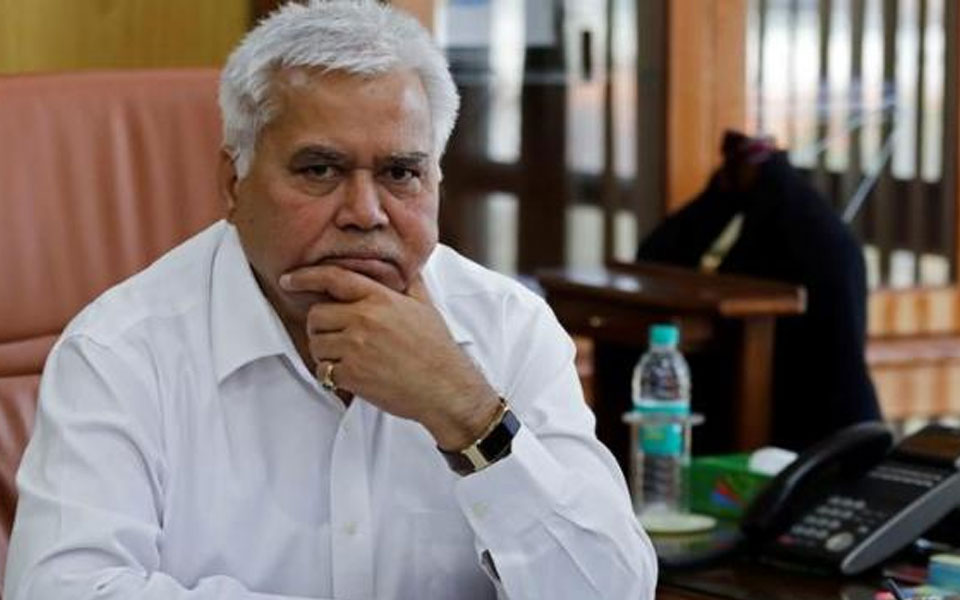
BENGALURU: Ethical hackers on Sunday claimed to have the bank account details of Telecom Regulatory Authority of India (Trai) chairman R S Sharma and posted the same on Twitter. Users also posted screenshots of sending Re 1 to Sharma via the Aadhaar-Enabled Payment Service using apps like BHIM and Paytm, and through IMPS. They also posted the transaction IDs.
This is a fallout of the chairman's move to post his Aadhaar number, 7621 7768 2740, on Saturday and challenging Aadhaar critics to do him harm if they could. TOI could not independently confirm any of Sharma's data.
On Sunday, ethical hackers - including Elliot Alderson, Pushpendra Singh, Kanishk Sajnani, Anivar Arvind, and Karan Saini - pointed out that nearly 14 items had been leaked so far. This includes Sharma's mobile numbers, residential address, date of birth, PAN number, voter ID number, telecom operator, phone model, and Air India frequent flyer ID.
They also claimed to have his bank account number and IFSC code for five other accounts - in PNB, Bank of India, SBI (joint account), Kotak Mahindra and ICICI Bank. Anivar Aravind and a few others sent Re 1 to his Bank of India account via AEPS. Twitter users cautioned the chairman that the ability to send money to him without his consent could expose him to blackmail, money laundering and other dangers.
Hackers also posted his demat account details, his payment history for a three-year subscription to a right-wing website with his SBI debit card, usage of Aadhaar card for sale of organic goods by Leela Dhar Organics of Hari Sewak Sharma on July 2, 2018.
Ethical hackers are those who hack into computer networks to test or evaluate their security, rather than with malicious or criminal intent. Aadhaar issuing body UIDAI on Sunday reiterated that Aadhaar was safe and secure.
UIDAI said that hackers had obtained this information on R S Sharma by Googling him as he was a long-standing public servant. This was shortly after Pushpendra Singh, who is also a blockchain developer, posted screenshots of obtaining Sharma’s Punjab National Bank account number, IFSC code, MICR code and other details from the UIDAI database. TOI could not independently confirm any of Sharma’s data.
Ethical hackers also claimed to have his bank account number and IFSC code for five other bank accounts. Anivar Aravind and a few others sent Re 1 to his Bank of India account via AEPS. Hackers also posted his Yahoo email address, demat account details, his payment history for a three-year subscription to a right-wing website with his SBI debit card, usage of Aadhaar card for sale of organic goods by Leela Dhar Organics of Hari Sewak Sharma on July 2, 2018.
French security expert Elliot Alderson advised Sharma to change his Gmail password as it had been hacked. To which Sharma tweeted: “No. Why should I change? It is working fine! Even if you hack, it is not because of Aadhaar!”
More Aadhaar backers post ID number online
Telecom Regulatory Authority of India (TRAI) chairman R S Sharma’s Twitter challenge has now escalated into a Twitter war between those who are for Aadhaar and those against it. On Sunday, following Sharma’s footsteps, several Aadhaar supporters posted their Aadhaar numbers online and dared hackers to harm them.
The TRAI chairman retweeted the tweets from his followers such as Amarendra Joshi (also followed by Narendra Modi’s official handle) who put out their Aadhaar numbers. Other users like VG, Amit Kumar and a dozen others posted their Aadhaar details and mobile numbers. Sharma retweeted one Bharath Vasi’s tweet: “A tight slap to all the hyper active privacy paranoids!! The self-proclaimed hackers, who are showing his mobile, PAN numbers & address data, can’t they hack such info without knowing his Aadhaar? Surly they can obtain! Then why blame #Aadhaar?”
Several anti-Aadhaar tweets pointed out that those exposing the data are ethical hackers and cannot use it to harm Sharma.
courtesy : timesofindia.indiatimes.com
Let the Truth be known. If you read VB and like VB, please be a VB Supporter and Help us deliver the Truth to one and all.
NCW chief condemns rape-murder of 4-year-old girl in Pune, calls for swift action
New Delhi (PTI): National Commission for Women (NCW) Chairperson Vijaya Rahatkar has condemned the alleged rape and murder of a four-year-old girl in Maharashtra's Pune, calling it "deeply distressing" and a "blot on humanity".
The girl was allegedly raped and killed by a 65-year-old labourer, who has a criminal record, in Bhor tehsil of Pune on Friday. The accused allegedly lured the child to a cattle enclosure on the pretext of giving her food. After raping her, he killed her by hitting her with a stone, according to police.
The accused has been arrested.
In a post on X on Saturday, Rahatkar said the incident in the Nasrapur area in Pune was heartbreaking and has shaken society.
"The brutal torture and murder of a four-year-old innocent girl in Nasrapur (Bhor, Pune) is deeply painful, heartbreaking, and shocking. It is a blot on humanity," she said.
She said Pune Rural police has arrested the accused and noted that Maharashtra Chief Minister Devendra Fadnavis and Deputy Chief Minister Sunetra Pawar have assured strict action in the case.
Rahatkar said the NCW has taken cognisance of the matter and written to the National Commission for Protection of Child Rights (NCPCR), requesting the body to ensure necessary and prompt action.
It has also been recommended that the case be pursued under stringent provisions of the Protection of Children from Sexual Offences (POCSO) Act and be closely monitored from the filing of the chargesheet to proceedings in a fast-track special court to ensure time-bound justice, she added.
Ensuring justice for the victim and stringent punishment for the accused is a collective responsibility, the NCW chairperson underlined.
In a post on X, the NCW said it has taken suo motu cognisance of the extremely "heinous" incident.
"This heinous crime causes profound pain and outrage, and it highlights serious concerns regarding the safety of young girls," it said.
Strongly condemning this grave "inhuman act", the NCW said such crimes constitute a serious violation of children's rights and raise questions about society's security system.