Had limited choice: Sanjay Raut on no ministries to some Shiv Sena seniors
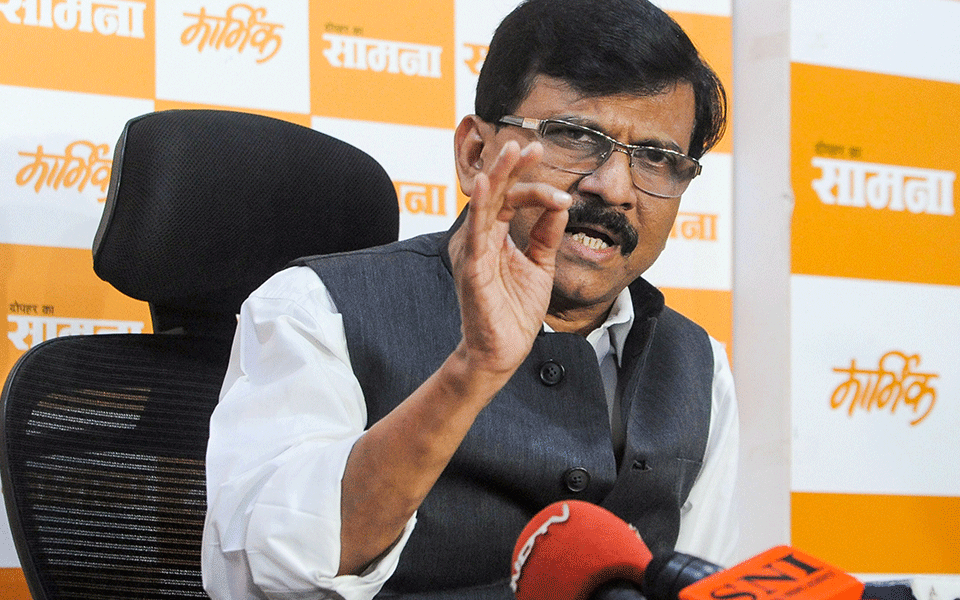
Mumbai: Amid speculation that some senior Shiv Sena leaders were unhappy after not being inducted in the Uddhav Thackeray-led Maharashtra council of ministers, party MP Sanjay Raut on Tuesday said the Sena had a "limited choice" in the three-party alliance government.
Raut, who is the executive editor of Shiv Sena mouthpiece 'Saamana', told PTI that they had to accommodate allies who supported the Thackeray-led party after the state Assembly poll results were announced on October 24.
"We had to give a chance to new faces as well," the Rajya Sabha member said.
The Shiv Sena did not include its leaders like Ramdas Kadam, Diwakar Raote, Ravindra Waikar, Deepak Kesarkar and Tanaji Sawant in the new council of ministers during expansion on Monday.
Raut skipped the much-awaited ministry expansion ceremony on Monday. His absence was attributed to his brother Sunil Raut, a Sena MLA, not getting a ministerial berth.
Asked why he stayed away from the swearing-in ceremony, Raut on Tuesday said, "I was at the 'Saamana' office doing my job." The opposition BJP also skipped the swearing-in ceremony of Thackeray's council of ministers.
Monday's expansion, which raised the strength of the state ministry to 43, came over a month after the Thackeray- led Maharashtra Vikas Aghadi (MVA) government came to power.
The chief minister expanded his Cabinet by inducting 36 ministers, including his son Aaditya Thackeray and some Gen-next leaders from political families, while NCP's Ajit Pawar made a comeback as deputy CM.
The Shiv Sena last month joined hands with the Congress and NCP, its traditional adversaries, after its alliance with the BJP collapsed over the issue of sharing the chief ministerial post.
On November 28, Balasaheb Thorat and Nitin Raut of Congress, Eknath Shinde and Subhash Desai of the Sena and Jayant Patil and Chhagan Bhujbal of the NCP had taken oath along with Thackeray.
In the 288-member House, the Sena has 56 MLAs, NCP 54 and Congress 44. The opposition BJP has 105 MLAs.
Let the Truth be known. If you read VB and like VB, please be a VB Supporter and Help us deliver the Truth to one and all.
Telangana survey flags 89,000 child labourers, highlights caste disparities in employment
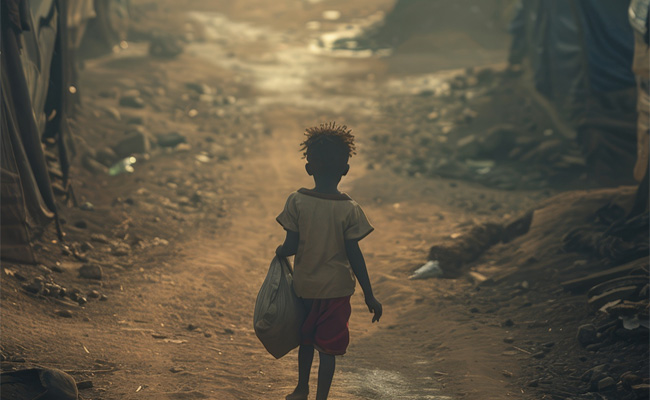
Hyderabad: A caste-based survey conducted by the Telangana government for 2024–25 has identified around 89,000 children engaged in labour across the state, with a large share belonging to Scheduled Caste (SC) and Scheduled Tribe (ST) communities.
The findings are part of the Socio, Economic, Educational, Employment, Political and Caste (SEEEPC) Survey, which covered about 3.5 crore people across 242 caste groups. According to the report, nearly one per cent of individuals below 18 years are involved in daily wage work. While the percentage appears small, officials noted that the absolute number reflects a serious concern.
The survey found that 11 per cent of identified child labourers belong to the ST Lambadi community, while 14 per cent are from the SC Madiga community. The highest incidence was reported among the ST Kolam group, where 7.2 per cent of minors are engaged in daily wage labour.
The data also revealed wider socio-economic disparities. Nearly half of the Scheduled Caste population is dependent on daily wage work, while only around 5 per cent are employed in the private sector, compared to about 30 per cent among General Castes.
State Welfare Minister Ponnam Prabhakar said the findings show that SC and ST communities remain three times more backward than General Castes, while Backward Classes are about 2.7 times more disadvantaged.
The report further noted that, on average, 31.3 per cent of people in the 25–65 age group depend on daily wage work. Among communities, the BC-A Odde group recorded the highest share at 55 per cent. In contrast, only 2.6 per cent of OC Brahmins rely on such work.
Several SC and ST communities, including Kolam, Beda, Madiga, Koya, Gond, Yerukulas and Mala Sale, were found to have among the highest proportions of daily wage earners. On the other hand, most General Caste communities and some Backward Class groups such as Goldsmiths and BC-C Christians showed lower dependence on daily wage employment.
The survey also pointed to inequalities in access to formal employment. Communities such as OC Rajus, OC Brahmins and Kapus were found to have a higher presence in private sector jobs, with up to 27 per cent of their population employed in such roles.