Harassing juniors through informal WhatsApp groups to be treated as ragging: UGC
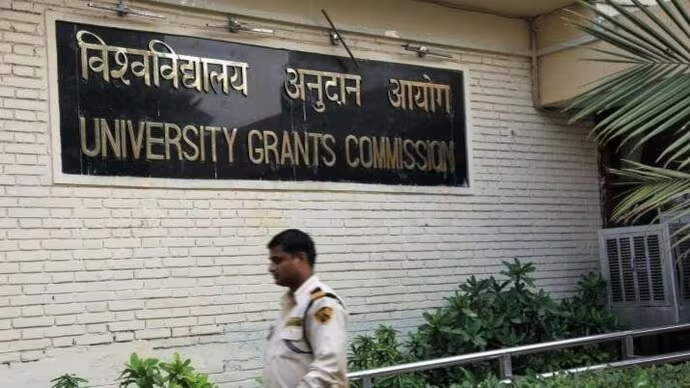
New Delhi (PTI): The University Grants Commission (UGC) has directed higher education institutions to monitor any informal WhatsApp groups created to harass juniors, saying it will be treated as ragging and attract strict action under anti-ragging rules, according to officials.
The UGC receives dozens of complaints every year from freshers alleging harassment by seniors.
"In several cases, seniors form informal WhatsApp groups, contact juniors and subject them to mental harassment. This too amounts to ragging and will invite disciplinary measures," the UGC said in its latest directive.
"Student safety on campus is paramount and non-negotiable. Failure to enforce anti-ragging norms may lead to stringent action, including withholding of grants," it warned.
The advisory also flagged incidents where juniors were threatened with social boycott if they did not follow seniors' instructions. Forcing students to cut their hair, stay awake for long hours or verbally humiliating them were cited as other common ragging practices.
"Such acts cause physical and psychological distress and are serious violations of anti-ragging regulations and completely unacceptable," it said.
Let the Truth be known. If you read VB and like VB, please be a VB Supporter and Help us deliver the Truth to one and all.
Man arrested with Rs 2.54-crore heroin in Mumbai

Mumbai (PTI): Police have arrested a man and seized over 500 grams of heroin worth Rs 2.54 crore in the illicit market from him in Mumbai, officials said on Friday.
The police's Anti-Narcotics Cell (ANC) made the drug seizure in Santacruz in the western suburbs. The operation was conducted by the Kandivali unit of the ANC on Thursday as part of a special crackdown against drug trafficking in the area, they said.
Acting on specific inputs, an ANC team conducted a raid in Santacruz (East) and intercepted a man. During a search, the team recovered 508 grams of high-grade heroin from his possession, an official said.
The seized contraband, a highly addictive, opioid drug derived from morphine, is estimated to be worth Rs 2.54 crore in the international market, he informed.
Following the seizure, a case was registered against the man under relevant sections of the Narcotic Drugs and Psychotropic Substances (NDPS) Act, 1985, and he was formally placed under arrest in the early hours of Friday.
The police are currently investigating the source of the drug and trying to identify the intended recipients of the consignment, he said.