Haryana Assembly passes Bill to increase working time to 10 hours for shop employees
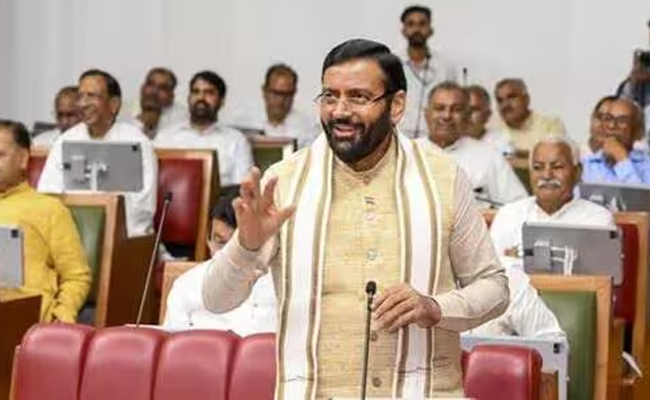
Chandigarh (PTI): The Haryana Assembly on Monday passed a bill increasing the daily working hours from nine to ten hours while retaining the overall weekly limit of 48 hours for employees of shops and private commercial establishments.
The Haryana Shops and Commercial Establishments (Amendment) Bill, 2025 has been passed to amend the Haryana Shops and Commercial Establishments Act, 1958.
While Labour Minister Anil Vij said that the Bill aims to reduce the compliance burden on smaller establishments through reforms for promoting economic growth while ensuring continued protection for workers, Congress MLA Aditya Surjewala differed. Pointing to some of its provisions, he asked if it was ease of doing business or legalising "modern-day slavery".
Minister Vij said that the Bill was beneficial for both workers and shopkeepers, and it was in the interest of workers as well as traders.
There is also a provision for an increase in the permissible limit of overtime work per quarter from 50 hours to 156 hours, enabling shops and commercial establishments to meet peak business demands more efficiently.
The Bill also seeks to increase the maximum period of continuous work without rest from five to six hours.
Surjewala moved an amendment which his party legislators backed to retain the existing nine-hour limit, but the House rejected it by voice vote.
Surjewala said that the Bill has the provision to increase the daily working hours from nine to ten while overtime has been proposed to be increased from 50 hours to 156, which, he said, would work out to two extra hours every day.
"Now, take 10 hours of daily work with two hours of overtime. If any person has to work 12 hours a day for six days a week, what time does it leave for himself or his family?" he said.
Surjewala asked whether it was ease of doing business or legalising modern-day slavery.
Vij told the House that the increase in threshold limit from zero employees to 20 or more employees in any establishment for registration and other regulatory provisions of the Bill in order to reduce compliance burden for smaller businesses, will encourage job creation and eliminate the fear of non-compliance.
Establishments with fewer than 20 workers will no longer need a registration certificate under the bill but they will only need to provide an intimation of their business, Vij said.
Earlier, every shopkeeper was required to register.
He pointed out that even today, in states like Karnataka, shopkeepers are required to register even if they do not have a single worker.
However, Surjewala claimed that over 80 per cent of shops and establishments that have less than 20 workers would be excluded from the Act's provisions.
Vij said that the increase in the daily hours of work from the existing nine hours to ten hours, inclusive of rest intervals, is subject to a maximum of 48 hours in any week. This measure aims to create greater economic activity, enhance employment opportunities and give establishments the flexibility to handle emergencies, peak demand or staff shortages without disruption.
Vij said before finalising this Bill, he studied data from states across India. In Haryana, registration has been mandated for establishments with 20 or more workers.
Similarly, in Maharashtra, Punjab, Andhra Pradesh and Odisha, registration is compulsory for establishments having 20 or more workers.
Likewise, the daily working hours are 10 hours in Haryana, as well as in Maharashtra, Punjab, Telangana, Andhra Pradesh and Odisha.
The Bill was among the eight bills passed on the concluding day of the Winter session of the Haryana Vidhan Sabha.
The Bills included the Haryana Private Universities (Amendment) Bill, 2025; the Haryana Abadi Deh (Vesting, Recording and Resolving of Ownership Rights) Bill, 2025; and the Haryana Jan Vishwas (Amendment of Provisions) Bill, 2025.
The Haryana Jan Vishwas (Amendment of Provisions) Bill was passed to amend certain enactments for decriminalisation and rationalisation of offences to further improve trust-based governance for ease of living and ease of doing business.
The Haryana Jan Vishwas (Amendment of Provisions) Bill had been introduced to reduce 164 minor criminal provisions in 42 state Acts across 17 departments by removing obsolete and redundant clauses, introducing civil penalties and administrative actions for minor technical and procedural lapses, and decriminalising minor and technical offences through the elimination of penal provisions.
Let the Truth be known. If you read VB and like VB, please be a VB Supporter and Help us deliver the Truth to one and all.
Vartha Bharati–Sankalp predictions align closely with Karnataka bypoll results

Bengaluru: The Vartha Bharati–Sankalp election analysis has shown a high level of accuracy in predicting the outcome of the recent Karnataka Assembly by-elections held in May 2026, correctly calling winners in both constituencies and closely estimating vote share trends.
The by-elections were held in Bagalkot and Davanagere South, drawing significant political attention as both seats were seen as key tests for the ruling Congress and opposition BJP.
According to the analysis, Vartha Bharati–Sankalp had made three major projections ahead of the results the winning party, vote share percentages, and margin of victory.
In both constituencies, the platform accurately predicted that the Congress would emerge victorious. The outcome matched the projections, with Congress candidates winning in Bagalkot and Davanagere South.
In terms of vote share, the predictions were largely in line with the final results. In Bagalkot, the BJP’s vote share was forecast in the range of 40 to 46 per cent, while the actual figure stood at 42.9 per cent. The Congress vote share, however, exceeded expectations, with the party securing 55.4 per cent against a projected range of 43 to 48 per cent.
The margin of victory in Bagalkot turned out to be significantly higher than anticipated. While the projection had placed the margin between 2,000 and 3,500 votes, the final margin was around 22,332 votes.
In Davanagere South, the predictions also remained largely accurate. The Congress vote share was projected between 43 and 51 per cent, and the final figure stood at 43.9 per cent. The BJP was expected to secure between 42 and 50 per cent but ended with 40.3 per cent.
The analysis had also identified the role of SDPI as a potential spoiler in the constituency. While its vote share was estimated around 6 per cent, the party eventually secured around 12 per cent of the vote.
The margin of victory in Davanagere South was predicted to be between 1,500 and 2,600 votes. The actual margin was higher at around 5,708 votes, though the contest remained relatively close as anticipated.
Overall, the performance of Vartha Bharati–Sankalp stood out for correctly identifying the winning parties in both seats and maintaining close accuracy in vote share estimates, with only limited deviations in specific cases.