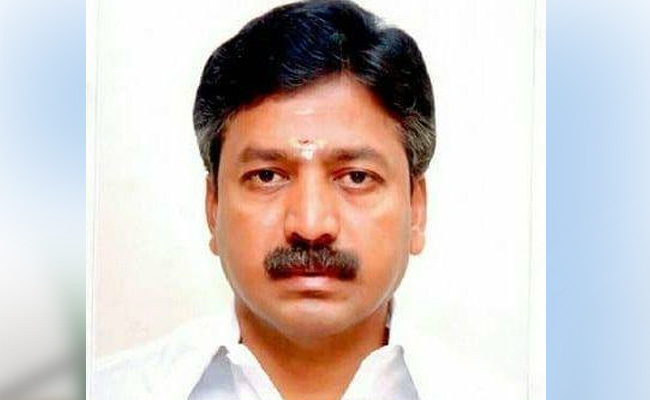
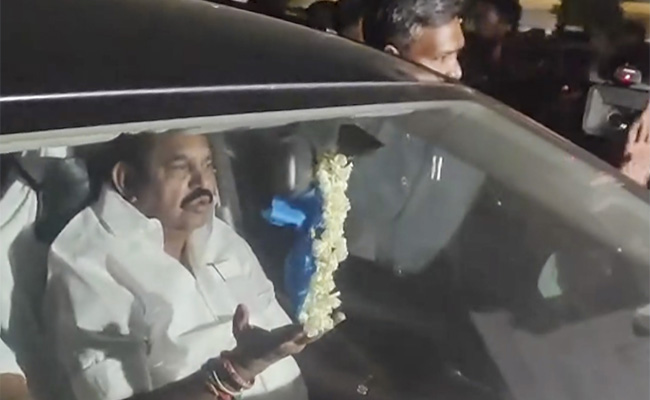
Haryana minister Anil Vij threatens fast unto death over officials 'not complying with his orders'

Ambala, Jan 30 (PTI): Haryana Minister Anil Vij on Thursday expressed strong displeasure over officials not complying with his orders and said that, for the sake of his Ambala Cantt constituents, he is prepared to go on a fast unto death like farmer leader Jagjit Singh Dallewal.
The 71-year-old senior BJP leader, a seven-time MLA from Ambala Cantt, told reporters here that he has stopped holding "Janta Darbar" in Ambala, which he used to conduct every Monday.
"I may not attend grievances redressal committee meetings either because my orders are not being implemented by the officials," Vij said.
"(Baki Haryana ka toh mujhe kuchh nahi lena…) I have nothing to do with the rest of Haryana, but the people of Ambala Cantt have elected me MLA seven times. For their work, even if I have to hold an agitation, I will do that. And if I have to go on a fast unto death like (farmer leader Jagjit) Dallewal, I will do that," Vij, the Transport and Energy Minister, said.
This is not the first time that Vij has expressed his displeasure with officials. In October, he had voiced frustration over the "absence" of some senior officers at a meeting he had called in Ambala.
Previously, Vij had often been at odds with Manohar Lal Khattar when he was Haryana's Chief Minister. Khattar is currently serving as a Union Minister.
When the BJP first came to power in Haryana in 2014, Vij, along with other BJP leaders like Ram Bilas Sharma, was considered a frontrunner for the CM's post. However, the party chose Manohar Lal Khattar, a first-time MLA at the time, as its CM candidate.
In March 2024, Vij expressed dissatisfaction with the BJP for not consulting him when the party decided to replace Khattar as chief minister and bring in Nayab Singh Saini instead.
Vij claimed he only learned about the change during a BJP MLAs' meeting in Chandigarh when Saini's name was announced.
In September 2024, just days before the Assembly elections, Vij stated that he would stake a claim for the chief minister's post if the party won.
"When Nayab Saini replaced Khattar, people asked, 'Why not Anil Vij?' Many from the state and my constituency met me regarding this…. I have always obeyed my party's orders, but I said, if the party makes me CM, I will change Haryana's 'takdeer and tasveer,'" Vij had said in September.
Vij had recently said that Mohan Lal Badoli, who was booked in a gang-rape case, should resign from the post of state BJP chief to maintain the "sanctity" of the party until he is proven innocent in an investigation by the Himachal Pradesh police.
Haryana BJP chief Badoli and singer Rocky Mittal have been booked after a woman alleged that she was raped by them in a hotel in Himachal Pradesh's Kasauli. Police have registered an FIR against them.
Let the Truth be known. If you read VB and like VB, please be a VB Supporter and Help us deliver the Truth to one and all.
Trump says EU has until July 4 to approve last year's trade deal or it will face higher tariffs
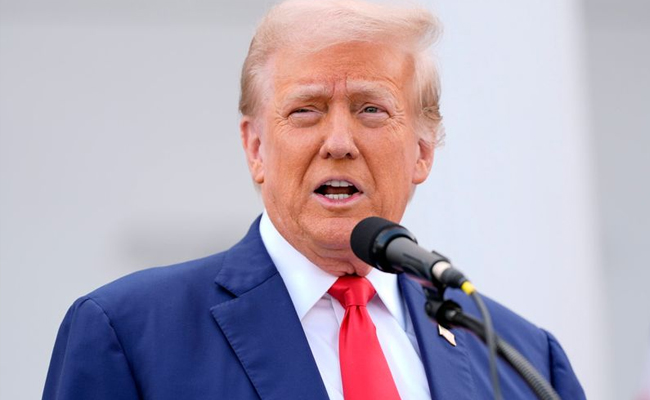
Washington (AP): President Donald Trump has said in a social media post that goods from the European Union would face higher tariff rates if the 27-member bloc fails to approve last year's trade framework by July 4.
The announcement on Thursday appeared to be a deadline extension after the president said last Friday that EU autos would face a higher 25 per cent tariff starting this week. Trump made the updated announcement after what he described as a "great call" with European Commission President Ursula von der Leyen.
Still, the US president was displeased that the European Parliament had yet to finalize the trade arrangement reached last year, which was further complicated in February by the US Supreme Court ruling that Trump lacked the legal authority to declare an economic emergency to impose the initial tariffs used to pressure the EU into talks.
"A promise was made that the EU would deliver their side of the Deal and, as per Agreement, cut their Tariffs to ZERO!" Trump posted. "I agreed to give her until our Country's 250th Birthday or, unfortunately, their Tariffs would immediately jump to much higher levels."
It was unclear from the post whether Trump was implying that the tariff rates would jump on all EU goods or the increase would only apply to autos.
His latest statement indicates he might be backing away from his earlier threat on EU autos by giving the European Parliament several more weeks to approve the agreement.
Under the original terms of the framework, the US would charge a 15 per cent tax on most goods imported from the EU.
But since the Supreme Court ruling, the administration has levied a 10 per cent tariff while investigating trade imbalances and national security issues, aiming to put in new tariffs to make up for lost revenues.