Haryana transfers Rewari SP; victim's family rejects compensation
Rewari gang rape case

Chandigarh, Sep 16 : Embarrassed over the failure to arrest those involved in the alleged gang-rape of a board topper, the Haryana government on Sunday ordered the transfer of Rewari's Superintendent of Police (SP) and replaced him with another officer.
Rahul Sharma has been posted as the new SP of Rewari in place of Rajesh Duggal.
The police arrested Deendayal, the owner of the tubewell room where the gang-rape took place in Mahendragarh district. Police said he gave the keys of the room to the accused youth where they committed the crime on September 12.
The police have also detained a medical practitioner who was called by the accused when the condition of the 19-year-old rape victim deteriorated after she had been sexually assaulted.
Police officials said the medical practitioner gave the victim first aid treatment. He did not inform the police though he knew that the victim was sexually assaulted claiming that he was threatened by the accused.
The Haryana Police has faced flak for treating the gang-rape incident casually initially by citing jurisdiction issues, losing crucial time and evidence to nab the accused.
In a related development, the family of the gang-rape victim on Sunday rejected the compensation cheque of Rs 2 lakh sent by the Haryana government.
"Is this the value that the Haryana government has calculated for the gruesome crime committed on my daughter? We reject the compensation offered. We want justice for our daughter," the mother of the victim said in Rewari, nearly 350 km from here.
The Haryana Police on Sunday continued the hunt for the rapists. Police sources said on Sunday that raids were being conducted at various locations to arrest the three accused involved in the crime.
The police were questioning relatives, friends and fellow villagers of the accused to know their whereabouts. Nearly 100 people have been questioned.
Special Investigating Team (SIT) chief Nazneen Bhasin told the media in Rewari that the rape of the young woman had been confirmed in the medical examination.
She said that anyone giving information about the accused would get a reward of Rs 1 lakh. The accused include a soldier, Pankaj, and two youths, Manish and Nishu. All belong to Kanina village.
Despite Haryana Director General of Police B.S. Sandhu claiming that the accused would be arrested, the police have failed to do so.
The victim, who has identified her attackers, and her parents had said earlier that the police were not taking action in the matter and were dealing with it casually.
The family alleged that more men could be involved in the gang-rape.
The accused, who belong to the same village as the victim and knew her, allegedly kidnapped the victim from Kanina bus stand while she was on her way for coaching classes.
She said they gave her water to drink which was laced with a sedative. They then took turns raping her in a room adjoining agricultural fields till she fell unconscious.They later dumped her at a bus stop near the village.
One accused, Manish, even called up the victim's father and told him to pick her from the bus stand. The victim, a second year student in a college, topped the board examination and was felicitated by the government.
Let the Truth be known. If you read VB and like VB, please be a VB Supporter and Help us deliver the Truth to one and all.
CM Siddaramaiah alleges ‘criminal conspiracy’ in Sringeri recount, vows legal action
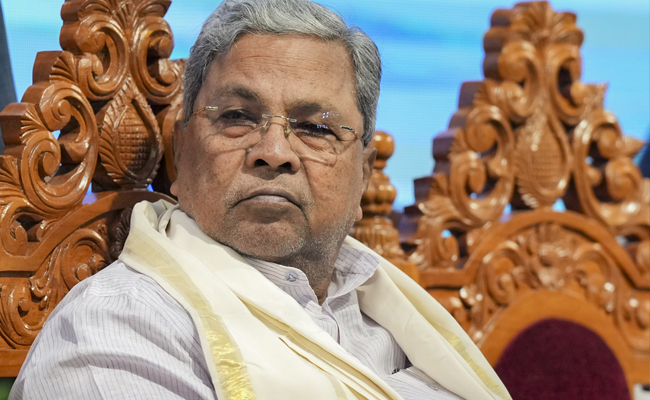
Bengaluru (PTI): Alleging a “criminal conspiracy” by BJP candidate D N Jeevaraj in the Sringeri Assembly poll recounting, Karnataka CM Siddaramaiah on Tuesday said the outcome was manipulated after valid postal ballot votes in favour of Congress leader T D Raje Gowda were tampered with during the recounting process.
Following a Karnataka High Court order on an election petition filed by Jeevaraj, challenging Raje Gowda’s election, the reverification and recounting were conducted on Saturday.
After the reverification and recount of postal ballots for the Sringeri Assembly constituency, votes polled in favour of Raje Gowda were reduced by 255, the returning officer said.
A report on the matter has been submitted to the Election Commission of India for further action, the officer added.
Congress leader Raje Gowda had won the 2023 Assembly polls from Sringeri by 201 votes, defeating his nearest rival Jeevaraj.
Addressing a press conference in Bengaluru, Siddaramaiah said the High Court had directed the recounting of postal ballots and that irregularities were noticed during the exercise conducted on May 2.
“This is a clear case of criminal conspiracy,” Siddaramaiah said, alleging that valid votes cast in favour of Raje Gowda were altered after being accepted by counting agents of all parties, including Congress, BJP, and JD(S).
He claimed that during the recounting of postal ballots, 255 votes were initially accepted as valid by all agents but were later tampered with by subordinate officials.
“There is a second mark on the votes polled in favour of Raje Gowda. They had accepted these as valid votes. Subsequently, another mark was made by officials. This is a clear case of criminal conspiracy,” he said.
When asked who was behind the alleged conspiracy, the CM replied, “It was hatched by Jeevaraj and others. It is planned.”
Siddaramaiah further alleged that the returning officer acted improperly by declaring the result despite the presence of an Election Commission observer during the recounting.
“Immediately after the counting, the returning officer announced the result. He should not have done so; this is against the law,” he said.
He pointed out that Raje Gowda had originally won by 201 votes, but after the recounting, the BJP candidate was declared the winner by 52 votes.
“The BJP has committed a criminal act of conspiracy. This is not vote chori but vote dacoity,” he alleged.
The CM said a police complaint had already been filed by Raje Gowda’s election agent, Sudhir Kumar, and emphasised the need for electoral integrity.
“We want transparency and free and fair elections. That is what our Constitution mandates,” he added.
Stating that the government would pursue legal remedies, Siddaramaiah said, “We are preparing an appeal challenging the returning officer’s announcement in a court of law.”
Responding to a separate query on elections in other states, the CM said there appeared to be an anti-incumbency factor in West Bengal, while results in Tamil Nadu were “surprising,” adding that Vijay’s party was emerging as the largest there.
Following the victory of party candidates in Bagalkote and Davanagere South, Siddaramaiah expressed confidence about future electoral prospects in Karnataka.
“Even in 2028, we will win the Assembly elections. We will come back,” the CM said.
Siddaramaiah added that he would order a forensic examination into the alleged tampering of postal ballots.