Hasty approval to projects in Great Nicobar will prove to be dangerous: Congress
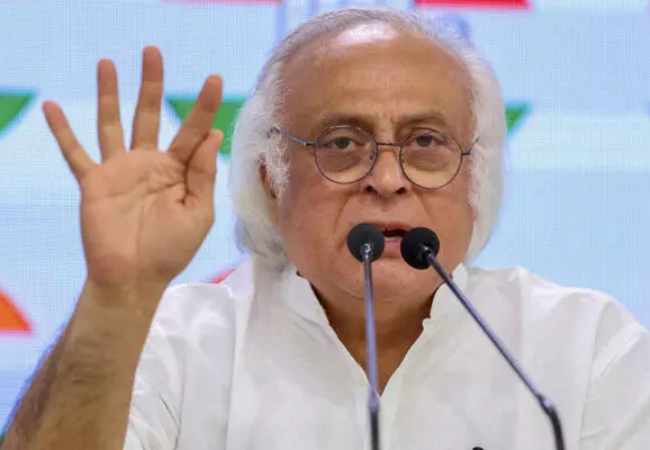
New Delhi (PTI): The Congress alleged on Friday that the government's hasty approval to projects worth crores in an ecologically-sensitive area like Great Nicobar will prove to be dangerous for the entire region.
Congress general secretary Jairam Ramesh said these projects will not only inflict irreparable damage on the fragile ecology there, but will also systematically push the survival of indigenous communities to the margins.
"The government's hasty approval of aggressive projects worth thousands of crores in the name of development in an ecologically extremely sensitive area like Great Nicobar, driven by greed and shortsightedness, will prove to be dangerous and long-term tragedy for the entire region.
"This entire area is already highly vulnerable to climate disasters, where even the slightest tampering with the natural balance can bring devastating consequences. Despite this, the government has ignored warnings, scientific assessments, and local realities to push these projects forward in the greed for profits of a few corporates," Ramesh said in a post on X.
The former Union environment minister also highlighted a book, titled "Great Nicobar: The Story of a Betrayal", claiming that it conducts an incisive examination of the government's role in the entire matter, policy negligence and the compromises being made with tribal rights through several research-based, factual and relevant articles.
"This compilation is a living documentary evidence of how, in the name of development, the future of an entire region and its people has been put at stake," he said.
The Congress has been against the Great Nicobar Development Project, claiming that it will ruin the fragile ecology of the area.
Let the Truth be known. If you read VB and like VB, please be a VB Supporter and Help us deliver the Truth to one and all.
Centre launches national childhood diabetes screening, treatment framework

New Delhi (PTI): The Union Health Ministry on Sunday released a guidance document providing a framework for screening, diagnosis, treatment and long-term management of childhood diabetes.
According to the ministry, the document, for the first time, establishes a structured and standardised national framework, positioning India among a select group of countries that have integrated childhood diabetes care into the public health system.
The "Guidance Document on Diabetes Mellitus in Children" was released at the National Summit on Best Practices in Public Healthcare Service Delivery, concluded on May 1-2.
According to a statement by the ministry, the framework aims to ensure universal screening of all children from birth to 18 years through community and school-based platforms for early identification of diabetes.
Suspected cases will undergo immediate blood glucose testing and be referred to district-level health facilities for confirmatory diagnosis and treatment, it said.
A key feature of the initiative is the provision of a comprehensive free-of-cost care package at public health facilities, including screening, diagnostic services, lifelong insulin therapy, glucometers, test strips and regular follow-up care.
The initiative seeks to reduce the financial burden on families and ensure uninterrupted treatment for children diagnosed with diabetes.
The document also lays down an integrated continuum of care linking community-level screening with district hospital-based management and advanced care at medical colleges to ensure seamless follow-up and treatment.
To strengthen early detection, the guidance promotes the "4Ts" awareness framework -- Toilet, Thirsty, Tired and Thinner -- to help parents, teachers and caregivers recognise early warning signs of type 1 Diabetes.
Besides clinical protocols, the document focuses on family and caregiver empowerment through structured training on insulin administration, blood glucose monitoring, emergency response and daily disease management.
The statement stated the initiative is expected to reduce mortality through early detection, prevent complications and improve the quality of life of affected children while strengthening the public health system's capacity to manage non-communicable diseases among children.