Have been vocal for women's quota since I was MP: Nitish
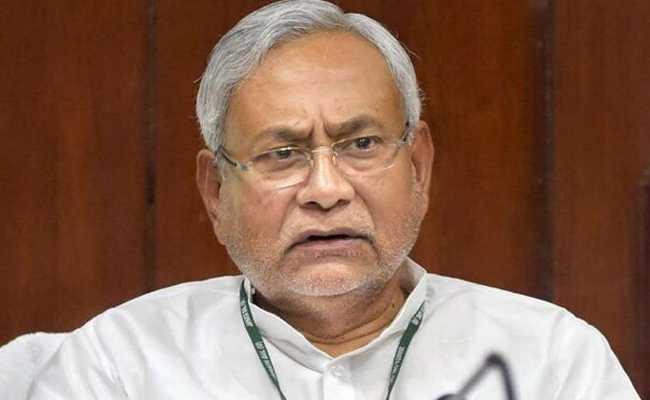
Patna (PTI): Bihar Chief Minister Nitish Kumar on Wednesday asserted that he was in support of women's reservation in Parliament and state assemblies though there must be provisions for adequate representation of SCs, STs, OBCs and EBCs.
Speaking to reporters, he urged the Centre to move fast on implementing the proposals in the women's reservation bill by conducting the census, and consider his long-standing demand for a caste census.
"I have been in support of women's reservation. Why should they not be assured representation? My speeches during the days I was a member of parliament bear testimony to my stand that remains unchanged," said Kumar.
"We have ensured adequate representation of women wherever it is possible. In panchayats, urban local bodies, government jobs, including the police force, the representation of women in Bihar is highest for any state in the country," he added.
Kumar said it must also be ensured that there is a provision for ensuring that women from SCs, STs, OBCs and EBCs get adequate representation.
"It is, though, regrettable that even if the bill is passed, actual implementation shall hang fire till census, followed by delimitation," he said.
The Centre introduced the constitutional amendment bill on Tuesday to reserve one-third of seats in Lok Sabha and state assemblies for women. The government said it will enable greater participation of women in policy-making at the state and national levels and help achieve the goal of making India a developed country by 2047.
Women's reservation will come into effect after the delimitation exercise is undertaken and will continue for 15 years. Seats reserved for women will be rotated after each delimitation exercise.
Nitish said, "I would request the central government to move fast by conducting the census and consider our long-standing demand for a caste census."
Caste census, in which headcount is limited not just to SCs and STs, has become a rallying point in Bihar where the numerically powerful OBCs have dominated politics since the 1990s.
Resolutions demanding caste census have been passed twice, unanimously on both occasions, by the state legislature and Kumar had also led an all-party delegation a couple of years ago to press the demand before Prime Minister Narendra Modi.
The Modi government expressed its reluctance to undertake the cumbersome exercise. However, adamant in the view that a caste census had become indispensable since the last time it was held was way back in 1931, the government in the state ordered a survey on similar lines, which is now in its final stages.
Moreover, the INDIA coalition, which includes JD(U) and Lalu Prasad's RJD, both championing the cause of OBCs, has promised a caste census if voted to power in the resolution adopted at the Mumbai conclave held last month.
Let the Truth be known. If you read VB and like VB, please be a VB Supporter and Help us deliver the Truth to one and all.
Karnataka launches India’s first digital grievance system for gig workers
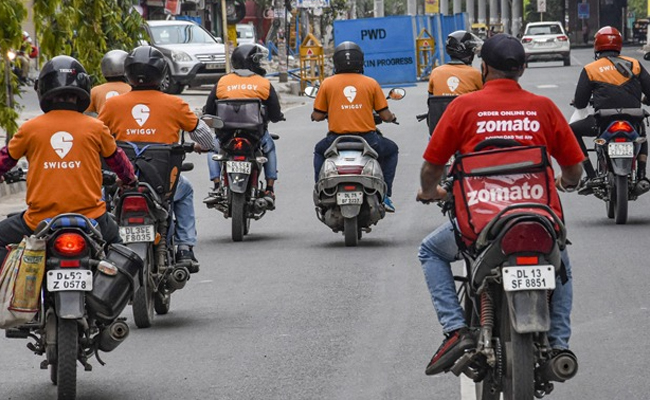
Bengaluru: In a first-of-its-kind initiative in India, the Karnataka government has launched a digital grievance redressal system for gig workers to provide structured support and protection to platform-based workers.
According to The Hindu, the system, developed by the Karnataka Platform-based Gig Workers’ Board in collaboration with the Department of e-Governance, allows workers to file complaints through the Integrated Public Grievance Redressal System (IPGRS).
Gig workers can raise issues related to pay, working conditions, and platform-specific disputes. Complaints will be routed to the Internal Dispute Resolution Committees (IDRCs) of respective platforms and are expected to be resolved within a defined timeframe. This is expected to bring transparency and legal recourse for a workforce that has so far operated without a formal dispute resolution framework.
Under The Karnataka Platform-Based Gig Workers (Social Security and Welfare) Act and Rules, every aggregator platform must constitute an Internal Dispute Resolution Committee (IDRC). Platforms such as Namma Yatri and Yulu have already integrated their IDRC contact details with the government portal.
Around 12 lakh gig workers have been identified in the state, and a unique identification system is being developed to remove duplicate entries. Officials said welfare schemes are also being designed based on type of work, working hours, and contribution.
Labour Minister Santosh Lad said that Karnataka, technology capital of the country, is leveraging this potential for worker welfare as well. “By launching this system, we are ensuring that the gig economy is no longer an informal space, but a structured one where every worker’s voice is heard,” he said.
“The schemes will vary based on the type of platforms. For example, cab rides are mostly undertaken by men whereas urban domestic activity is undertaken mostly by women. It may also be based on the contribution made, and the quantum of gig work done by a gig worker. Some gig workers work for more than eight hours while some may work on a few gigs. So, work load, nature of work, and time period of work could vary,” TH quoted G. Manjunath, Additional Labour Commissioner and CEO of the Board as saying.
“It has to be scientifically structured based on their effort and labour. We are working with experts, including academicians from Briston University, King’s College, and IISc, and other stake holders, including board members,” he said.
Officials added that aggregator platforms will be required to contribute 1 per cent towards worker welfare, with implementation beginning July 5.