HC asks police to reply to Tahir Hussain’s bail plea in IB staffer Ankit Sharma murder case

New Delhi (PTI): The Delhi High Court on Tuesday sought response of the police on a plea by former AAP councillor Tahir Hussain seeking bail in a case relating to the murder of IB staffer Ankit Sharma during the northeast Delhi riots in February 2020.
Justice Anoop Kumar Mendiratta issued notice to the police on Hussain’s plea challenging a trial court’s December 3 order rejecting his bail application for want of material change in circumstances.
Hussain, in his plea, said the trial has commenced in the case and out of 114, 20 prosecution witnesses have been examined so far and that he has been in jail for the last four years and nine months.
The plea, filed through advocate Tara Narula, said the applicant has suffered a long period of incarceration and since there are a large number of witnesses to be examined, the trial is unlikely to be concluded soon.
The petition stated that the co-accused persons allegedly involved in the riotous mob and committing the offence of murder have already been granted bail by the high court.
According to the prosecution, on February 26, 2020, complainant Ravinder Kumar informed the Dayalpur police station officials that his son Ankit Sharma, who was posted in the Intelligence Bureau, was missing since February 25, 2020.
He later came to know from some locals that a person had been thrown into the Khajuri Khas drain from the mosque of Chand Bagh pulia after being murdered.
The prosecution alleged that Sharma’s body was recovered from the Khajuri Khas drain and there were 51 injuries on his body.
Hussain is one of the accused in the case.
According to the prosecution, the four accused persons were also part of the violent mob which was involved in the acts of rioting and arson, which killed Sharma.
Communal clashes had broken out in northeast Delhi on February 24, 2020, after violence between citizenship law supporters and protesters spiralled out of control leaving at least 53 people dead and scores injured.
Let the Truth be known. If you read VB and like VB, please be a VB Supporter and Help us deliver the Truth to one and all.
Bengaluru jail introduces biometric tracking system for prisoners
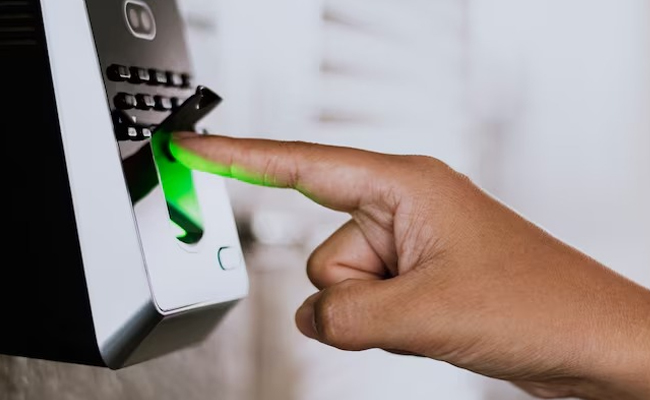
Bengaluru: In a bid to curb misconduct and illegal activities inside Parappana Agrahara Central Prison, prison authorities have introduced a new ‘Prisoners Tracking Movement System’ under which inmates will have to undergo biometric verification while entering every barrack.
According to jail officials, biometric systems have been installed across all major sections of the prison, including barracks, visitor rooms, hospital, canteen, kitchen, library, playground, handicraft units and bakery sections. Staff members have also been deployed at these locations.
Officials said inmates visiting the visitors’ room must now obtain a digital token after biometric verification. Details such as the prisoner’s name, identification number and entry time will be updated in the prison software system. This will help authorities maintain a complete digital record of inmates visiting and returning from meeting rooms.
Similar systems have also been introduced at entry points of the hospital, library and other barracks accessed for work-related purposes. Officials said the system will help identify prisoners involved in suspicious or illegal activities with other inmates and enable authorities to track how much time a prisoner spends at different locations inside the prison.
Authorities stated that AI-powered cameras were already being used inside the prison to monitor inmates as well as prison staff. Along with this, digital tracking of prisoner phone calls and a digital token system for visitor meetings have now been added to strengthen surveillance over inmate movement. Officials said the project has been implemented at a cost of around Rs 2.25 crore.
The prison department has also introduced a canteen usage tracking system to monitor prisoners’ spending patterns. Instead of direct cash payments, inmates can purchase bakery items and snacks using wallets or coupons issued within the prison system.
Officials said the digital system will record details including the buyer’s name, items purchased, quantity, date, time and remaining wallet balance. This will allow prison authorities to maintain complete expenditure records of inmates.